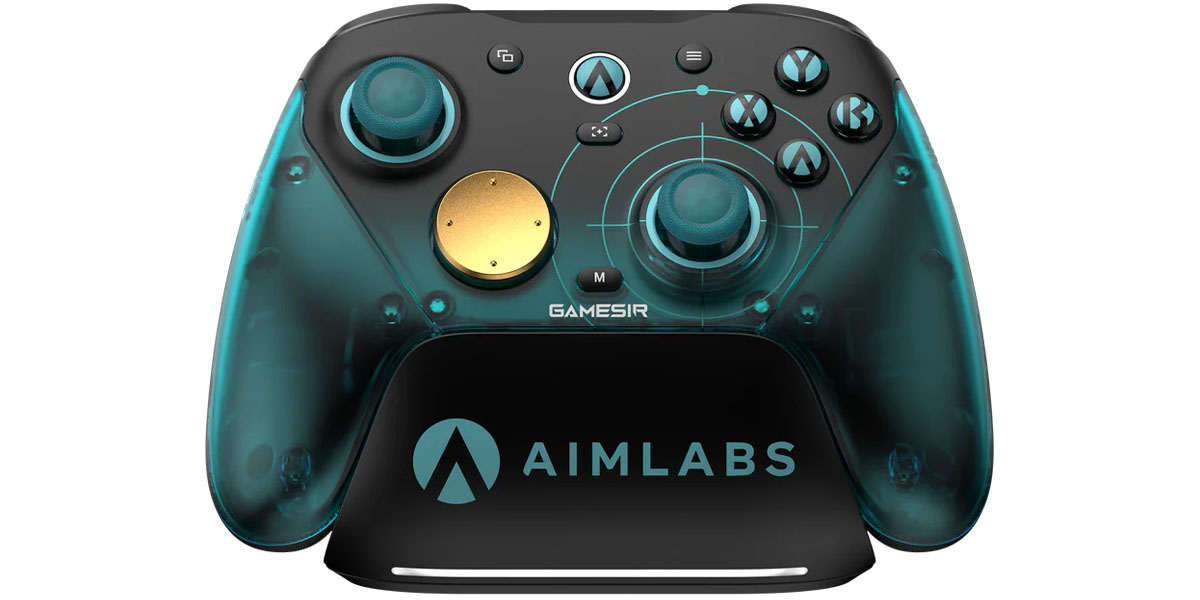
The Death of the $200 Controller: Why the GameSir G7 Pro 8K Is the Only Upgrade That Matters
You know the cycle. We all know it. You spend nearly two hundred dollars on a “Pro” controller because you want that competitive edge. You want the back paddles, the hair triggers, and the weight that feels like quality in your hands. For a few months, you feel like a god. Your aim snaps, your movement feels fluid, and you convince yourself the investment was worth it. Then, the drift sets in. The rubber grips start to peel. The bumpers lose their click. Suddenly, that premium piece of hardware is nothing more than expensive e-waste.
For the better part of a decade, this was the tax we paid for performance. Brands like Scuf and the Xbox Elite Series dictated the rules, and the rule was that high performance required a high price tag. But the industry has hit a breaking point. A quiet revolution has been building in the budget sector, led by manufacturers who realized that “Pro” features shouldn’t be gated behind a velvet rope. The GameSir G7 Pro 8K is not just another third-party controller. It is a paradigm shift. It is a device that offers specifications triple its price point, challenging everything we thought we knew about the economics of competitive gaming.
The Evolution of an Underdog
To understand why this controller matters, we have to look at where it came from. GameSir didn’t start as a giant slayer. They cut their teeth on mobile accessories, iterating rapidly and listening to feedback with an intensity that larger brands often lack. Their previous model, the G7 SE was praised because it brought Hall Effect sensors—magnetic sticks that don’t drift—to the masses for under fifty bucks. It forced the entire industry to pay attention.
But the G7 Pro 8K is different. Its trying to be durable, fastest, most precise instrument on your desk. It targets the high-end PC esports market directly, staring down heavyweights like Razer and saying, “We can do that better, and we can do it for cheaper“. This isn’t about budget durability anymore. This is about dominance.
Beyond Hall Effect: The TMR Revolution
Everyone has been talking about Hall Effect sensors as the “endgame” for controllers. They use magnets to measure position, meaning no physical contact and no wear. But the engineers behind the G7 Pro decided that wasn’t enough. They skipped Hall Effect entirely and implemented Tunnel Magnetoresistance, or TMR.
This sounds like Star Trek technobabble, but the difference is grounded in quantum mechanics. While Hall Effect sensors measure voltage differences in a magnetic field, TMR sensors rely on quantum tunneling current through insulating layers.
Why should you care? Because Hall Effect sensors, for all their durability, can be “noisy.” They often require heavy software filtering to smooth out the jitter, and that filtering adds latency. TMR is different because it consumes a fraction of the power—about 600 microamps—and offers a raw, unfiltered signal that feels incredibly snappy. The Gen-2 modules in this controller offer a resolution of 4096 steps. That means when you move the stick a fraction of a millimeter, the game registers it instantly. There is no smoothing, no prediction, just a 1:1 translation of your thumb’s movement. For the first time, a controller stick feels as responsive as a high-end gaming mouse.
The Speed Demon: 8000Hz Polling
The “8K” in the name isn’t just marketing fluff. It refers to the controller’s ability to report its state to the host computer 8,000 times per second. To put that in perspective, a standard Xbox controller polls at 125Hz. That is a report every 8 milliseconds. A standard competitive controller hits 1000Hz, or 1 millisecond. At 8000Hz, the interval drops to 0.125 milliseconds. In a competitive scenario, this reduction impacts the end-to-end system latency.
While your monitor’s refresh rate is often the biggest bottleneck, reducing the input device latency ensures that the most recent input data is always available the exact moment the game engine polls for it. This minimizes input aliasing, which is that frustrating discrepancy between when you pulled the trigger and when the game actually registered it. Historically, you only saw this kind of speed on wired devices. GameSir achieved 8K polling over wireless, suggesting a highly optimized proprietary protocol that prioritizes packet velocity. However, you need a clean RF environment to maintain that stability.
You must keep it in mind, Processing 8,000 interrupts per second puts a heavy load on your CPU. Benchmarks show usage jumping from around 4% to over 13% depending on the processor. If you are rocking an older CPU like a Ryzen 5 3600, enabling 8K polling can actually degrade your performance by causing frame time spikes. This feature is strictly for enthusiasts with high-end systems capable of absorbing the overhead.
The Software Ecosystem: Power and Complexity
Hardware this complex needs software to manage it. The GameSir Nexus application acts as the control center. It offers granular customization that lets you adjust the response curves of the TMR sticks, ranging from “Linear” for raw input to “Precision” for sniping. Crucially, the software allows you to set the dead zone to true zero. Combined with the TMR sensors, this lets you test the anti-drift capabilities. The software visualizes the stick’s circularity error, with the G7 Pro typically reporting errors below 0.5%, indicating near-perfect centering. You can also remap the four auxiliary buttons—two rear paddles and two shoulder buttons—to any standard function.
There is a branding element here with the “Aimlabs Edition.” While it implies deep software integration, there isn’t a direct API handshake. Instead, the collaboration reflects a hardware tuning philosophy. The default stick tension and response curves are pre-calibrated to match the tracking requirements of Aimlabs’ most popular scenarios.
The Real World: Where it Shines and Where it Stumbles
No device is perfect, and the G7 Pro 8K has its flaws. The D-pad is a point of contention. It utilizes mechanical switches, but the cap sits loosely on the stem, creating a “wobble” or “float” before the switch engages. While the click is tactile, the lack of stabilization can lead to imprecise inputs in games where clean cardinals are mandatory. If you live and die by your inputs in Street Fighter, this might annoy you.
There is also a structural weakness in the trigger locks. The internal plastic tab that engages the hair-trigger mode can bend or shear off if you press the trigger with excessive force while it is locked. This is a controller that demands finesse. If you grip tightly and slam triggers in the heat of battle, you might find the durability lacking compared to the metal internals of an Elite Series 2.
Despite these issues, the value proposition is undeniable. You are getting wireless 8K polling and TMR sticks for around $80. It renders the Xbox Elite Series 2, with its aging potentiometers and 125Hz polling rate, effectively obsolete for PC gamers.
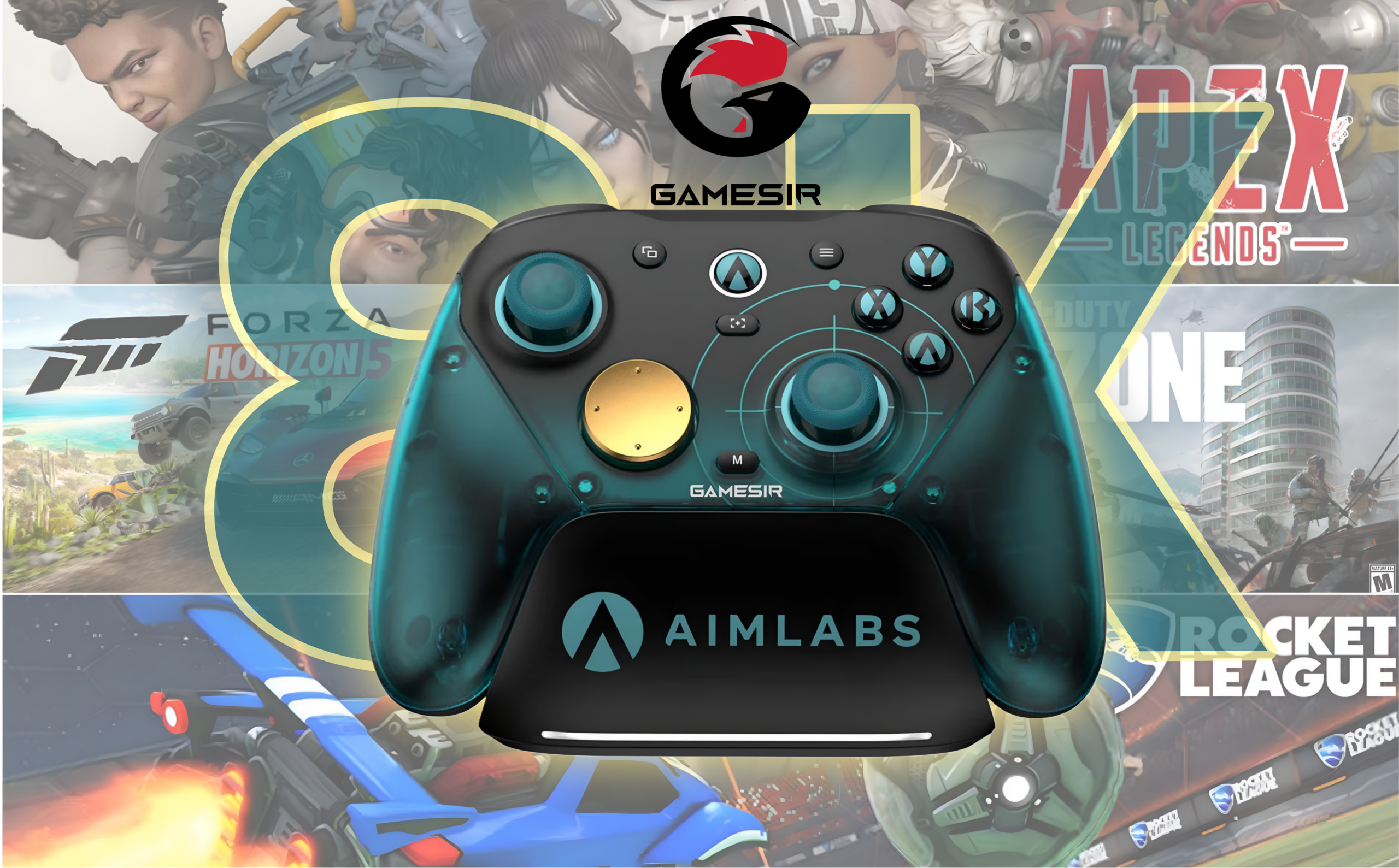
The Top 4 Games to Unleash the G7 Pro 8K
1. Apex Legends
Apex Legends is unique in the battle royale genre because of its high Time-To-Kill (TTK). In games where enemies die in two bullets, reaction time is everything. In Apex, you need to sustain your aim on a moving target for extended periods. This is where the TMR sensors shine. The combination of 8K polling and high-resolution sticks manifests as pure smoothness. Maintaining a crosshair on a strafing Octane feels less “stepped” and more fluid. The micro-stutter associated with lower resolution sticks disappears, allowing you to track targets with a consistency that feels almost like cheating.
2. Call of Duty: Modern Warfare III / Warzone
Call of Duty is a game of twitch reflexes and movement mechanics. The “slide-cancel” is a staple of high-level play, requiring a specific sequence of button presses executed rapidly. The G7 Pro’s macro support allows you to bind these sequences to a single back button, simplifying complex movement tech. Furthermore, the optical face buttons and hair-triggers allow for rapid-fire capability with semi-automatic weapons that exceeds the physical limitations of membrane buttons.
3. Rocket League
You might not think of Rocket League as a game that needs 8000Hz, but you would be wrong. This game is entirely physics-based, requiring precise angular inputs for aerial control. The circularity of the G7 Pro’s sticks is the star here. Testing shows an average error rate of just 0.5% to 0.8%, compared to the 10% error rate of standard controllers. This means your diagonal inputs are perfect. When you go for a fast aerial or a flip reset, the car goes exactly where you point it. There is no deviation. The consistency of the TMR sensors removes the hardware variable, leaving only your skill (or lack thereof) on the pitch
4. Forza Horizon 5
This inclusion might surprise you, given the focus on digital triggers for shooters. But Forza highlights the versatility of the G7 Pro. You flip the trigger switches back to “Analog Mode,” engaging the Hall Effect sensors. Now you have a silky-smooth, linear travel from 0 to 100%. You can feather the throttle through a drift or apply just enough brake to tuck into a corner without locking up the wheels. The vibration motors and the ergonomic grip texture keep you immersed, proving that while this controller is built for esports, it hasn’t forgotten how to just have fun.
Thousandtime Thoughts
The GameSir G7 Pro 8K acts as a specialized tool. It is designed for a specific purpose: competitive gaming on PC. It effectively commoditizes “Pro” performance, proving that features like 8000Hz polling and TMR sensors do not require a $200 investment.
It is a triumph of aggressive engineering. While it requires some care regarding the trigger locks and the D-pad might not satisfy the most hardcore fighting game enthusiasts, for the aspiring esports professional or the dedicated FPS grinder, it is an essential purchase. It removes hardware limitations from the equation. If you miss a shot with the G7 Pro 8K, you know it was your aim, not your controller. And for $80, that kind of honesty is a steal.
PRODUCT IN THIS POST