Shonen Jump’s Next Apex Predator
The secret is officially out. Ichi the Witch is not just the most visually arresting serialization currently running in Weekly Shonen Jump. It is a highly calculated, flawlessly executed power move by an editorial department that knew exactly what it was doing.
To understand why this series matters right now—and why you need to read Chapter 1 before the inevitable, internet-breaking anime announcement—you have to look at the landscape it was born into. Following the monumental conclusions of Jujutsu Kaise and My Hero Academia, Shonen Jump found itself staring into a power vacuum. The “Dark Trio” era had closed its domain. The magazine needed a new anchor. It needed something that felt simultaneously familiar enough to retain the massive global audience, yet fresh enough to justify its existence.
What we got was the ultimate comeback story disguised as an eldritch fantasy.
The Return of the Prodigy
It is impossible to untangle the success of Ichi the Witch from the industry lore surrounding its artist, Shiro Usazaki.
If you followed manga in the late 2010s, you remember Act-Age. You remember the cinematic paneling, the impossibly expressive eyes, the way Usazaki could make a high schooler reciting lines on a stage feel like a life-or-death battle. When that series was abruptly canceled in 2020 due to circumstances entirely out of her control, it felt like watching a prodigy’s brush get snapped in half.
For four years, the industry waited. Where would she go? What would she draw next?
The answer was a collaboration with Osamu Nishi, the architectural mind behind the beloved, emotionally resonant Welcome to Demon School! Iruma-kun. Pairing Nishi’s impeccable sense of pacing and heart with Usazaki’s transcendent art is the manga equivalent of putting a Formula One engine into a luxury chassis.
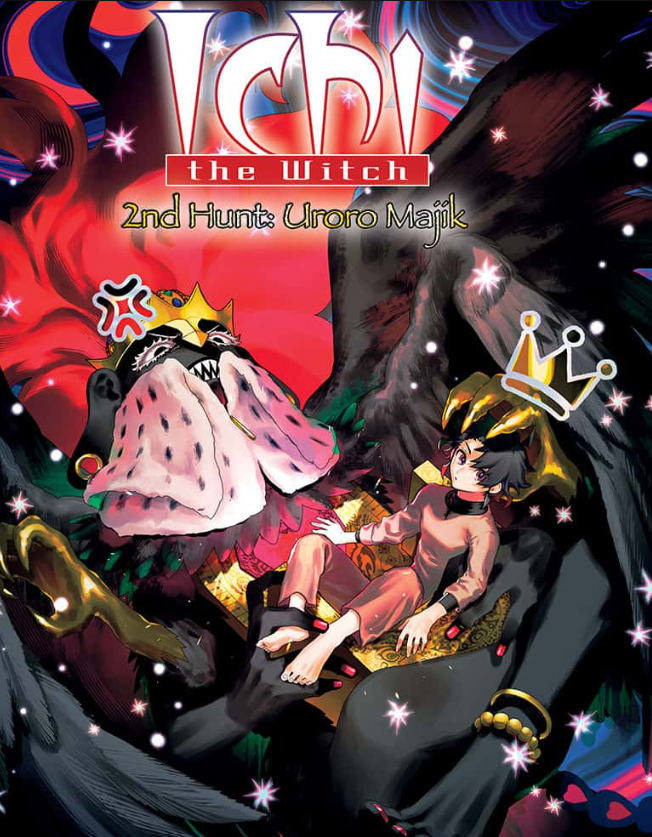
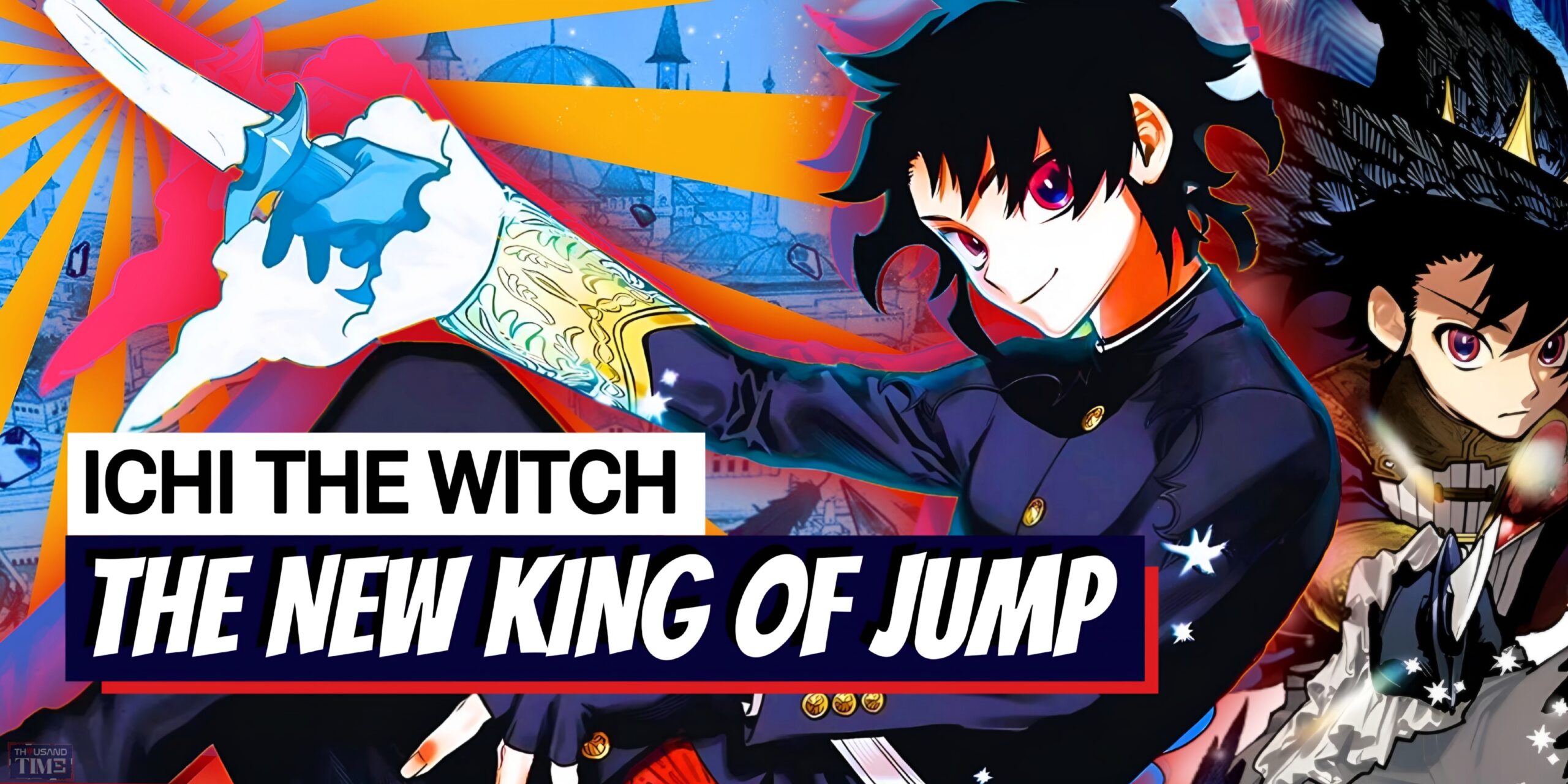
And Usazaki’s art has evolved. The grounded, theatrical realism of her past work has mutated into something feral and breathtaking. The visual vocabulary of Ichi the Witch operates on a spectrum between high fashion and high-concept horror. It begs a question that feels almost sacrilegious to ask out loud: Are we looking at the strongest, most detailed draftsmanship in Jump since Yusuke Murata reinvented One Punch Man or Kentaro Miura painted Berserk?
It certainly feels like it. The fast cuts of her most detailed panels are already circulating online not just as story beats, but as masterclasses in illustration.
Designing the Throne Room
This brings us to the “stickiness” of the series—the cultural gravity that elevates a good manga into a global phenomenon.
To survive the modern, algorithm-driven era of pop culture, a property must be more than just well-written. It has to be modular. It has to be meme-able. It needs to generate its own gravity on TikTok and dominate the cosplay floor at Anime Expo before the first volume is even translated.
Nishi and Usazaki understood the assignment perfectly.
The character design in Ichi the Witch is staggering in its intent. There is a deliberate, stark contrast between the “Monster Design” of the Majin—which often lean into surreal, unsettling, almost Lovecraftian geometry—and the “Witch Design,” which borrows heavily from modern streetwear and avant-garde runway fashion.
Look no further than Desscaras. The character is practically a walking mood board, dripping with an effortless, undeniable “Cool Factor” that the internet immediately latched onto. The creators haven’t just designed a cast of characters; they have designed an aesthetic movement. They understand that modern readers don’t just consume a story; they wear it. They curate their digital identities around it.
So, what is the final verdict? Is the hype real, or is it just the echo chamber of a fandom desperate for a new obsession?
The reality is that Ichi the Witch is exactly what it claims to be. It is peak Shonen storytelling, engineered for the present moment. It honors the lineage of the action-fantasy genre while discarding the tropes that have begun to feel tired. It delivers emotional resonance without sacrificing breakneck pacing, and it dresses the entire package in art so good it feels like showing off.
The titans of the last decade have taken their bows. The throne was empty. Ichi the Witch just sat down.
Thousandtime Thoughts
There is something profoundly telling about how Ichi the Witch treats magic. For a long time, pop culture framed supernatural power as an institutional privilege—something you inherited or learned in prestigious, walled-off academies. It was clean, orderly, and deeply aspirational.
Ichi reflects a modern shift in how we view power and systems. Magic here isn’t a prestigious institution; it’s an environmental hazard. It is chaotic, dangerous, and must be managed through grueling, blue-collar survivalism rather than elite scholarship. It speaks to a subtle, creeping cultural anxiety: the feeling that the world’s hidden systems are not there to elevate us, but are simply massive, indifferent forces we have to figure out how to survive.
When you pair that underlying modern anxiety with Shiro Usazaki’s triumphant return to the page, the result is lightning in a bottle. It is a reminder that the industrial machinery of Weekly Shonen Jump, for all its ruthless churn, is occasionally capable of aligning the exact right talent with the exact right cultural moment.
MANGA IN THIS POST