
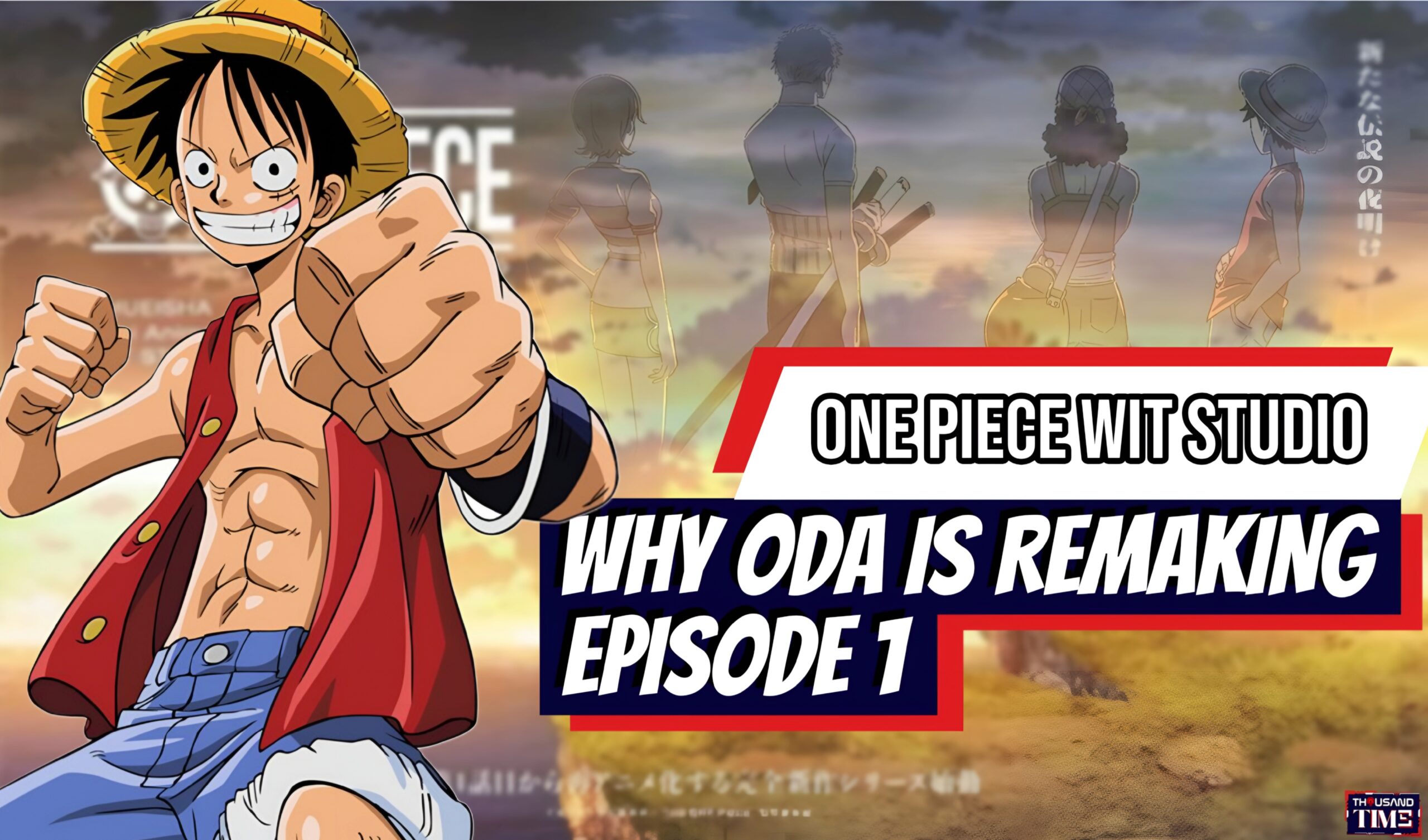
The 1999 Toei classic is legendary, but WIT Studio’s high-octane reboot isn’t just a remaster—it’s a necessary, brilliant evolution built for the next generation of anime fans..
Remaking a television show that is still currently airing is the kind of audacious flex usually reserved for tech companies launching a beta to replace another beta. Yet, when Shueisha, Netflix, and WIT Studio announced The One Piece—a ground-up remake of Eiichiro Oda’s pirate epic—the anime community didn’t just blink; it erupted.
For a quarter of a century, the original Toei Animation broadcast has been a Sunday morning institution. It is still running, currently delivering some of the most visually spectacular episodes in its history. So why hit reset now? The answer lies less in nostalgia and more in a shrewd, culturally aware strategy to future-proof the most successful manga of all time. This isn’t just a fresh coat of paint. It is a calculated admission that the way we consume media has fundamentally changed.
The Intimidation Economy of a 1,100-Episode Behemoth
Modern entertainment is defined by the “TikTok attention span”—a reductive term, perhaps, but one that accurately captures a generational shift in pacing preferences. Audiences raised on the blistering, zero-fat momentum of Jujutsu Kaisen or the cinematic seasonal drops of Demon Slayer often hit a brick wall when attempting to scale Oda’s masterpiece. The 1999 anime, for all its undeniable charm and historical weight, shows its age. It asks new viewers to endure standard-definition 4:3 aspect ratios, drawn-out reaction shots, and pacing designed to keep the anime from catching up to a weekly manga.
This friction has birthed a quiet regret surrounding the franchise. Recent internet discourse and creator interviews hint at Oda’s acute awareness that his story’s legendary starting point—the East Blue saga—is increasingly inaccessible to a younger demographic. The East Blue saga remake is born from a desire to fix this broken onboarding process. It isn’t about erasing the past. It’s about ensuring that the story’s emotional bedrock isn’t buried behind a wall of outdated pacing that alienates the exact audience it was originally written for.
Trading Omni-Directional Mobility for Rubber Physics
The pedigree here is staggering. By bringing in heavy hitters like director Masashi Koizuka and character designer Kyoji Asano, both renowned for their genre-defining work on Attack on Titan, Netflix is signaling absolute prestige. But it also raises a fascinating creative tension. How does a studio famous for dark, atmospheric horror and hyper-violent political thrillers handle the goofy, bright, and deeply earnest world of early One Piece?
The answer lies in kinetic energy. WIT Studio practically perfected 3D camera work and fluid, high-speed movement with their ODM gear animation. Now, imagine that same visceral understanding of weight and momentum applied to Luffy’s elastic rubber physics or Zoro’s lightning-fast sword styles.
WIT Studio One Piece promises a visual evolution. We are looking at a more dynamic, atmospheric East Blue. The lighting will be deeper. The combat will hit with a bone-rattling modern crunch. It is an aesthetic upgrade, yes, but it is also a mechanical one, designed to make the whimsy of Oda’s world feel grounded and dangerous in ways the 1999 technology simply couldn’t support.
Cutting the Fat to Save the Heart
The original East Blue narrative spans roughly 61 episodes. In the era of weekly syndication, that was standard practice. Today, it’s a structural vulnerability. By utilizing the modern seasonal anime model, WIT will likely condense this arc into a lean, zero-filler 20 to 24-episode run. This is where Eiichiro Oda pacing gets the modern polish it deserves.
There is a lingering fear among purists that a faster pace equates to a loss of emotional resonance. But tightening the narrative often does the exact opposite. Stripping away the padded mid-scene flashbacks, the prolonged stare-downs, and the anime-original filler doesn’t dilute the emotion. It sharpens it. Nami’s desperate, tearful “Help me” in Arlong Park, or Sanji’s deeply moving farewell to Zeff on the Baratie—these are some of the finest emotional beats in fiction. They don’t need padding. Delivered with modern cinematic timing, they will likely hit harder than ever before.
The Dual-Studio Experiment: A New Industry Blueprint
This Toei vs WIT animation narrative misses the larger point. We are witnessing a revolutionary approach to IP management. WIT is acting as the prestige onboarding team, handling the legacy arcs and inviting new fans through the door. Meanwhile, Toei Animation continues to push the boundaries of weekly television, delivering movie-quality animation in the current, bleeding-edge Egghead Arc.
They are coexisting. And the industry is watching. If successful, this dual-studio model could become the blueprint for other massive, aging franchises. It offers a way to keep long-running series culturally relevant and visually fresh from the beginning, all while preserving the active canon for the veterans.