With AMD’s Strix Halo chip pushing RTX-level power into a 7-inch screen, the era of the bulky gaming laptop might finally be ending. But are you ready for the battery backpack?
The working professional’s gaming dilemma usually looks something like this: You finally have an hour of free time at 9:00 PM. You want to play a heavy, immersive AAA title, but doing so requires retreating to a dark desk in the spare room, effectively banishing yourself from your own household. The traditional compromise has always been the gaming laptop, a device that promises portability but actually delivers a jet-engine fan, an uncomfortably hot keyboard, and third-degree burns on your thighs. It is a form factor that is rapidly starting to feel obsolete.
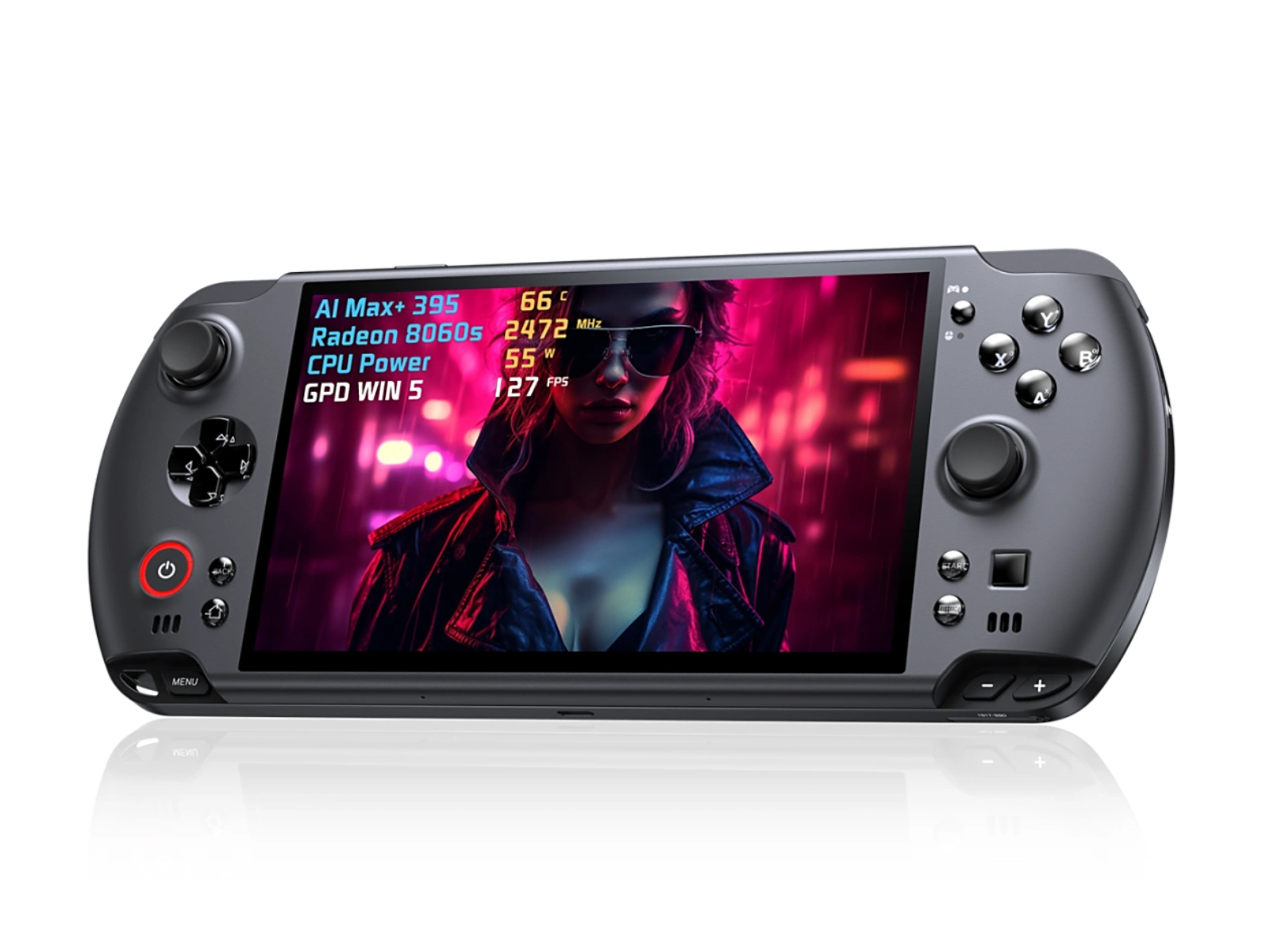
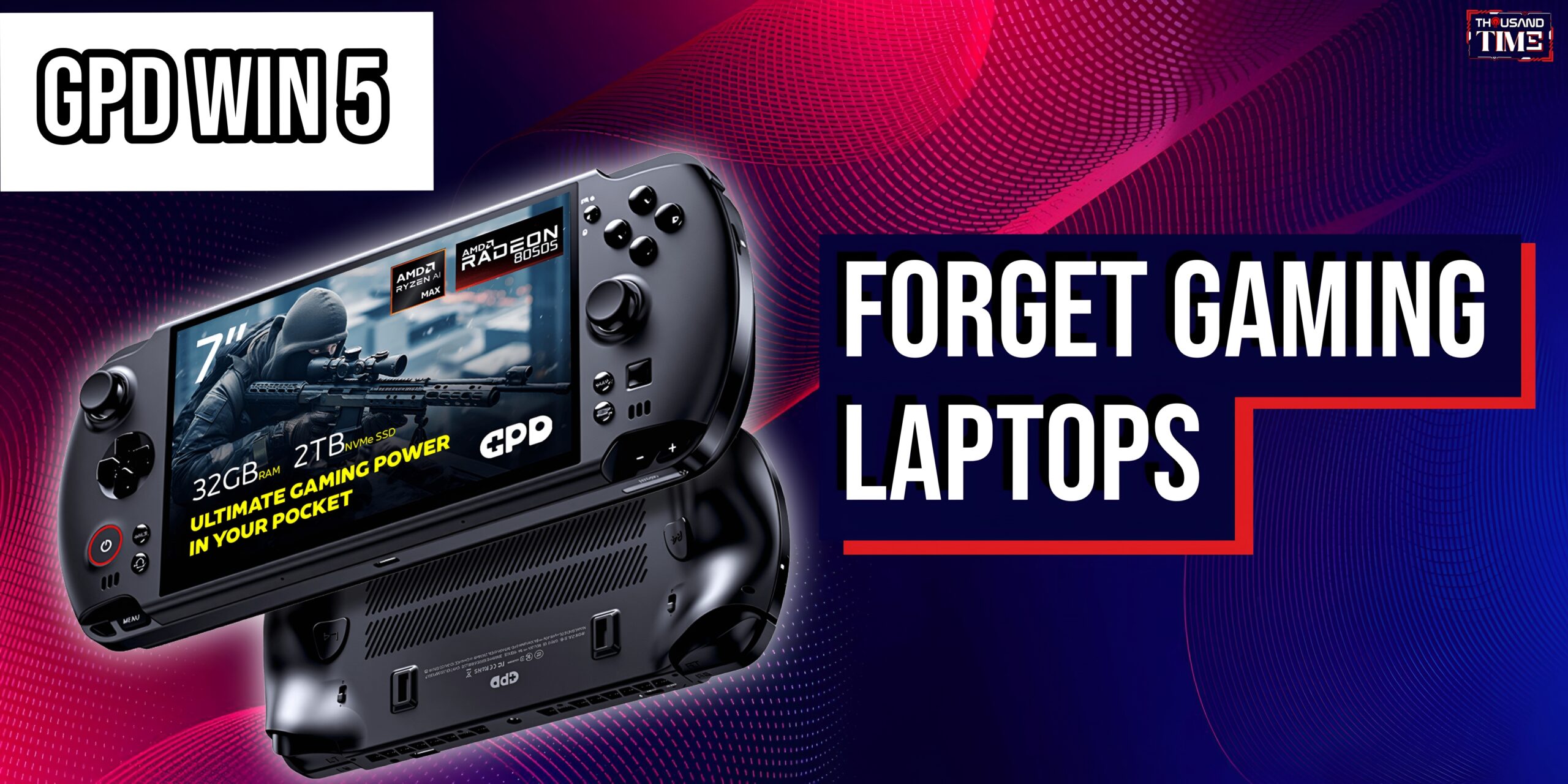
Enter the GPD Win 5. Powered by AMD’s new Strix Halo chip—specifically the 16-core Ryzen AI Max+ 395—this device crams PlayStation 5-level performance into a 7-inch chassis. It is a piece of hardware that fundamentally shifts the portable computing conversation. If you are wondering if a handheld pc can replace a gaming laptop, this is the first generation of silicon where the answer is a definitive, uncompromising yes.
Ditching the Bucket Seat for the Living Room
We need to be honest about the physical reality of gaming laptops. They are an awkward middle ground. They are too bulky for a crowded commute, too hot to actually use on your lap, and ultimately outclassed by a proper tower PC when tethered to a desk. Form factor dictates behavior. A five-pound clamshell laptop, no matter how sleek the marketing suggests, forces you to sit at a table. It demands a posture of work. A handheld, on the other hand, invites you to stay in the living room. It allows you to lie in bed and play Alan Wake 2 without waking your partner with the sound of a cooling system attempting to achieve liftoff.
When looking at the handheld pc vs gaming laptop 2026 landscape, the difference in user experience is staggering. Modern handhelds like the Win 5 direct heat out of the top vent, away from your hands and lap. They offer targeted, efficient cooling designed for grip, rather than a wide slab of plastic that traps heat against your legs. The laptop was designed for typing first and gaming second. The handheld prioritizes the play experience, seamlessly integrating into the casual spaces of your home rather than demanding a dedicated surface.
The “One Device” Fantasy Realized
Portability is only half the equation. The true test of a laptop replacement is what happens when you need to do actual work, or when you want to play a competitive shooter on a 27-inch monitor with a mouse and keyboard.
This is where the GPD Win 5 stops being a mere console and becomes a legitimate modular workstation. Thanks to its USB4 and OCuLink ports, the docking ecosystem is remarkably frictionless. You can plug this 7-inch slab into a monitor, pair your peripherals, and suddenly you are editing 4K video or crunching spreadsheets on a machine with up to 128GB of high-speed RAM.
It feels like a magic trick. Any recent amd strix halo gaming test will confirm that the Radeon 8060S graphics chip inside this machine rivals a desktop RTX 4060. We are no longer talking about “good for a handheld” performance; we are talking about uncompromised, 60-teraflop desktop power. You are not scaling down settings to low and praying for 30 frames per second. You are running modern titles at 120Hz natively. By splitting the difference between a high-end ultraportable and a dedicated gaming rig, the Win 5 makes a brilliant case for itself as the best desktop replacement handheld on the market today. It is the “one device” fantasy finally realized.
The Price of Modularity (and the Battery Backpack)
Of course, living the “one device” lifestyle requires a few compromises. The first is financial. At well over $2,000 for a high-end configuration, the Win 5 is priced like a premium workstation, not a casual toy. The second compromise is physical. Silicon has shrunk exponentially; battery physics has not. To feed a chip capable of drawing up to 75 watts in a handheld form factor, GPD had to make a drastic design choice. The result is the gpd win 5 external battery. Instead of sealing a tiny, inadequate battery inside the shell, the device relies on a massive, 80Wh power bank that physically clips onto the back of the unit.
It is undeniably clunky. With the battery attached, the Win 5 balloons to over 900 grams—nearly double the weight of older handhelds. But it is also a fascinating reflection of where technology currently sits. We have engineered the silicon to shrink a console into our palms, but we lack the chemical energy storage to keep it alive without strapping a brick to it.
Is the battery backpack an elegant solution? No. But it is a necessary one, and it is a trade-off many will gladly accept for the sheer versatility it unlocks. You can pop the battery off when plugged into the wall to keep the device light, and snap it back on when you head to the couch. It is modularity born of necessity.
Thousandtime Thoughts
The definition of a “PC” has permanently fractured. For decades, computing power was inextricably linked to physical volume—the bigger the box, the better the performance. The GPD Win 5 proves that you no longer have to choose between extreme power and extreme portability, but it also highlights how miniaturization has become a strange new kind of luxury. As our hardware outpaces our ability to comfortably hold it, we are left navigating bizarre physical compromises, like strapping 80-watt-hour battery packs to the back of our screens just to sustain the illusion of untethered freedom. Yet, despite the clunkiness, the era of the clamshell gaming laptop feels like it is on borrowed time.
Why buy a device that is mediocre at both working and traveling when you can own a modular core that excels at both? The power of a full desktop now fits comfortably inside a backpack. It leaves us with one lingering question: if our handhelds are now as powerful as our towers, do we even need desks anymore?
PRODUCT IN THIS POST