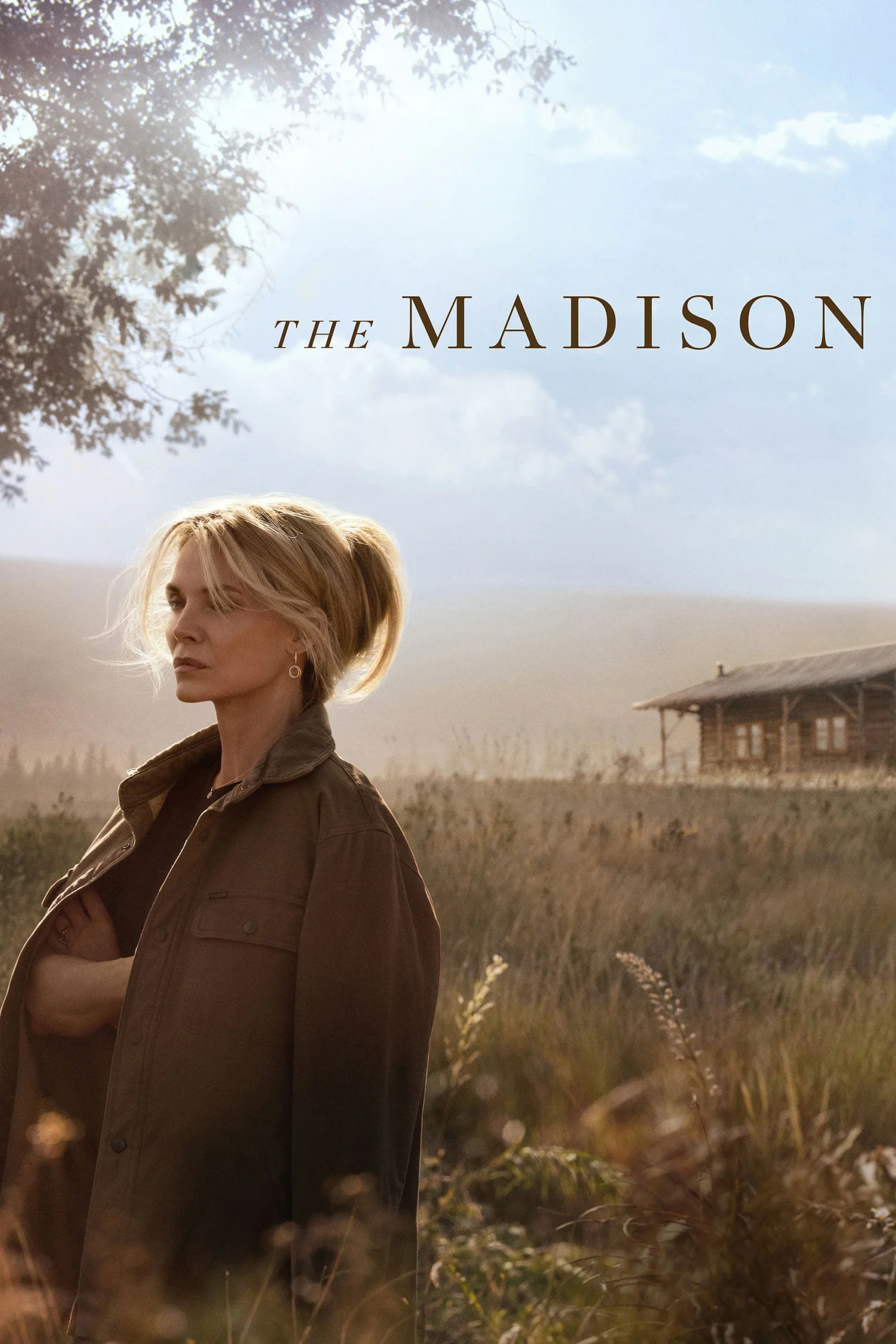
Wondering if The Madison is connected to Yellowstone? We break down why Taylor Sheridan’s new drama is completely separate from the Dutton universe.
Sweeping Montana vistas. The familiar, slightly melancholic twang of acoustic guitars. Prime high-end ranch real estate. Taylor Sheridan’s name looming large in the opening credits. If you tuned into the premiere, you would be entirely forgiven for bracing yourself for a shootout at a cattle guard. But with Taylor Sheridan at the helm, the biggest question viewers have following the Season 1 finale is: is The Madison connected to Yellowstone in any official capacity?
It is an understandable point of confusion. The Madison just wrapped its tight, beautifully paced six-episode first season on Paramount+, dropping Michelle Pfeiffer’s grieving New York matriarch, Stacy Clyburn, into the rugged American West after a tragic plane crash claims the life of her husband, played with characteristic grit by Kurt Russell.
The aesthetic screams Dutton. The narrative, however, firmly declines the invitation to the bunkhouse. To understand why The Madison matters—and why cutting the official cord from the Dutton extended universe was actually the smartest creative move the series could have made—we have to look at how modern television franchises are built, and how they occasionally need to be dismantled to let a good story breathe.
The ‘2024’ Origins: Why Fans Expected a Dutton Spinoff
For the better part of a year, the internet operated under the assumption that Michelle Pfeiffer was about to step into a direct sequel to television’s biggest neo-Western. The confusion wasn’t born out of thin air; it was baked into the show’s early development. The Madison originally began its life under the working title 2024. For anyone keeping score of Sheridan’s sprawling Paramount empire, that title neatly followed the naming convention established by the historical prequels 1883 and 1923. The cultural expectation was set: this would be the show that carried the Dutton legacy into the present day, perhaps picking up the pieces left behind by the flagship series’ tumultuous conclusion.
But television development is rarely a straight line. Somewhere during production, a crucial pivot occurred. Paramount+ officially announced the project not as a spin-off but as a standalone neo-Western. This was a massive, calculated risk. Yellowstone is an absolute juggernaut, a guaranteed built-in audience for any property brave enough to wear its brand. Yet, it is also an exhausting one. The flagship series has been bogged down by highly publicized contract disputes, rumors of behind-the-scenes friction, and the looming specter of plain old franchise fatigue.
Audiences are increasingly wary of “homework TV”—shows that require you to have watched three other series and read a wiki page just to understand a passing reference in episode four. Untethering from the Yellowstone universe allowed Sheridan to write something entirely different. Freed from the logistical nightmare of maintaining franchise canon, The Madison didn’t have to check if a specific valley was previously claimed by John Dutton. Instead, the show evolved into a quieter, highly dialogue-driven, and intimate study of grief. It is a show that doesn’t need to wedge in a legacy cameo to justify its existence, proving that Sheridan’s writing is often sharpest when he isn’t playing with established action figures.
The Clyburn Family Rules: How ‘The Madison’ Stands Alone
If Yellowstone is essentially The Godfather on horseback, The Madison is something closer to a prestige family stage play that happens to be set outdoors.
The narrative mechanics of the two shows operate in fundamentally different universes. In the Dutton world, problems are solved through political assassinations, complex ranching politics, and trips to the infamous “train station.” Gang-style violence is the currency of the realm.
The Clyburn family operates under a different set of rules. The violence in The Madison is remarkably minimal, driven by sudden, messy family outbursts rather than the cold efficiency of hired guns. The central tension isn’t about saving a land empire from coastal developers. Instead, the conflict is deeply internal. It is Stacy Clyburn wrestling with overwhelming survivor’s guilt, trying to hold her fractured family together while buckling under the crushing weight of sudden widowhood.
The Duttons fight to keep the modern world out of Montana. The Clyburns are wealthy New Yorkers desperately trying to figure out how to exist within it.
This culture clash provides a rich vein of dark, observational humor that feels entirely new for Sheridan. Watching a family accustomed to Manhattan penthouses violently adjust to rural realities—including a memorable and humbling encounter with a frozen outhouse—offers a different kind of friction than cattle rustling. It is less about dominating the land and more about surviving it.
Crucially, The Madison shifts the lens from patriarchal warfare to maternal survival. The critically praised, agonizingly intimate chemistry between Pfeiffer and Russell in the pre-crash flashbacks anchors the emotional weight of the series. When Russell is gone, the vacuum he leaves behind forces the women of the family into the foreground. The resulting dynamic is messy, resentful, and deeply human. By refusing to be Yellowstone, The Madison became exactly what streaming television desperately needs right now: an adult drama that asks you to care about the people on screen not because of their last name, but because of their pain.
Thousandtime Thoughts
The massive streaming debut of The Madison proves a fascinating point: audiences are hungry for Taylor Sheridan’s specific Western aesthetic, even without the Dutton family name attached to it. We might be witnessing the evolution of the “Sheridan-verse” from a literal cinematic universe into something closer to a signature mood.
Rather than relying on the interconnected franchise model—where every character must eventually cross paths or share an ancestor—branding a show purely by its creator’s atmospheric style is proving to be incredibly valuable. The Madison succeeds entirely on its own emotional merit and atmospheric world-building. If a show can pull these kinds of numbers without leaning on established IP, does this signal the beginning of the end for the expansive, exhausted franchise model in streaming? It suggests that viewers don’t necessarily need a sprawling corporate lore bible to stay invested. They just need a compelling human story, a wide-open sky, and a creator confident enough to let it stand alone.
SERIES IN THIS POST