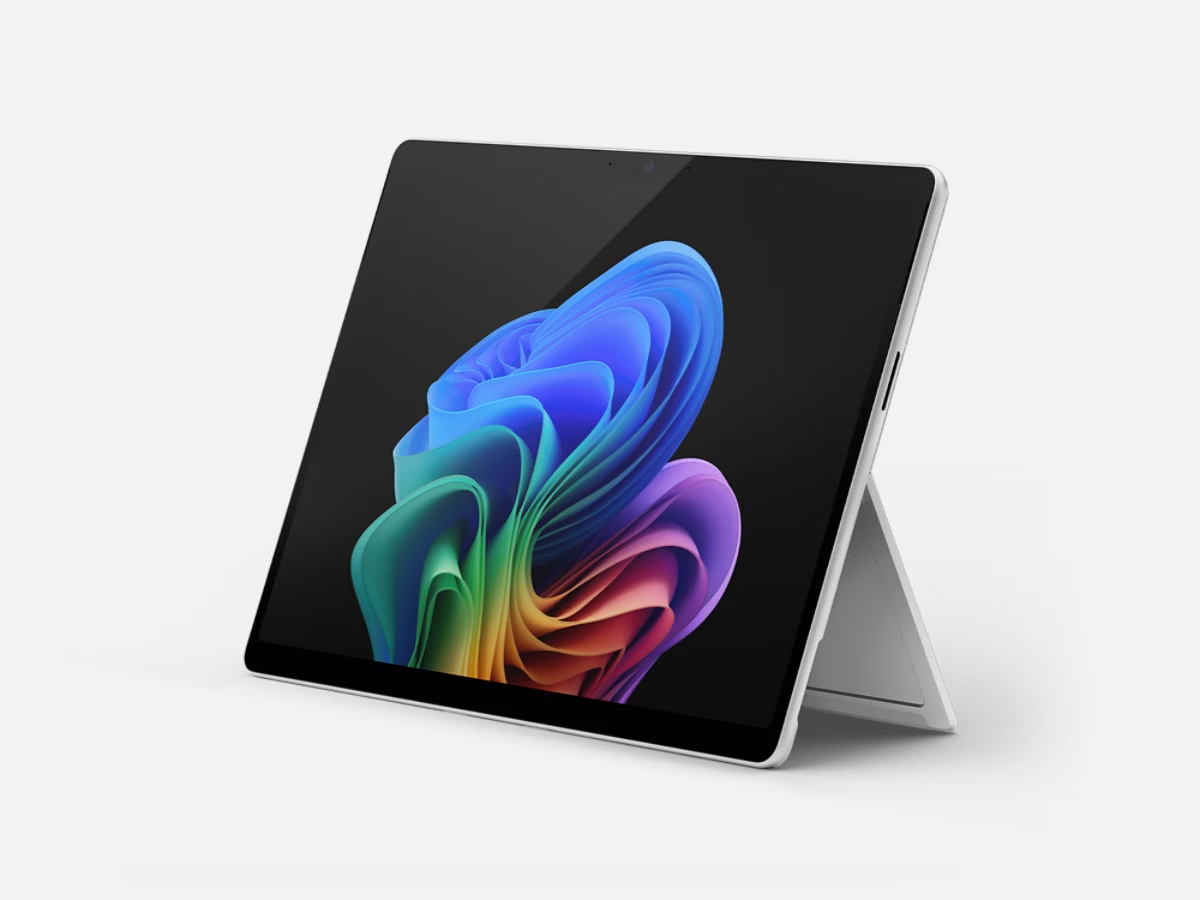
Two years after the relentless “Copilot+ PC” hype, we revisit Microsoft’s massive ARM gamble to see if it finally became the ultimate creator tablet—or if it’s still forcing compromises.
Cast your mind back to the chaotic, buzzword-heavy summer of 2024. It was a strange, feverish moment in the technology sector. Every CEO with a microphone was shouting about “Copilot+”. The marketing blitz was inescapable, promising a day-one AI revolution that would fundamentally alter how humans interacted with their machines. Amidst that deafening noise, Microsoft launched its most ambitious hardware pivot in a decade.
Initial reviews of the device were generally positive, but they carried a distinct, unified note of caution regarding the new ARM architecture’s app compatibility. The hardware felt like a revelation, but the software felt like an IOU.
Now, the dust has settled. It is 2026, and the frantic AI marketing cycle has predictably moved on to its next shiny object. We are no longer interested in the promises Microsoft made two years ago; we are judging this device based on what it is today. Two years is the true test of any platform shift. People do not want to buy a corporate vision. They just want a device that works flawlessly at a coffee shop or on a flight.
The Intended Master vs. The 2026 Reality
When this machine debuted, Microsoft thought they were building a device for absolutely everyone. They aggressively marketed it as an iPad killer and a direct MacBook Air rival. The ambition was staggering. It was presented as a universal tablet that could somehow serve as a casual media viewer, a cinematic rendering station, and an enterprise workhorse all at once.
That was the pitch. But time has a way of clarifying things. By 2026, the true “best fit” user for this device has crystallized into something much more specific. It does not belong to the hardcore 3D animator or the competitive gamer. Instead, it serves perfectly today as the ultimate tool for the mobile nomad, the digital executive, and the light-to-medium visual creator. These are professionals who prioritize a cellular, ultra-light form factor over raw rendering brute force.
Accepting a tablet as your primary PC in 2026 means letting go of spec-sheet obsession and embracing environmental flexibility. The true deciding factor for this demographic isn’t the silicon inside, but the Flex Keyboard. After two years of constant bending, detaching, and tossing into carry-on bags, the keyboard’s sheer longevity has proven to be the anchor of the experience. It reliably turns a glass slate into a tactile workstation without missing a beat, making the modern hybrid workflow possible.
Windows on ARM in 2026: Did the Ecosystem Catch Up?
At launch, the Snapdragon X Elite chip was undeniably, incredibly fast. But raw speed does not matter if you are running in quicksand. The x86 emulation layer—dubbed Prism—was a severe bottleneck. Apps stuttered. Battery life drained unpredictably under heavy legacy loads. Early adopters were, effectively, paying to beta test Microsoft’s transition layer. It is time for a software reality check. Have things fundamentally changed?
If you are searching for “windows on arm creator apps 2026,” the landscape is vastly different today than it was at launch. The major pillars of creative work have finally arrived. Programs like Adobe Premiere, Illustrator, and DaVinci Resolve run natively now. The experience is fluid and responsive, offering a stark contrast to the sluggish emulation of 2024. Did the app ecosystem actually catch up to the Snapdragon X Elite architecture by 2026, or are users still dealing with emulation lag?. For mainstream creative workflows, it absolutely caught up. But the transition is not flawless. There are still lingering ghost towns in the app store. If your daily routine relies on niche plugins, older games, or specific enterprise VPNs, you will still hit frustrating brick walls.
Yet, it is vital to separate the tech reviewer echo chamber from how humans actually work. In 2024, tech YouTubers endlessly complained about specific benchmark tests, pushing the device to synthetic limits. Today, real-world creatives are actually using it to effortlessly edit vertical video for TikTok and Shorts on planes. The device handles the modern, fragmented workflow beautifully, even if it does not top an artificial rendering score.
Hardware Endurance and The Resale Market Context
A computer is a physical object. It gets dropped, left in hot cars, and stared at for thousands of hours. How the physical device has aged is just as important as its software updates when evaluating its current worth against the 2026 tablet market. Let’s talk about the OLED screen. After 24 months of displaying heavy UI elements—static taskbars, persistent browser tabs—we have to evaluate the dreaded OLED screen burn-in. Surprisingly, the lack thereof is remarkable. Microsoft’s subtle pixel-shifting mitigations seem to have held the line, preserving the deep blacks and vibrant contrasts that made the display so striking on day one.
Battery life is another critical metric. We must look at battery cycle degradation. Two years in, is it still a true “all-day” machine?. Yes, though with the usual caveats of chemical aging. It still easily outpaces the thermal constraints of the older x86 Surface Pros, maintaining enough stamina for a transcontinental flight without reaching for a charger.
Then there is the current, likely discounted market price. The premium tablet market is ruthless. When looking at the Surface Pro 11 vs. iPad Pro M4 long-term, the comparison shifts. The iPad Pro M4’s long-term aging has proven robust, and 2026 ultra-books are pushing new boundaries. But a two-year-old, depreciated Surface Pro 11 sits in a fascinating sweet spot of value and capability.
This brings us to “upgrade anxiety.” If someone is currently holding onto an aging Surface Pro 8 or 9, they face a dilemma. Is a discounted, two-year-old Surface Pro 11 a smarter buy than the newest 2026 entry-level hardware?. Given how well the Snapdragon chassis has physically endured, and how far the ARM software has matured, the answer leans heavily toward yes. The initial gamble has finally paid off.
Thousandtime Thoughts
There is a distinct, frustrating tension in buying hardware for “future promises” versus “current realities”. Looking back at this release, Microsoft clearly exhibited its historical pattern of releasing hardware that is slightly ahead of its software ecosystem. It is gently unsettling how the tech industry continuously forces consumers to serve as early-adopter beta testers, paying premium prices to smooth out the rough edges of a corporate transition.
The Surface Pro 11 wasn’t just another annual update; it was the messy, necessary bridge to the ARM future. Today, in 2026, that bridge is finally safe to cross. The severe emulation penalties have largely faded, and the physical hardware has proven remarkably resilient. Yet, it leaves us with a lingering question. If the Surface Pro 11 finally achieved Microsoft’s ultimate 2-in-1 dream, why does the tablet market still feel like it’s waiting for the next big thing?
PRODUCT IN THIS POST