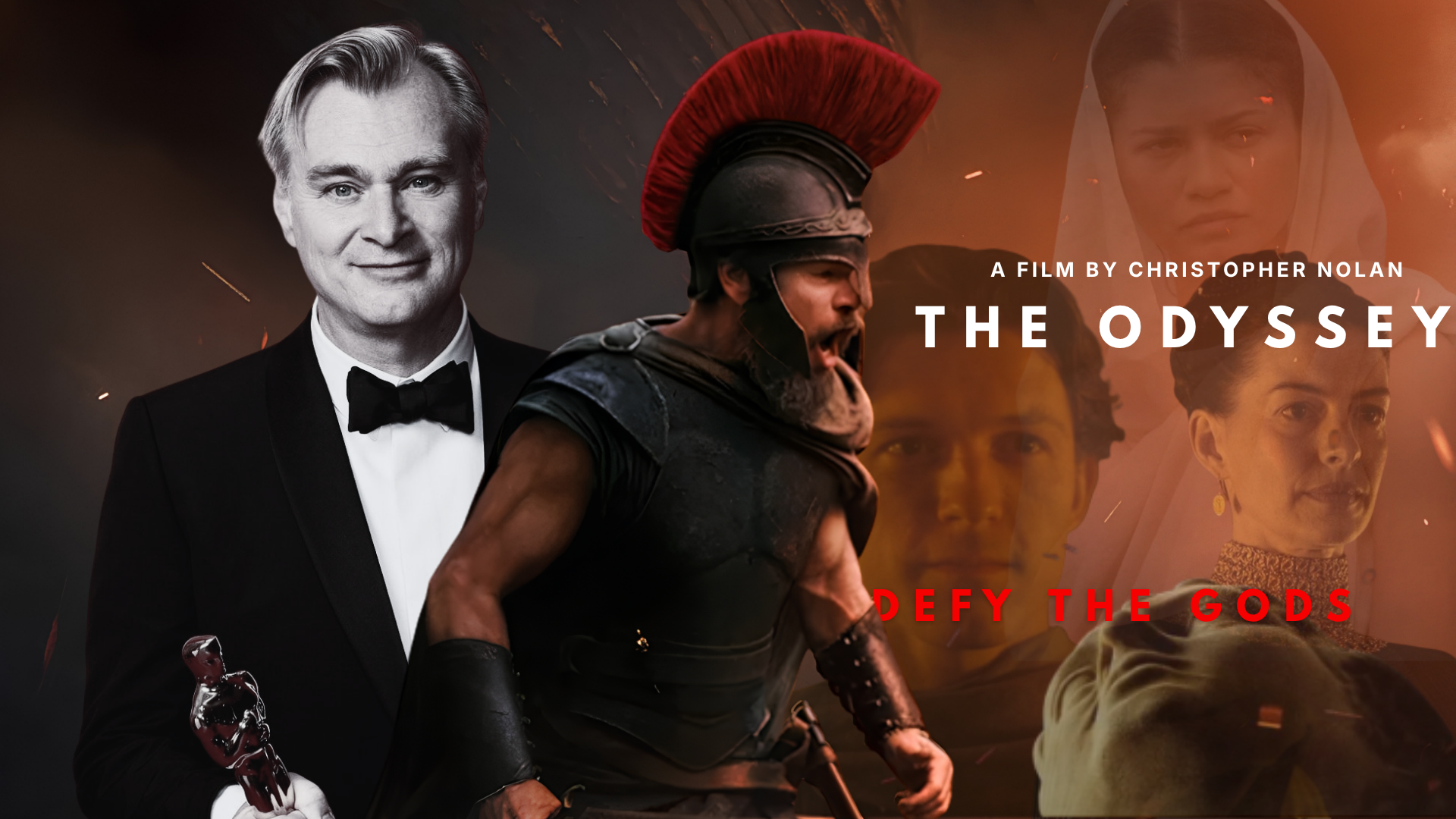
Christopher Nolan’s $250 million adaptation, starring Matt Damon, trades Homer’s clever, glory-seeking king for a shattered veteran who can’t find his way home — even after he’s home. Here’s what actually changed, and why it had to.
Every version of The Odyssey assigned in tenth-grade English ends the same way it begins: with a clever man solving problems other men can’t. He blinds a Cyclops with a sharpened stake and a fake name. He straps himself to a mast so he can hear the Sirens sing without dying for the privilege. He strings a bow that no other man in Ithaca can even bend. It’s a story engineered for admiration — a résumé of triumphs dressed up as a homecoming.
Christopher Nolan’s new film, which opens in theaters today after one of the strangest productions of his career, keeps most of those beats. What it strips away is the résumé. This Odysseus — played by a hollowed-out, quietly ferocious Matt Damon — isn’t solving problems so much as surviving them, and the gap between those two things turns out to be the entire point. It’s also the real question behind all the differences from Homer that Nolan’s Odyssey has introduced: why spend a quarter of a billion dollars reworking a poem that already worked?
The short answer involves an R rating, a runtime pushing three hours, and a cast stacked deep enough — Damon, Anne Hathaway, Tom Holland, Zendaya, Robert Pattinson, Charlize Theron — that Universal’s marketing team barely had to lift a finger. It’s Nolan’s first film since Oppenheimer swept the Oscars, and it has landed with critics about as well as a summer blockbuster can land, hovering near a career-best 98 percent on Rotten Tomatoes and edging out even The Dark Knight. None of that, though, explains the discourse. People are arguing about this movie because Nolan didn’t just modernize The Odyssey. He performed something closer to a diagnosis.
The Man of Many Wiles Becomes a Man of Many Wounds
Homer’s Odysseus carries an epithet that tends to get flattened in casual retellings: polytropos, usually rendered as “man of many wiles,” or, in Emily Wilson’s widely read 2017 translation — one of Nolan’s own stated reference points — simply “complicated.” The Homeric hero doesn’t just survive his obstacles. He seems to enjoy them a little. He lies for sport, invents fake identities on a whim, and takes visible pride in being the smartest person in whatever myth he’s wandered into. Suffering, in the original poem, is the toll he pays for being clever. It’s rarely the actual subject.
Nolan’s film inverts that ratio almost completely. Reviewers describe Damon’s performance as introspective and stripped of anything resembling swagger — a man who spends the movie’s back half undone by the very cunning he was once proud of. Hollywood Reporter‘s review had a blunter way of putting it: “Call it Ancient Greek PTSD.” That tracks with what people close to the production have said themselves. Damon has recounted that a veteran working on the film told him the whole thing reads, to him, as being about PTSD — and Damon didn’t push back on the read.
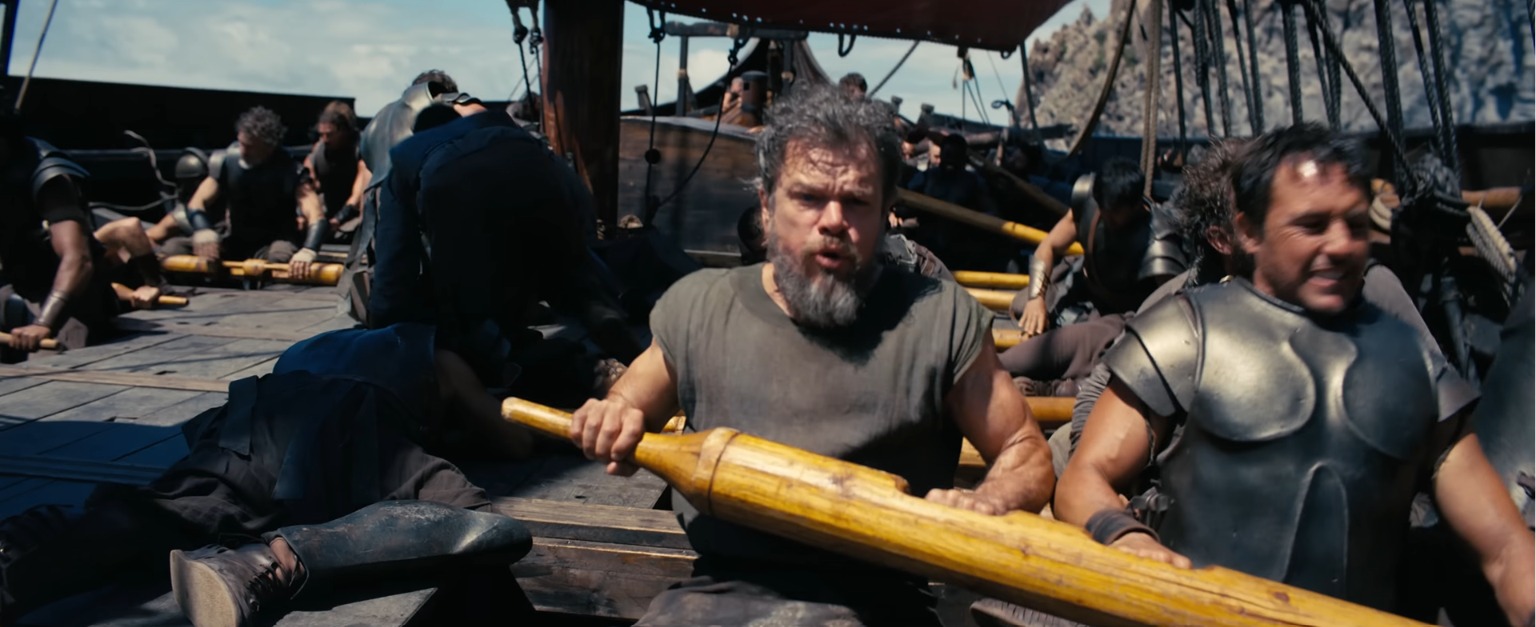
This is also where the film takes its boldest liberty, and where purists have the most legitimate complaint. Sinon — the soldier who convinces the Trojans to drag the wooden horse through their own gates — doesn’t actually appear in Homer’s Odyssey. He’s borrowed from later tradition, most famously Virgil’s Aeneid. Nolan imports him anyway, and in doing so relocates the film’s real wound to a moment Homer never wrote: Odysseus manipulating his own kinsman into a sacrifice that guarantees the fall of Troy. By several critics’ accounts, that’s the moment the war stops being fought against Troy and starts being fought against Odysseus’s own conscience — a fight that follows him across every island for the next ten years.
So, is Nolan’s Odyssey “accurate” to Greek myth? Depends what you mean by accurate. The gods haven’t been erased. Zendaya’s Athena appears throughout the film, and lightning still cracks at conveniently ominous moments. But Nolan, by his own account, was drawn to something more specific: the idea that everything ancient people once explained through gods — thunder, earthquakes, the ocean’s temper — is stuff we now explain through science. So the film never quite confirms whether Athena is a literal goddess or a psychological stand-in. Several critics read her as bound up with the memory of a priestess killed during the sack of Troy, her image resurfacing as the only language Odysseus has left for guilt. Both readings hold up. That ambiguity is the whole trick: the divine machinery of the original poem stays intact, but its authority quietly transfers to psychology.
A Cyclops You Can Practically Smell
If the gods got philosophically slippery, the monsters went the opposite direction — aggressively, unmistakably physical. Nolan has never been a director who reaches for CGI when a real object will do, and The Odyssey may be the most extreme expression of that habit in his filmography. Polyphemus, the Cyclops who traps Odysseus and his men in a cave, wasn’t built in a computer. He was built as a sixty-foot practical rig combining animatronics and puppetry, with Bill Irwin — the performer who voiced and operated TARS in Interstellar — providing his movement and growl from somewhere inside the machinery.
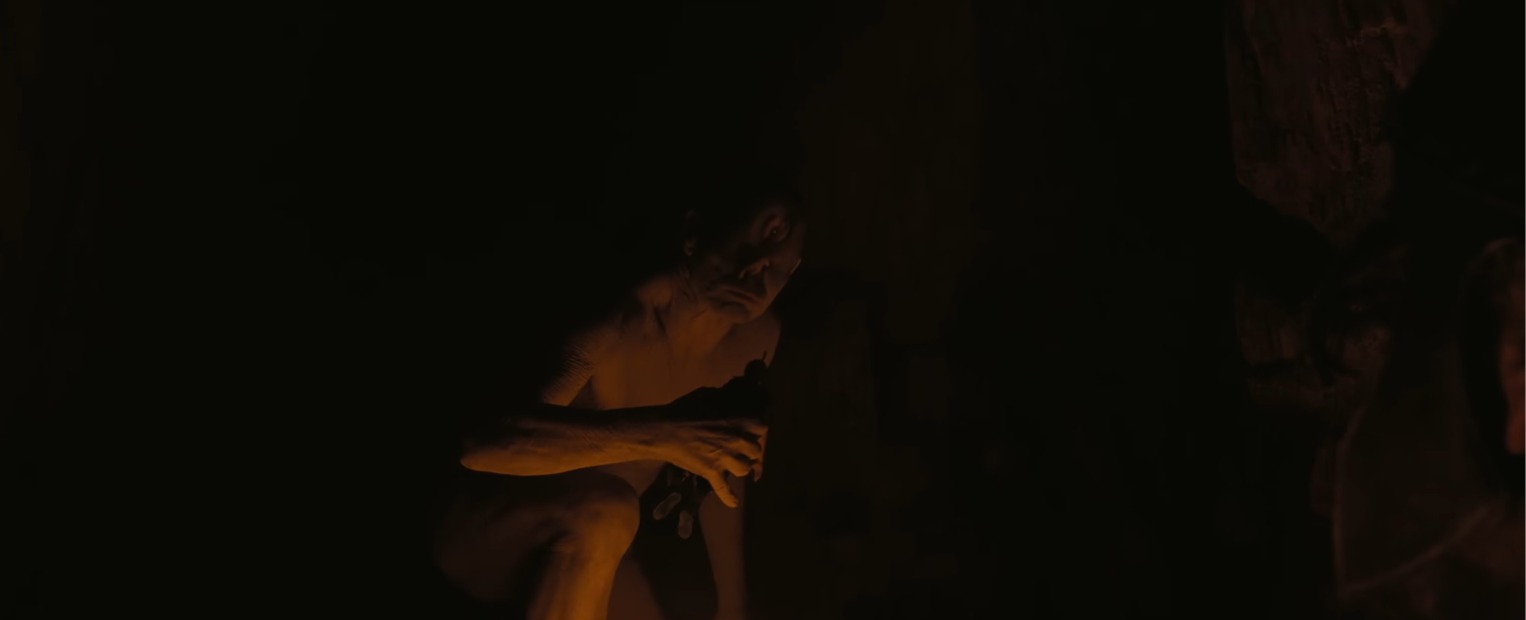
Nolan has said the whole sequence was built around a single question, one he posed to Empire: “What would this be like in real life?” So instead of a soundstage, the production shot inside an actual cave in Messenia, Greece, complete with a genuine swarm of bees at the entrance and forty real sheep crowded inside for scale — and, unavoidably, smell. Ask Damon about the experience and he doesn’t reach for a word like “magical.” By his own account, across roughly eighty films, this was the hardest shoot of his career, one that demanded months of physical transformation before a single scene was in the can.
There’s a strange, effective logic running underneath the whole production: the parts of the myth that could plausibly be real — sheer cliffs, oppressive caves, a sixty-foot monster you can practically smell — get rendered with obsessive, tactile precision. The parts that were always metaphysical — gods, fate, prophecy — are the ones Nolan leaves genuinely uncertain. Homer’s original audience believed in both halves equally. We don’t. Nolan built an entire production around that gap.
We Finally Have a Word for What Odysseus Went Through
None of this would land the way it does if audiences in 2026 weren’t already fluent in the vocabulary Nolan is borrowing. This isn’t even a new critical move, really. Back in 2002, psychiatrist Jonathan Shay published Odysseus in America, an entire study built on the premise that Homer’s poem is one of the earliest and most precise descriptions we have of a combat veteran’s failure to fully come home — years before “moral injury” entered mainstream conversation. Shay had made a similar case about the Iliad and Vietnam veterans nearly a decade earlier. Nolan isn’t inventing this reading of the text. He’s just the first person with a quarter-billion dollars and access to IMAX cameras willing to stage it at scale.
That’s probably the fairest response to anyone frustrated that this isn’t a strictly faithful adaptation. It’s faithful to something. Just not to the plot mechanics a lot of us memorized for a tenth-grade quiz.
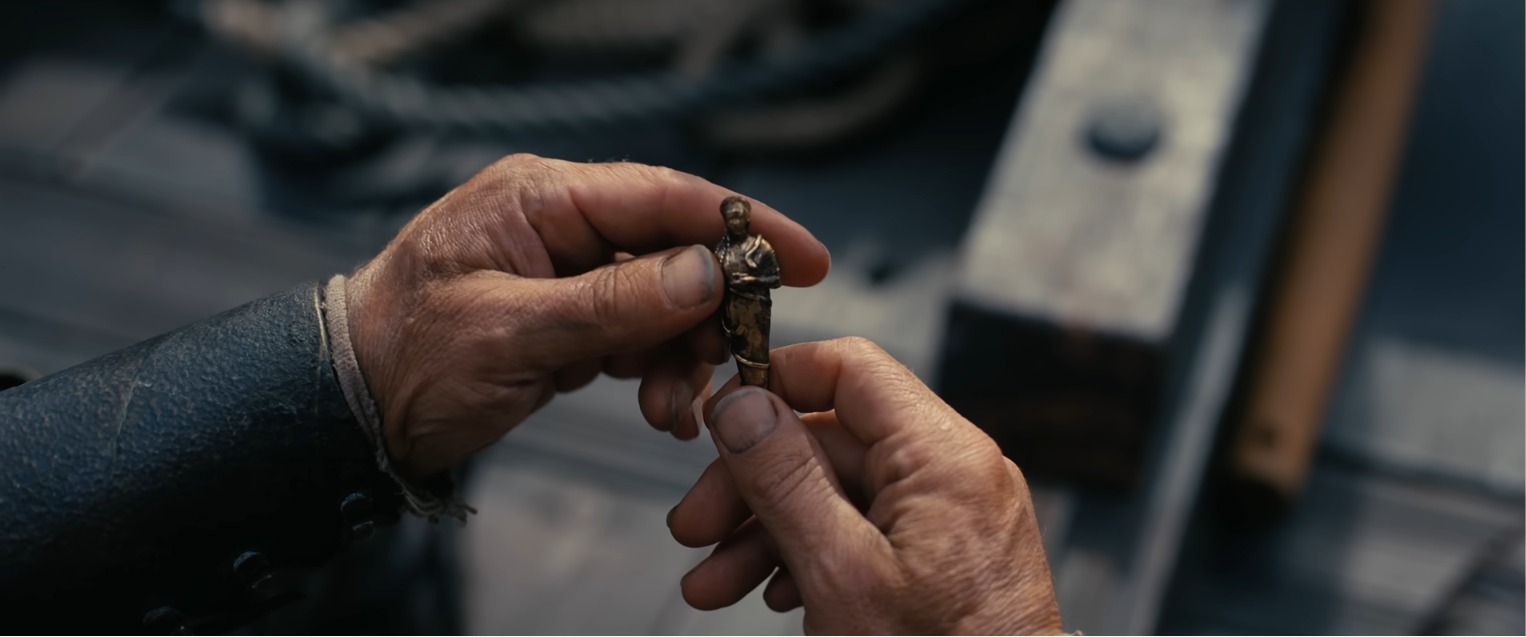
Homer’s poem wasn’t handed down as a fixed text, either. It existed for centuries as oral performance, reshaped slightly by every bard who sang it, tuned each time to whatever a particular audience most needed to hear. Nolan, sixty-foot animatronic Cyclops and quarter-billion-dollar budget aside, is doing something closer to that old job than most modern remakes even attempt. He hasn’t broken the story. He’s recited it to a room that’s finally ready to hear what it was always about.
Thousandtime Thoughts
Every culture invents its monsters out of whatever it’s least willing to say plainly. Homer’s Greeks couldn’t diagnose a soldier with PTSD, so they gave him a Cyclops instead — something external, something you could at least stab. We don’t have that excuse anymore. We have the clinical language. We have the research. And we still, more often than not, prefer the monster.
That’s worth sitting with longer than the runtime allows. Nolan didn’t drag The Odyssey into the present so much as expose how little distance there ever was between a Bronze Age war poem and an ordinary conversation about a friend who came back from deployment changed. The myth didn’t get more relevant. We just ran out of ways to avoid what it was describing all along.
Which leaves an uncomfortable question for anyone walking out of the theater a little rattled: if the heroes of our oldest stories showed up in a waiting room today, would we still be building them statues? Or would we finally just hand them a card with a therapist’s number on it?
MOVIE IN THIS POST
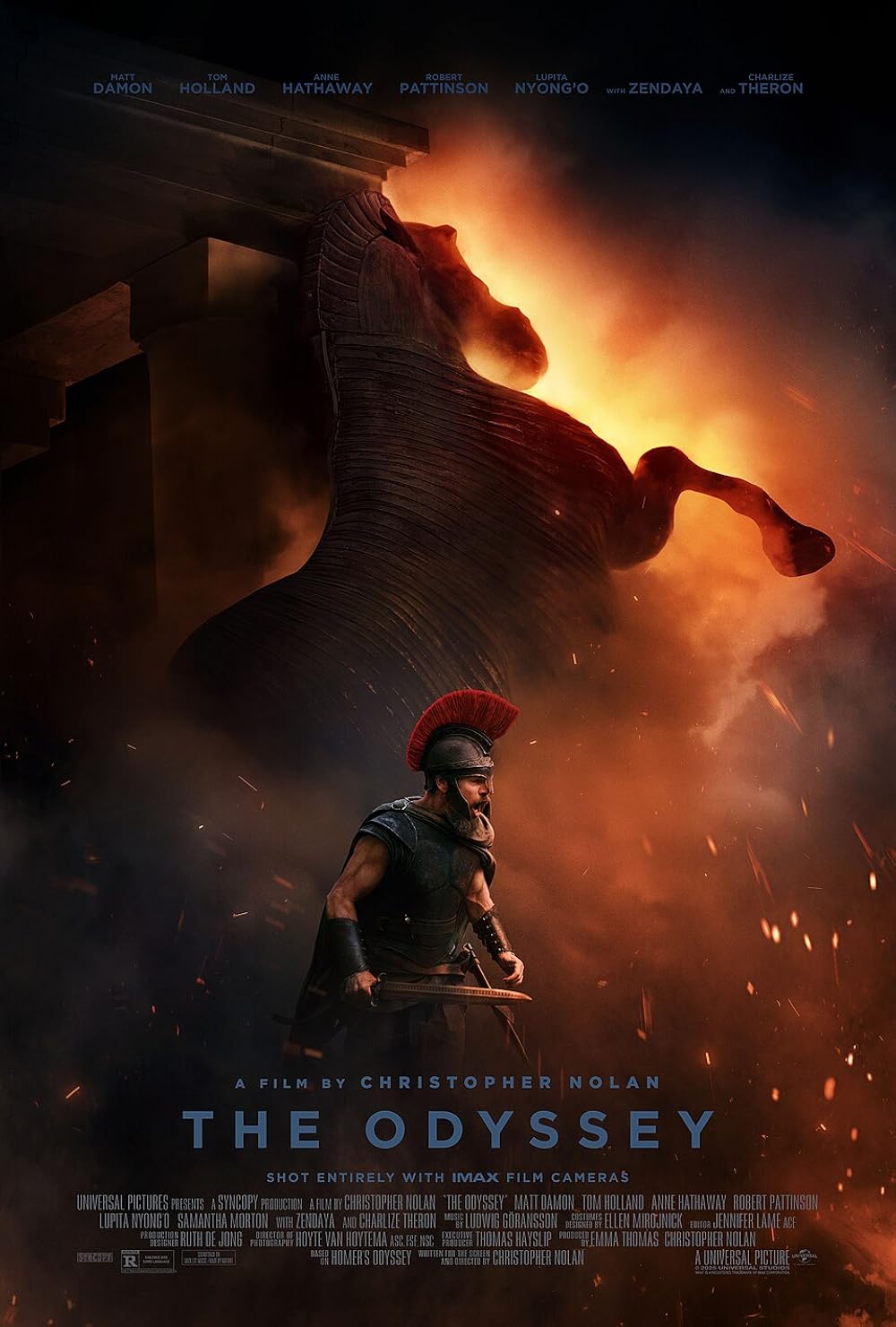
THE ODYSSEY
Content you might like after reading this

Is The Madison Connected to…
Why Super Mario Galaxy Sets…
Hoppers Movie Review: Pixar’s Weirdest…
Harry Potter HBO: Will HBO…
Why Season 3 is the…
James Gunn’s Supergirl: Fan Expectations,…