
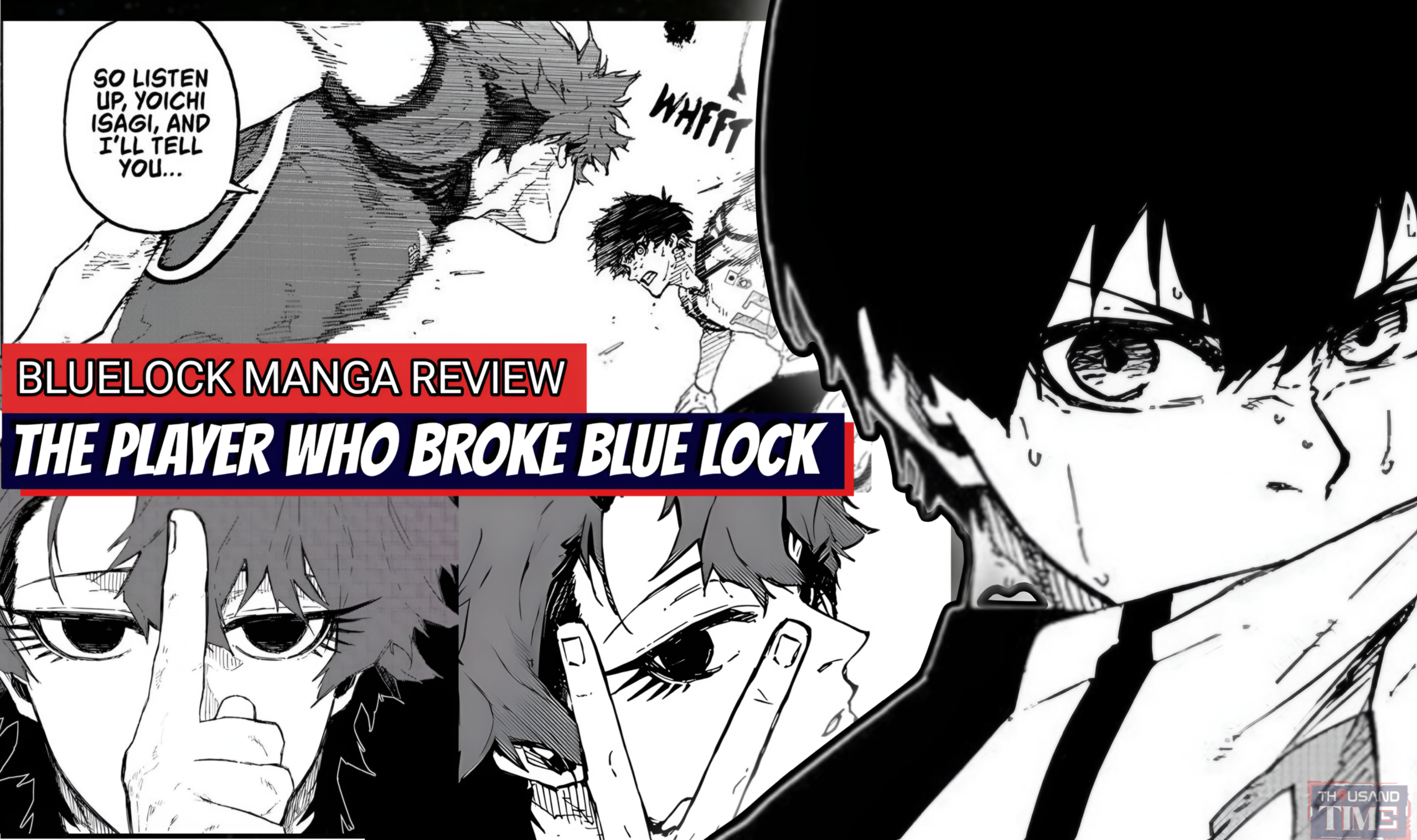
Why the most dangerous player on the pitch isn’t even trying to score—and what it teaches us about modern ambition.
For years, Blue Lock has operated on a single, unflinching premise: absolute, devouring individualism.
The wildly popular soccer manga was built on the philosophy of its eccentric mastermind, Jinpachi Ego, who preaches that the only way to forge the world’s greatest striker is to cultivate a supreme, unyielding arrogance. To win is to consume the dreams of the players around you. To pass is to admit defeat. It is a brutal, hyper-capitalist vision of sports, where every player is desperately clawing their way to the center of the spotlight.
And then came Hugo.
In the current, highly anticipated Japan vs. France match, the narrative has thrown a massive wrench into the machine. Hugo is an anomaly. Instead of fighting for the spotlight, he actively desires to be the shadow. He doesn’t want to be the star; he wants to be the ultimate facilitator, the invisible architect who makes the light shine brighter.
This completely shatters the worldview of the protagonist, Yoichi Isagi. Isagi’s entire tactical framework—a predictive, hyper-analytical awareness dubbed “Metavision”—relies on reading the field as a chessboard of selfish actors. Metavision works because it assumes everyone is moving rationally toward their own glory. It calculates the trajectory of human greed.
But what happens when an opponent is motivated purely by contentment in a supporting role? The math falls apart. When there is no ego to predict, Isagi’s formula breaks. The shadow blinds him.
The Exhaustion of the Main Character
The introduction of Hugo hasn’t just scrambled the on-pitch tactics; it has sparked a massive debate across the internet. Fans aren’t just arguing about soccer formations. They are arguing about how we live.
It is easy to see why. Isagi’s endless, terrifying hunger mirrors the modern “grindset.” He is the ultimate avatar for hustle culture—the mindset that demands constant optimization, endless ambition, and the perpetual devouring of competition to secure your place at the top. For anyone navigating modern careers, creative pursuits, or the relentless pressure of social media, Isagi’s journey is intensely familiar.
It is also exhausting.
We live in a culture that tells us we must be the CEO, the founder, the star, the main character. To settle for anything less is framed as a failure of ambition. But the reality is that the spotlight burns. The mental and emotional toll of the grindset has led to widespread burnout, leaving a generation of digitally engaged professionals wondering if the peak is actually worth the climb.
This is why Hugo feels so radical. He is not framed as a villain or a loser. Instead, he serves as a validating mirror for the “Number 2s” of the world. He represents the people who find deep, genuine satisfaction—and sustainable success—in supporting roles.
There is profound power in realizing you do not have to be the center of the universe to be essential to its survival. Hugo proves that the shadow isn’t a place of failure; it is a place of quiet, structural control. Importantly, the story doesn’t preach that one path is inherently superior. The world needs Isagi’s relentless drive just as much as it needs Hugo’s stabilizing grace. The two mindsets coexist, challenging and elevating one another.
Anarchy as an Antidote
So, how does a system built on absolute ego respond to a broken formula?
By introducing absolute anarchy.
With Isagi’s rational calculations short-circuiting against Hugo’s selfless contentment, Coach Ego realizes that structure can no longer win the game. If you cannot predict the board, you have to flip the table. Enter the “Double Joker” countermeasure.
In a move of sheer tactical desperation, Ego sends in Ryusei Shidou and Shoei Barou simultaneously.
If Hugo represents calm, structured contentment, Shidou and Barou represent explosive, unhinged individualism. They are agents of chaos who refuse to be managed, predicted, or tamed. They don’t play soccer; they impose their will on reality. Throwing them onto the pitch alongside Isagi is not a strategy—it is a detonation.
The resulting tactical friction sets the stage for the most chaotic final half in the manga’s history. It is the ultimate test of systems: Can the serene, invisible architecture of the ultimate Number 2 withstand the raw, untethered violence of pure, irrational ego?
As the France match descends into total chaos, creator Muneyuki Kaneshiro is forcing us to pick a side, not just on the pitch, but in how we approach our own lives. Are you caught in the trap of the grindset, or have you found peace in the shadow? Drop your philosophy below.