It features a snap-on QWERTY keyboard, Y2K aesthetics, and a promise to cure your screen addiction—so why is it powered by an always-listening AI?
We are all a little exhausted. The glass slabs in our pockets have swollen to near-tablet proportions, commanding our attention with algorithmic precision. It is hardly a surprise that Gen Z has spent the last year romanticizing vintage flip phones on TikTok, treating them as charming artifacts of a simpler era. We crave distance from the infinite scroll. But we also experience mild panic the moment we cannot access Google Maps.
Enter the iKKO Mind One. It is not just a new gadget; it is a cultural response to our collective screen fatigue. Measuring barely larger than a credit card, the device raised massive crowdfunding capital by promising a return to tactile, intentional computing.
Yet, the Mind One is a walking contradiction. It is marketed as a minimalist escape from the attention economy—a true digital detox tech solution—while simultaneously operating as the kind of deeply integrated AI smartphone 2026 power users expect. It wants to unplug you, but it is built entirely around cloud intelligence.
Honey, I Shrunk the Distractions
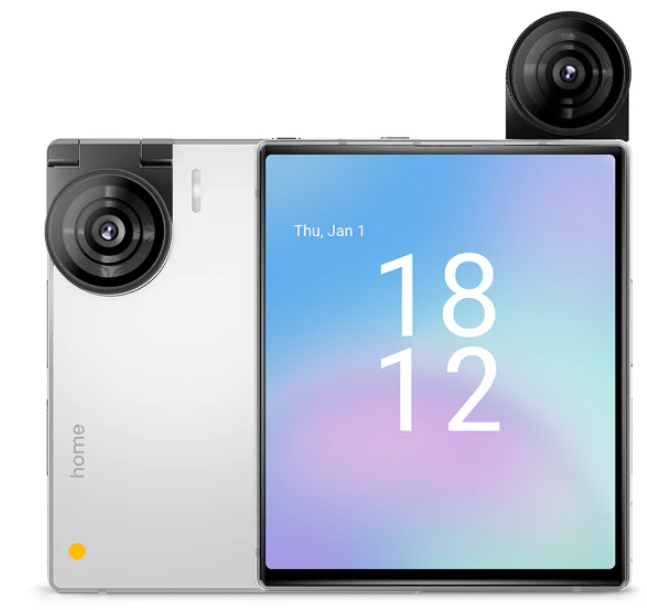
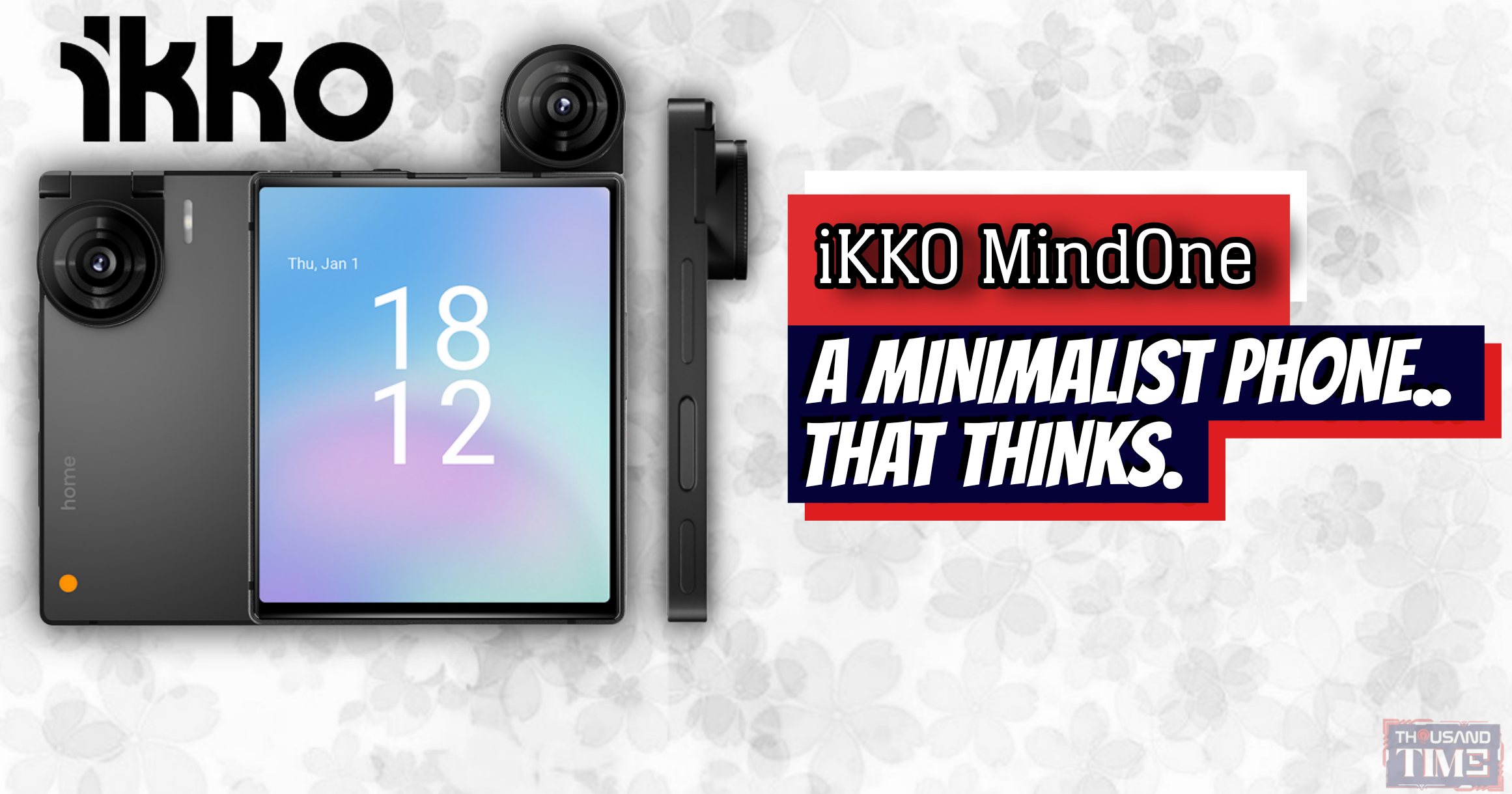
To hold the Mind One is to feel a strange sense of temporal whiplash. The physical hardware is aggressively compact. With an 86×72 millimeter footprint and a 4-inch AMOLED display protected by Sapphire Glass, it practically begs you to slip it into a coin pocket and forget about it. But it is not entirely quiet. The device is packed with clever hardware tricks. The standout is a 50MP Sony sensor that physically flips 180 degrees. It is an engineering flex that allows the high-end rear lens to swing forward for selfies—a design choice that perfectly serves the vlogging and TikTok crowd without cluttering the screen with hole-punch cutouts.The real magic, however, lies in the modularity. iKKO offers a snap-on Expansion Case that transforms the device entirely.
It adds a built-in Hi-Fi DAC for wired audiophiles and, crucially, a physical QWERTY keyboard.
This is the ultimate BlackBerry revival moment. In a world flattened by capacitive touchscreens, the snap-on keyboard offers the deeply satisfying, tactile feedback of raised, sloped keys. It taps into a growing cultural desire for physical buttons. We want to feel the things we are interacting with again. The keyboard slows you down just enough to make typing a deliberate act, rather than a mindless flurry of autocorrected thumbs.
The Dumbphone That Knows Too Much
The core conflict of the Mind One lies in its software architecture. It is a dual-boot device, suffering from what might be the most fascinating identity crisis in modern tech. On one side, you have a clean, minimal Android 15 interface. You can strip it down, restrict your notifications, and use it exactly like a modern dumbphone alternative. On the other side is the “iKKO AI OS,” a dedicated, distraction-free workspace that trades traditional apps for omnipresent artificial intelligence.
Here is the tension: can you truly have a “dumbphone” experience if you are constantly relying on an AI voice assistant to manage your reality?
Imagine taking the Mind One on a weekend hike to escape your inbox. You have left your iPhone behind. You are present in the moment. But when you need to navigate a trail, translate a sign, or dictate a sudden thought, you simply press a button and speak to the device. Not only does it limit your app usage, but it simultaneously expands your reliance on cloud intelligence. You are trading visual addiction for auditory dependence.
The Mind One offers live voice translation and real-time meeting transcriptions that rival enterprise software. It removes the friction of opening an app, replacing it with the invisible hum of AI. It turns out, we do not actually want our phones to be dumb. We just want them to stop looking at us so intently.
A World Without Wi-Fi (And the Cost of Admission)
The most ambitious technical swing the Mind One takes is its approach to connectivity. Through a combination of “NovaLink” and “vSIM” technology, the device promises free global internet in over 60 countries—straight out of the box, with no SIM card required.
There is a catch, of course. This free data is exclusively bottlenecked for the phone’s AI queries. If you want to scroll Instagram or watch YouTube, you will need to insert your own physical Nano-SIM. But for the traveler who needs real-time translation in Tokyo or walking directions in Rome, the Mind One operates as a globally connected magic trick. But magic usually comes with a sleight of hand. And this is where the journalistic stakes get high.
If a device is constantly listening, transcribing, and routing queries through a global server network, who is protecting the data? iKKO’s track record here is, to put it mildly, complicated. The Reddit discourse surrounding their previous product, the ActiveBuds, was fierce and unforgiving. Independent developers found alarming security missteps, including unencrypted chat logs and exposed OpenAI API keys left sitting on the devices. Users realized their conversations were being sent to poorly protected servers.
iKKO claims to have learned from these mistakes, pushing rapid patches and ensuring the Mind One utilizes modern cryptographic protections within its GMS-certified Android 15 framework. But the question remains. Is the sheer convenience of free, borderless AI connectivity worth the potential privacy trade-off?
This is no longer a binary debate of “good” versus “bad” tech. It is a negotiation. We are constantly deciding how much of our personal data we are willing to barter for a slightly more seamless Tuesday afternoon.
Thousandtime Thoughts
The iKKO Mind One is an ambitious, slightly flawed, and undeniably vital piece of tech history. It is not perfect, but it is deeply interesting. It acts as a bridge between the rising dumbphone movement and the inevitable, screen-less AI hardware future we are hurtling toward.
So, who is this actually for?
It is for the tech-savvy minimalist who wants to reclaim their attention but refuses to give up Spotify. It is for the audiophile who wants a dedicated DAC in their pocket. And it is for the dual-wielding secondary-phone user who wants a globally connected safety net when they travel.
The Mind One proves that the era of the glass slab is slowly cracking. We are looking for alternatives.
Are you ready to trade your smartphone for an AI-powered dumbphone? Let us know in the comments below.
PRODUCT IN THIS POST