
Resident Evil Requiem Analysis: How Capcom Captured the PC Community
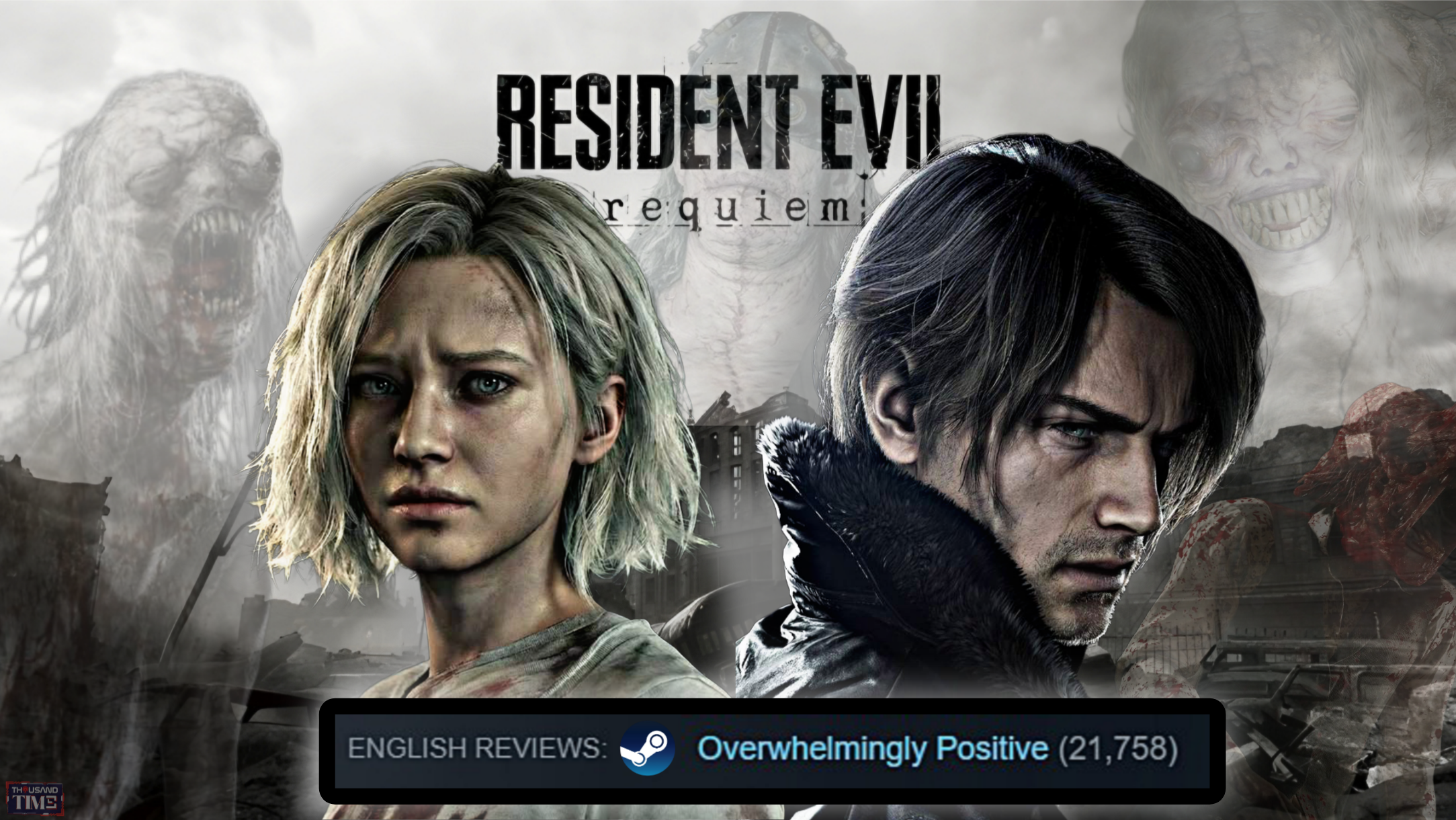
The Resident Evil community holds incredibly deep passion for the sprawling lore of the franchise. Furthermore, these fans heavily scrutinize every mechanical misstep or narrative deviation. As a result, new mainline installments always face immense anticipation and intense skepticism from this veteran player base. Capcom successfully shattered this cycle of apprehension on February 27, 2026, with the monumental launch of Resident Evil Requiem. The game rapidly earned over 71,000 “Overwhelmingly Positive” reviews on the Steam platform within days of its release. Therefore, this massive trust signal represents a profound cultural moment for the entire survival horror genre.
We need to properly frame this analysis around the phenomenon of its monumental success. Consequently, we will break down the core gameplay loop, highlight the fan theories blowing up across social media, and scrutinize the technical consensus. I honestly love seeing a dedicated studio completely stick the landing on such a highly anticipated project. Let’s explore exactly why the Steam community loves it.
The Staggering Launch Metrics
Data scraped directly from SteamDB shows an astonishing all-time peak of 344,214 concurrent players on Steam. Because of this, the figure sets a monumental new milestone for the entire franchise on the PC platform. For example, Requiem comfortably surpassed the previous franchise record of roughly 168,000 players held by the 2023 Resident Evil 4 remake. In fact, the concurrent player count actually exceeds the peaks of the Resident Evil 2, 3, and 4 remakes combined.
During its launch weekend, the game maintained a remarkably strong player count hovering between 160,000 and 320,000 players. It occasionally fell only behind untouchable PC-exclusive multiplayer titans like Counter-Strike 2 and Dota 2. Furthermore, it absolutely dominated the Steam Weekly Top Sellers chart. Massive pre-order volumes and immediate word-of-mouth recommendations drove this commercial dominance.
The critical reception perfectly matches the commercial success. The game currently holds a highly favorable Metascore ranging from 88 to 92 depending on the platform. Over 117 professional critic reviews form this consensus. Most impressively, the Metacritic user score surged to an exceptional 9.5 based on over 5,000 ratings. Consequently, it temporarily overtook Clair Obscur: Expedition 33 to rank among the highest user-rated video games of all time. This release proves that the traditional model of video game development still holds immense commercial and cultural power. Capcom clearly understands that players want complete, narrative-driven experiences right out of the box.
The Duality of Fear: A Masterful Gameplay Loop
The fundamental brilliance of Resident Evil Requiem lies in its structural design. Capcom’s development team implemented a daring dual-protagonist system. This approach strictly delineates the franchise’s two dominant sub-genres. The game assigns distinct psychological experiences to two separate protagonists: newcomer FBI analyst Grace Ashcroft and returning legendary DSO agent Leon S. Kennedy. As a result, the game acts as a “jack of all trades,” satisfying both purists of classic horror and adrenaline junkies craving kinetic combat.
Grace Ashcroft’s segments represent a masterclass in tension, vulnerability, and atmospheric dread. Her gameplay takes heavy inspiration from the suffocating tone of Resident Evil 7 and the Resident Evil 2 remake. Critics and community members alike note that her gameplay remains grounded in pure survival horror. Operating frequently in tightly framed perspectives, Grace faces what the Steam community affectionately dubs “extreme hide and seek”. The bioweapons actively and relentlessly hunt the player.
Her narrative journey begins with a deeply terrifying opening sequence at the Rhodes Hill Chronic Care Center and continues with an unsettling investigation at the Renwood Hotel. Because Grace lacks experience as a seasoned bioweapon executioner, her encounters feature extreme scarcity of ammunition and compounding psychological dread. You genuinely feel the desperate need to evade rather than confront the monsters.
Leon S. Kennedy’s Brutal Action Horror
Leon S. Kennedy’s campaign leans heavily into pulse-pounding, high-octane action horror. The Resident Evil 4 remake popularized this thrilling style. Leon portrays a battle-hardened, utterly fatigued veteran. He has fought bioweapons since the Raccoon City incident when he was just a rookie cop. Therefore, the gameplay reflects this narrative exhaustion combined with unparalleled lethal proficiency. Players controlling Leon engage in visceral, gory combat. He utilizes heavy firepower, extensive physical melee attacks, and a newly implemented hatchet-parrying system. This specific mechanic allows him to deflect incoming strikes from monstrous aberrations with brutal efficiency.
A prominent trend observed in the gameplay loop involves the evolution of enemy artificial intelligence. The game utilizes the RE Engine to render horrifyingly lifelike environments. It leverages high-fidelity sweat droplets, realistic skin textures, and dynamic lighting. Consequently, every single shadow becomes a potential threat. Furthermore, newly introduced viral mutations grant the zombies distinct “personalities” and highly erratic behaviors. Standard evasion tactics learned from previous games completely fail here. The transition between Grace’s stealth-oriented horror and Leon’s cathartic monster extermination creates a perfectly paced gameplay loop. A popular community sentiment notes that Leon simply seems “too tired to be scared anymore”. This thematic brilliance perfectly justifies his ability to wade through hordes of infected enemies.
Choices That Change Everything
This intense narrative culminates in a massive player choice regarding the Elpis virus. This specific choice results in two distinct endings that fundamentally alter the franchise’s trajectory. If the player chooses the canon ‘Good’ ending by releasing Elpis, Grace successfully develops an antiviral concoction. She administers it to Leon just as his body completely fails. Revitalized, Leon engages in a brutal final battle with Victor Gideon. Gideon murders Zeno and mutates into a hulking, Nemesis-like monstrosity. Following Gideon’s defeat, the underground ARK facility begins to collapse. The Hound Wolf squad miraculously extracts Grace and Leon. However, the conspicuous absence of their captain, Chris Redfield, leaves a chilling cliffhanger. This ties directly into Chris’s impending war with the corrupt BSAA set up in Resident Evil Village.
Conversely, the ‘Bad’ ending triggers if the player chooses to destroy the Elpis samples. The antiviral cure remains unmade, and the player entirely bypasses the final confrontation with the mutated Gideon. The story concludes on a deeply tragic, truncated note. A deteriorating Leon attempts to hold Zeno away from Grace. This heartbreaking moment results in devastating consequences. The community feels universally relieved that this bad ending falls outside the canonical timeline.
Balancing Emotion, Mechanics, and Memes
A clear trend within the Steam reviews highlights the community’s reliance on humor and self-referential memes. Internet culture heavily drives the Resident Evil fandom. Requiem provided ample material for comedic viral reviews. For example, user “Alesta” secured over 2,500 helpful votes with a hilariously punchy review: “Leon S. Kennedy will return in Avengers: Doomsday”. This brilliantly mocks Leon’s increasingly superhuman combat abilities. Similarly, user “ARISTIDES” secured nearly 1,000 votes by stating Leon finally got “old enough to play bingo”. These reviews highlight a community deeply comfortable with the franchise’s inherent campiness.
An incredibly fascinating angle emerges when examining the sparse negative reviews. One notable negative review aimed specifically to temper the hype. The user admitted to leaving a thumbs-down solely to “average out the toxic positivity crowd”. Another critical discussion thread highlighted the brevity of the game. Players debated whether the dual campaigns felt like gutted versions of past games spliced together. However, these critical voices remain a tiny minority against the overwhelming wave of massive praise.
Fan Theories, Identity Crises, and Leon’s Fate
Resident Evil Requiem ignited an absolute firestorm of lore speculation across forums and social media platforms. Capcom deliberately layered the game with Easter eggs and ambiguous identities. Prior to launch, the identity of the blonde female protagonist sparked massive debates. One vocal camp strongly believed the character was an older Rose Winters from Resident Evil Village. Timeline purists quickly dismantled this theory because Requiem takes place in 2028. This occurs roughly a decade before the events of the Shadows of Rose DLC. The second major camp theorized the character was Ashley Graham, returning in a minor role as a high-level government agent.
The ultimate in-game revelation proved to be a masterful subversion. The character is actually Grace Ashcroft, the daughter of Alyssa Ashcroft from the Resident Evil Outbreak spin-off series. This specific introduction provided a fresh perspective devoid of superhuman abilities. It perfectly tethered the narrative directly back to classic Raccoon City survivor lore.
Timeline Stitching and the Unseen Handler
An intense trend of timeline stitching continues regarding a second, unseen blonde character. A female intelligence officer guides Leon throughout the game. The game deliberately obscures her face. The leading community consensus points heavily to Sherry Birkin. Sherry survived the Raccoon City incident alongside Leon and grew up to become a prominent DSO agent. The established timeline and her deep shared trauma with Leon make Sherry the most logical candidate for his handler.
The ultimate fate of Leon S. Kennedy generates fiercely debated discourse within the fandom. Requiem heavily implies that Leon rapidly reaches the end of his operational lifespan. His stage three infection causes visible physical exhaustion. A granular fan theory focuses on a brief shot of Leon’s Porsche, bearing the license plate “ND9642”. Code-breakers suggest the “D” stands for “End,” signaling the final chapter in Leon’s story. Fans debate the Self-Sacrifice Theory, the Mutation Theory, and the Retirement Theory. The Retirement Theory stands as the most popular and comforting option. Fans speculate he will officially step down and disappear from government oversight.
Performance Specs: The Tale of Two Platforms
The technical reality of the game’s launch presents a complex, deeply fragmented picture. The game delivers vastly different experiences depending entirely on the player’s chosen platform. The Windows PC launch suffered from persistent, frustrating technical hurdles. A highly vocal portion of the PC player base reported experiencing jarring micro-stutters and hard game crashes. The technical consensus places the blame on Capcom’s aggressive reliance on Denuvo Anti-tamper. This software features a machine activation limit of five different PCs within a single 24-hour period. Additionally, the Nvidia graphics driver version 595.71 introduced severe problems specifically for Requiem players. RTX 4080 Super owners documented average frame rates plummeting from a smooth 110 FPS down to 91 FPS. Furthermore, RTX 4090 users discovered that enabling DLSS caused instantaneous game crashes.
A fascinating twist of software optimization currently has the Linux gaming community buzzing. Independent benchmark testing revealed that Resident Evil Requiem actually performs significantly better on Linux-based operating systems than on Microsoft’s flagship Windows 11. The Linux architecture runs through the Proton compatibility layer combined with AMD’s FSR 3.1.5 Frame Generation. Consequently, it provides a massive 16 FPS advantage in average performance.
The Steam Deck Verification Misunderstanding
The most surprising technical angle involves Valve’s portable Steam Deck. Upon release, the game carried an “Unsupported” category rating on the Steam store. Valve applied this label primarily because the game’s graphics settings required manual user intervention. Once manually configured, the RE Engine proved its exceptional scalability. Players running Steam Decks reported incredibly smooth, highly playable experiences. Extensive community testing established the optimal settings: cap the frame rate at 40 FPS, use FSR 3.1 on Quality Mode, and set Mesh Quality to Low. Utilizing these exact settings on an OLED Steam Deck draws approximately 16 to 18 watts of total system power, yielding a respectable battery life of nearly 3 hours.
On traditional home consoles, Capcom delivered a highly polished experience. The PlayStation 5 version operates at a beautifully fluid 50-60 FPS. The Xbox Series X and Series S handle the game at a rock-steady 60 FPS. Furthermore, the Nintendo Switch 2 port maintains a locked 30 FPS while delivering genuinely impressive visual clarity.