
Yacht Club Games doesn’t hold your hand in its gothic new adventure. Here is how to choose the right starting weapon before the first boss crushes you.
Mina the Hollower lures you in with a cozy, pixelated aesthetic that screams 1999. Then, before you even have your bearings, it drops a demanding, high-stakes choice into your lap. There are no training dummies here. There is no gentle tutorial. You are forced to pick a combat style right out of the gate, and that single decision dictates exactly how much you are going to suffer over the next few hours. If you are staring at your screen trying to figure out the best starting weapon in Mina the Hollower, you are entirely justified. It is a choice with real consequences.
This is not just a cosmetic preference. Your starting weapon defines your rhythm, your spacing, and your survival strategy in a game that borrows as heavily from Bloodborne as it does from The Legend of Zelda.
Here is how to navigate the early armory and find the tool that actually fits your hands.
The Classic Approach: Mastering the Nightstar Whip
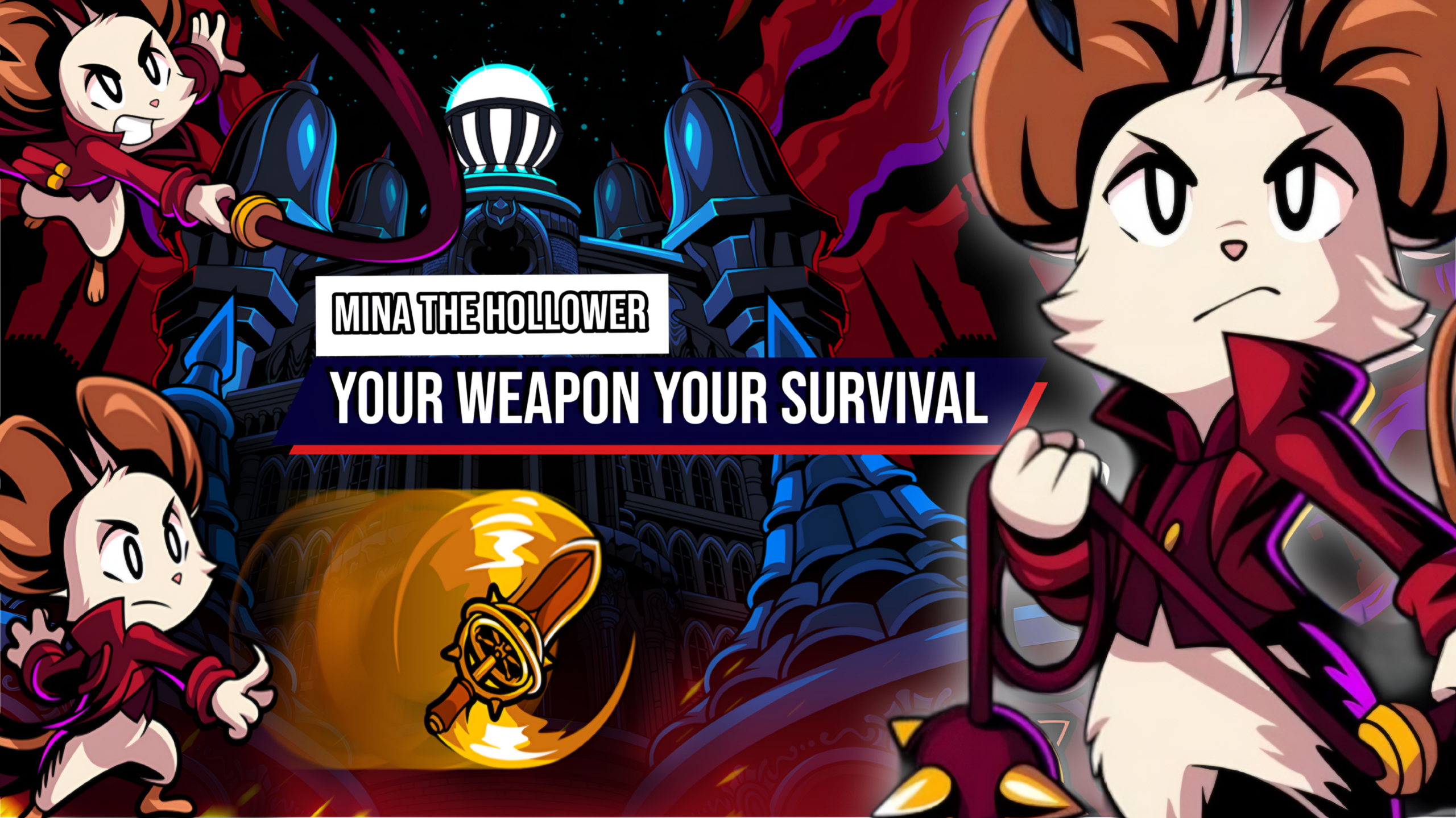
For anyone who spent their childhood memorizing Castlevania layouts, the Mina the Hollower Nightstar whip feels like coming home. It is the default, iconic weapon of the game, and at first glance, it seems like the safest bet for a newcomer.
But “safe” is a relative term in a gothic nightmare.
The Nightstar whip is fundamentally an instrument of spatial control. It offers moderate attack speed and decent damage, but its true power is locked behind a strict spacing requirement. You want to hit enemies with the very tip of the whip—the sweet spot. Misjudge the distance, and you either whiff entirely or deal chip damage while leaving yourself wide open to a gargoyle’s retaliation.

Where the whip truly shines is in its synergy with the game’s health-recovery mechanics. When you take damage, you have a brief window to regain lost health by going on the offensive. The whip’s medium range allows you to aggressively reclaim that health without pressing your face directly into an enemy’s hit box. It is an excellent, albeit demanding, starting point for any Mina the Hollower early build guide. Just do not mistake its familiar appearance for an easy learning curve.
Heavy Hitting: Is the Blaststrike Maul Worth the Risk?
If the whip is a fencer’s foil, the Blaststrike Maul is a wrecking ball.
Choosing the heavy, slow, high-damage hammer option means fundamentally changing how you play the game. You are trading mobility and reaction time for the ability to flatten Victorian horrors in a single, well-timed swing.
Playing with the Maul feels less like a retro adventure and more like running a heavy strength build in Dark Souls or wielding a Greatsword in Monster Hunter. You have to commit to the swing. Once that animation starts, you are locked in. If you miscalculate an enemy’s lunge, you will be punished severely.

The trade-off, however, is immense stagger potential. The Maul interrupts enemy attack patterns, giving you breathing room that the other weapons simply cannot provide. When debating the Blaststrike Maul vs daggers, you are really debating your own patience. Do you want to dance around your enemies, or do you want to wait for the perfect opening and crush them into the dirt? The Maul demands a methodical, almost musical sense of timing.
Speed and Precision: The Whisper & Vesper Daggers
For the adrenaline junkies, there are the dual daggers.
Whisper and Vesper are the high-risk, high-reward option. They boast the highest sheer DPS potential of the starting lineup, allowing you to shred through early-game mobs. The catch? You have almost zero reach. To deal damage, you must be close enough to count the pixels on a monster’s teeth.
To survive with the daggers, you must master Mina’s unique burrowing mechanic. You cannot just run up to an enemy and start swinging. You have to burrow underground, slip past their defenses, pop up directly inside their guard, unleash a flurry of slashes, and immediately dive back into the dirt using your invincibility frames to escape the counterattack.

It forces a hyper-aggressive, almost frantic playstyle. It is exhilarating when it works, and instantly fatal when it doesn’t. Later on, figuring out how to upgrade weapons in Mina the Hollower will help mitigate some of this danger by boosting your raw stats. But in those crucial opening hours, the daggers require absolute mechanical precision.
Ultimately, there is no “easy mode” weapon in this game. You are going to die. You are going to die a lot. The trick is choosing the weapon that matches your personal combat rhythm, so that when the “Game Over” screen inevitably flashes, it feels like a lesson learned rather than a cheap shot.