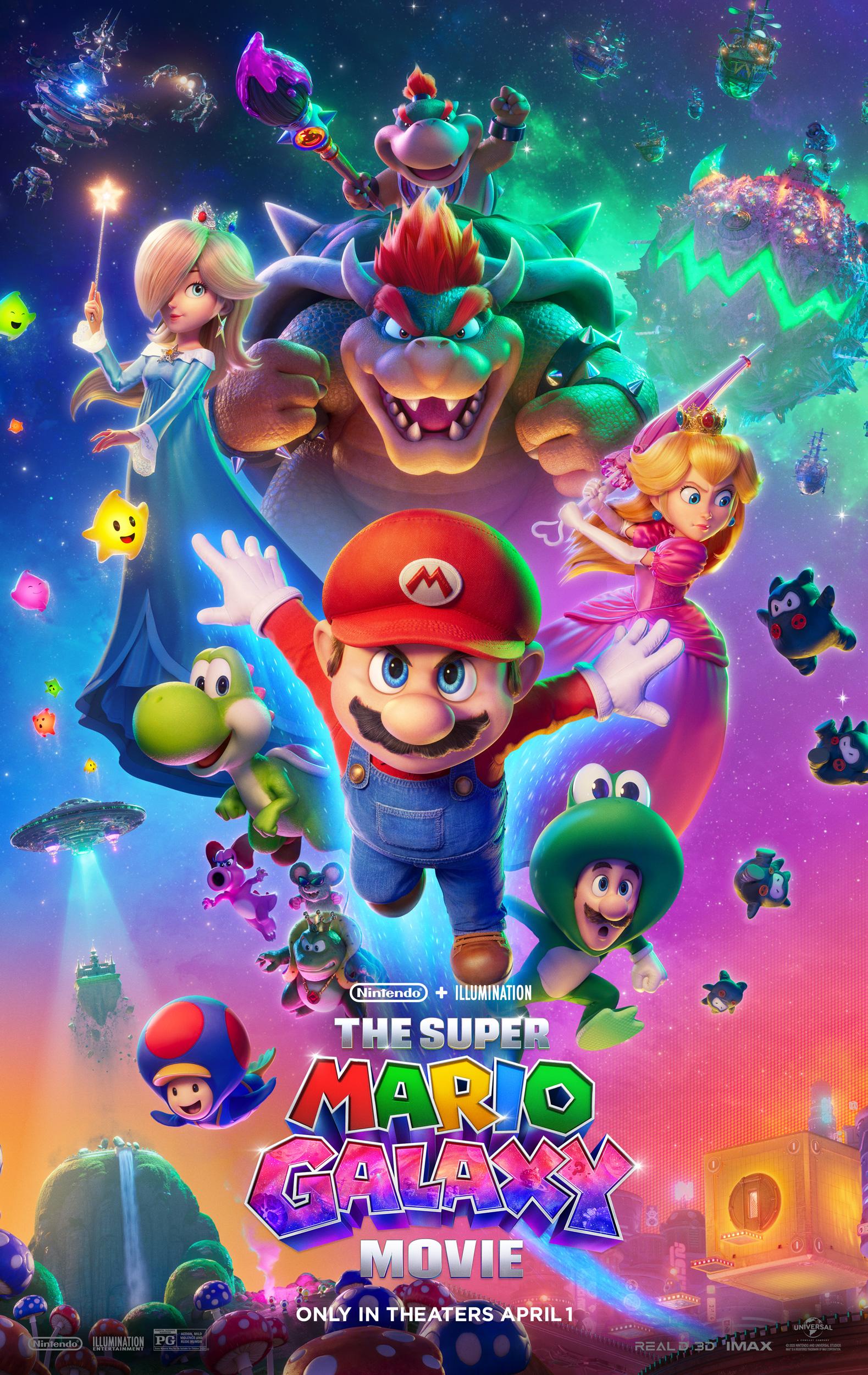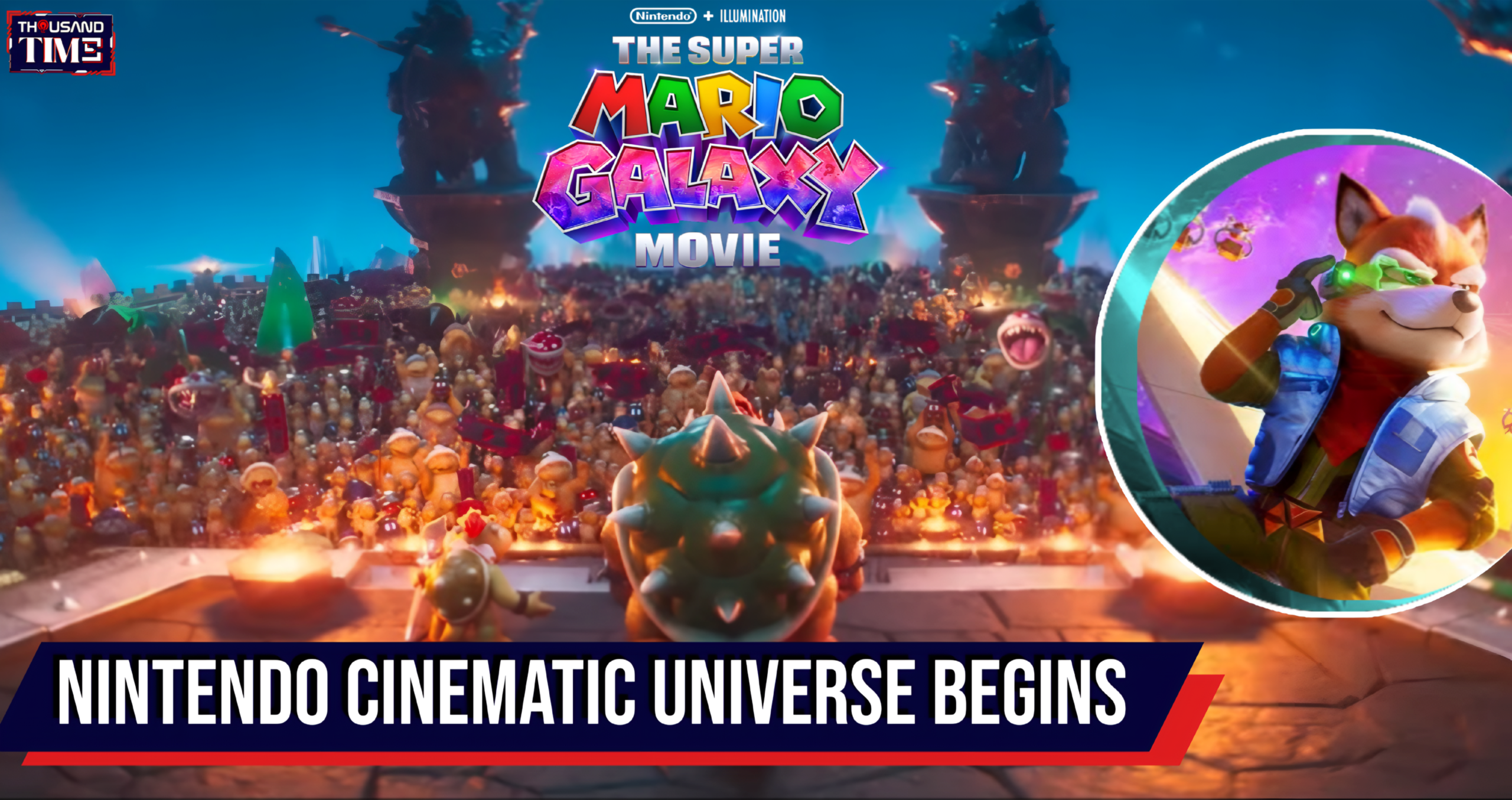
With Glen Powell’s Fox McCloud crashing into Mario’s cosmic adventure, Nintendo isn’t just chasing a billion dollars—they are actively building the road to Super Smash Bros.
When The Super Mario Bros. Movie crossed the billion-dollar box office mark in 2023, it did so by playing it relentlessly safe. It was a brightly colored, nostalgia-soaked victory lap—essentially a feature-length theme park ride—that proved Nintendo’s flagship plumber could carry a global blockbuster without alienating protective fans. But a billion dollars buys a lot of leverage, and sequels change the math. With the upcoming animated sequel, the studio isn’t just taking Mario to space; they are aggressively throwing open the multiverse doors. The sudden, confirmed addition of an entirely different franchise into the mix is the clearest signal yet of exactly why the super mario galaxy movie is setting up the nintendo cinematic universe.
This isn’t an obligatory follow-up. It is foundational architecture.
Breaking the Isolationist Rulebook
For decades, Nintendo has operated as the world’s most protective intellectual property vault. The trauma of the live-action 1993 Super Mario Bros. film kept the company’s characters locked away from Hollywood for thirty years. Even within their own games, Nintendo’s corporate rulebook has long dictated a strict isolationist policy: Mario stays in the Mushroom Kingdom, Link stays in Hyrule, and Samus Aran stays on Zebes. They do not mix.
Unless, of course, they are throwing each other off a floating platform in Super Smash Bros. That is what makes the star fox in mario movie cameo so staggering. Crossing over IPs in a narrative feature breaks Nintendo’s oldest, most sacred rule. By casting Glen Powell—an actor whose breakout involved flying fighter jets in Top Gun: Maverick—as the ace space pilot Fox McCloud, Illumination and Nintendo are signaling a massive shift in strategy. You do not hire the leading man of Hit Man and Twisters just to have him record a few grunts for a post-credits easter egg. A glen powell fox mccloud casting is a statement of intent. He is an anchor for future films.
Deep space provides the perfect narrative loophole for this collision. By taking Mario and Luigi out of their familiar, terrestrial bounds and launching them into the cosmos alongside Princess Rosalina, the franchise suddenly has a plausible reason to bump into extraterrestrial mercenaries. It turns the galaxy into a frontier where disparate properties can naturally intersect without feeling forced. This move violently validates the growing chorus of super smash bros movie rumors. Nintendo is clearly treating its film division the way Marvel treated Phase One, and Star Fox is not merely a background reference for eagle-eyed gamers. In the context of this expanding cinematic ecosystem, he is Nick Fury. He is the first undeniable proof of a wider, interconnected reality.
Mapping the Road to Final Destination
If the first film was the proof of concept, Galaxy is the connective tissue. We already know a live-action The Legend of Zelda film is in development under the direction of Wes Ball. Rumors continue to swirl around Illumination tackling standalone projects for Donkey Kong or perhaps a haunted house romp set in the Luigi’s Mansion universe.
Until now, it was easy to assume these projects would exist in their own distinct silos, insulated from one another by varying animation styles and differing tones. Galaxy shatters that assumption. Building an interconnected universe in 2026 is a bold, borderline arrogant play. Hollywood has spent the last decade watching rival studios try and fail to replicate Marvel’s success, usually stumbling because they rush the world-building before audiences actually care about the characters. Universal’s “Dark Universe” died before it even lived. DC had to reboot entirely.
But Nintendo possesses a distinct, almost unfair advantage. Audiences do not need to be convinced that these characters belong together. We already know the endgame. We have spent twenty-five years watching these icons fight. The challenge isn’t convincing viewers that a plumber, a space fox, and an elven knight can exist in the same room. The challenge is getting them there without the movie feeling like a corporate spreadsheet. By using Galaxy to introduce Arwings and intergalactic mercenaries, Nintendo is doing the heavy lifting early. They are drawing the map. They are proving that a video game movie franchise can be structurally ambitious, bridging the gap between a lighthearted romp and a sprawling, multi-franchise epic.
By the time the credits roll on this cosmic adventure, the Mushroom Kingdom will feel a lot smaller, and the Nintendo universe will feel infinite.
Thousandtime Thoughts
There is an undeniable risk to adopting the “cinematic universe” model in 2026. Audiences are visibly fatigued by sprawling, serialized mega-franchises that require homework to understand. Marvel is currently fighting the very weight of its own continuity. Yet, Nintendo is just stepping up to the starting line. Their distinct advantage is tone. If they can avoid the pitfalls of grim, over-serialized storytelling by keeping the mood light and firmly game-focused, this gamble might actually pay off. People don’t want a gritty, brooding origin story for Captain Falcon; they just want to see him punch a giant turtle. Still, launching a shared universe requires a delicate balance between standalone charm and cross-promotional obligation. Galaxy is the first real test of whether Nintendo can walk that tightrope without losing the inherent joy of its flagship mascot. The walls between these historically isolated kingdoms are officially coming down. If Mario and Star Fox are sharing the screen now, how long until Link shows up in the Mushroom Kingdom?
MOVIE IN THIS POST