
Leaks, Lore, and Missing Dragons: What to Expect in HOTD Season 3
The skies over Westeros are darkening. Consequently, the meticulous, boardroom-style politics that defined the sophomore outing of the Targaryen civil war have officially given way to apocalyptic fantasy warfare. Scheduled for a June 2026 premiere on HBO and Max, the third season of the hit prequel series promises a seismic shift in narrative velocity and visual scale. The official teaser shattered the internet in February 2026. As a result, this footage confirmed what readers of George R.R. Martin’s expansive source material have long anticipated. The diplomatic envoys have failed. Furthermore, the maritime blockades are breaking under dragon fire. Ultimately, the real Dance of the Dragons has finally begun.
However, the road to this explosive, pyrotechnic juncture has been paved with intense fandom discourse. Meanwhile, highly publicized creative friction between the foundational author and the television showrunner has dominated the conversation. Sweeping narrative gambles also threaten to alter the very fabric of the lore. Therefore, this exhaustive breakdown dissects the production realities, leaked scripts, complex community sentiment, and profound thematic deviations shaping this critical juncture in the television franchise.
Unpacking the Westerosi Waiting Room
The fandom consensus surrounding the show’s pacing has been intensely bifurcated. Consequently, this divide led to active, thousands-strong debates across social media platforms and dedicated discussion boards regarding the mechanics of modern television adaptation. The audience response to the second season’s pacing was anything but uniform. On massive community hubs such as the r/HouseOfTheDragon and r/asoiaf Reddit communities, numerous threads surfaced. Viewers questioned whether the narrative progression was artificially slowed to stretch the timeline. They expressed profound frustration at the perceived lack of meaningful dialogue or tangible plot advancement between the weekly episode drops.
Furthermore, fans noted that vital, bloody conflicts were continually deferred in favor of council meetings. For example, one highly upvoted post encapsulated this sentiment perfectly. The user asked if everyone agreed that the pacing was really slow, noting that barely anything seemed to happen. Honestly, waiting a whole week just to watch people stare at maps across the Narrow Sea tested everyone’s patience.
Conversely, a dedicated and highly analytical segment of the fandom praised the slower, character-driven approach. They highlighted the nuanced, deeply human development of figures like King Aegon II and Prince Aemond Targaryen. Aegon’s transition from a reluctant, sympathetic ruler desperately seeking adoration into a wrathful, broken monarch crushed under the weight of his own violent ambition was lauded as a masterclass in character study. In addition, defenders of the season pointed to the intricate depth added to secondary figures. They praised the moral ambiguity of Alys Rivers, the compelling political maneuvering of Larys Strong, and the scene-stealing gravitas of young Oscar Tully as proof that the season was doing vital narrative legwork.
The Logistics Trend Versus Instant Gratification
A discernible trend in modern prestige television is the “logistics over action” structure. In this format, entire seasons are dedicated to moving pieces across a geopolitical chessboard. The show leaned heavily into this architectural trend. For instance, it depicted the grueling reality of raising armies in the Riverlands, securing wavering alliances, and managing maritime supply lines. Standard high fantasy often glosses over these elements.
This trend collides violently with modern audience expectations for immediate, visceral payoff. Furthermore, we currently live in an era completely dominated by the instant gratification of binge-watching. The traditional weekly release schedule implemented by HBO exacerbated the feeling of stagnation. Consequently, this turned intricate, slow-burn political maneuvering into a perceived “anti-climax” for casual viewers who expected weekly spectacles.
The crucial angle here is the delicate balance between narrative necessity and audience gratification. The creators were essentially forced to hold back the cataclysmic, world-ending battles. They needed to preserve the emotional weight of the impending tragedies. If the dragons had engaged in total war immediately upon Aegon’s coronation, mere CGI spectacle would have completely overshadowed the psychological devastation of a family tearing itself apart. Therefore, the slow burn validates the characters’ initial reluctance to deploy living weapons of mass destruction. Now, with the launch of the new season, that restraint is entirely discarded. The dam has definitively broken. As a result, the narrative structure must pivot immediately from a simmering political thriller into a relentless, blood-soaked war epic. This shift will validate the audience’s patience while hyping up the inevitable, catastrophic payoff.
The Writers’ Room Civil War
Perhaps the most compelling, gripping drama surrounding the series is occurring within the production hierarchy itself. The deeply public and deteriorating relationship between franchise creator George R.R. Martin and series showrunner Ryan Condal has become a central talking point across pop culture media. This feud brilliantly illustrates the inherent, unavoidable friction of adapting “historical” fantasy texts for modern television audiences.
The creative schism became undeniable in late 2024. George R.R. Martin published a massive, scathing blog post titled “Beware the Butterflies”. He swiftly deleted it within hours. This post offered a granular critique of the adaptation choices made in the second season. Martin’s primary, most devastating grievance centered on the television execution of the infamous “Blood and Cheese” assassination sequence. Specifically, he criticized the deliberate omission of Prince Maelor, the youngest son of Queen Helaena and King Aegon II.
In the meticulously detailed source text, Helaena is forced by the assassins to choose which of her sons will die. She makes this agonizing, psychologically shattering decision, only for the assassins to kill her other son anyway. Consequently, this specific trauma ultimately drives her to suicide. The show bypassed this entirely by removing Maelor from existence. Martin described this as a catastrophic “butterfly effect” that would fatally compromise the internal logic of the narrative’s later stages. Furthermore, Martin went as far as to warn that the show was backing itself into a corner where future deaths would no longer make narrative sense.
The Four Pillars of Ruin: Narrative Architecture
To forcefully compensate for the deliberate pacing of its predecessor, the upcoming season is structured around four monumental, ground-shaking military engagements. Showrunner Ryan Condal has explicitly promised that the new season will feature “four major book events”. These events will radically escalate the scope and scale of the series, pushing the boundaries of television production to their absolute limits.
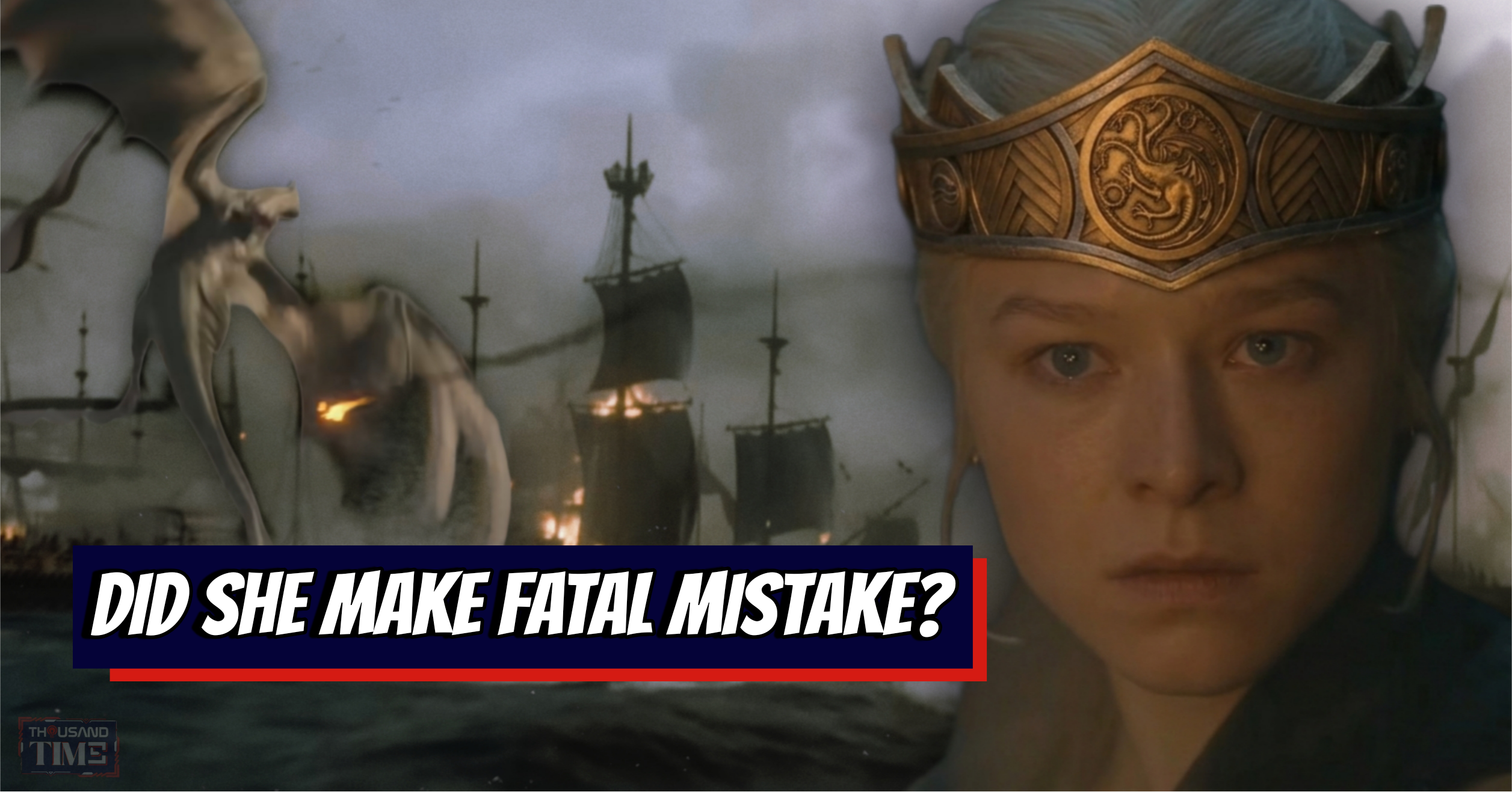
First, the season opens with blistering intensity with the highly anticipated Battle of the Gullet. This naval clash was originally intended to close out the previous season. Production delayed it due to massive scope and budget constraints. The conflict officially ignites when a ship carrying Rhaenyra’s young sons, Aegon and Viserys, to the safety of Essos is violently intercepted by the Triarchy fleet. Consequently, this prompts a massive aerial retaliation from five dragons: Vermax, Vermithor, Silverwing, Seasmoke, and presumably Sheepstealer or Moondancer. It is widely described as one of the bloodiest naval battles in Westerosi history.
Strategically and emotionally, the Battle of the Gullet is the absolute linchpin of the season. It features awe-inspiring spectacle and massive explosions. Its true narrative purpose is the psychological destruction of Rhaenyra through the traumatic death of her eldest son and heir, Jacaerys Velaryon. Hardcore fans have heavily analyzed a leaked call sheet for Episode 4 posted inadvertently by actor Steve Toussaint. This list notably excludes the actor playing Jacaerys from the massive ensemble cast list, implicitly confirming his demise early in the season. This specific loss will catalyze Rhaenyra’s transition from a cautious queen into a harsher, deeply paranoid, and draconian ruler. It perfectly sets the stage for her increasingly tyrannical reign over King’s Landing.
Mid-Season Shifts and Ground Warfare
Midway through the season, the tactical focus will shift dramatically to the Fall of King’s Landing. Aemond Targaryen and Ser Criston Cole have foolishly marched the bulk of the Green forces into the Riverlands to hunt Daemon. As a result, the capital is left largely undefended. This tactical absence allows Rhaenyra and Daemon to seize the city from the skies with relatively minimal resistance. The show is expected to significantly heighten the dramatic violence of this coup. It represents a politically seismic transition of power as Rhaenyra takes the Iron Throne.
Furthermore, the grueling ground war escalates with the Butcher’s Ball. This event features Ser Criston Cole’s starving, demoralized army getting ambushed and systematically decimated by Northern and Riverland forces. Historians describe the slaughter as “butchery, not battle”. It marks a definitive victory for the Black faction. The engagement results in the death of the Green Hand of the King and fundamentally alters the ground war’s momentum. Let’s face it, seeing Cole finally get his due is probably high on everyone’s wishlist right now.
Finally, the season will culminate in the sheer devastation of the First Battle of Tumbleton. This massive land engagement features a catastrophic, shocking betrayal. The newly recruited lowborn Dragonseeds, Hugh Hammer and Ulf the White, suddenly defect to the Greens. Consequently, they unleash their massive dragons upon the town and utterly shatter Rhaenyra’s tactical aerial advantage. This violent swing in momentum destroys her tactical advantage. The subsequent, devastating betrayal at Tumbleton will violently validate her growing distrust. It transforms the righteous queen into an isolated, fearful tyrant unable to trust her own shadow.
The Erasure of the Everywoman: The Nettles Controversy
No single casting rumor, leak, or production update has ignited as much sustained, vitriolic fury within the deep fandom as the systemic erasure of the character Nettles. The apparent decision to completely excise a fan-favorite, lowborn dragonrider from the narrative strikes at the very thematic heart of the franchise’s mythology. Reassigning her legendary feats to an existing royal protagonist sparks massive debates about class, race, and thematic fidelity.
In the original source text, Nettles is a foul-mouthed, lowborn, mixed-race peasant girl of no renown. She miraculously successfully tames the massive, wild dragon Sheepstealer. Crucially, she accomplishes this feat by demonstrating immense grit, patience, and intelligence. She brings the beast freshly slaughtered sheep every single morning until it accepts her. She completely bypasses magical Targaryen bloodlines or ancient Valyrian songs. Therefore, she represents a fundamental, undeniable challenge to the core doctrine of Targaryen exceptionalism.
However, persistent leaks and heavy production hints strongly indicate that Nettles has been completely cut from the television adaptation. Instead, Lady Rhaena Targaryen has been entirely rewritten to claim Sheepstealer. The text traditionally depicted Rhaena as a dragonless, pampered princess safely tucked away in the Vale until her own small dragon, Morning, hatches much later. Hardcore fans were thoroughly outraged to see glimpses of Rhaena running through the Vale in the trailer. They lamented the absolute loss of a character who survived on wit and grit. The show seemingly favored artificially giving a highborn princess more screen time to keep the core cast busy.
Trailer Dissections and Community Hype
With a production cycle spanning multiple years, the marketing of the series has become a massive, self-sustaining industry of its own. The release of the official teaser trailer in February 2026 did far more than just announce a release date. It ignited a massive ecosystem of content creators, analysts, and fans desperate for any glimpse of the carnage to come.
The official teaser dropped with the ominous, highly evocative tagline “From fire comes darkness”. It immediately confirmed a June 2026 premiere on HBO and Max. Within minutes, the internet was flooded with frame-by-frame dissections. YouTube reaction channels, such as Beyond The Trailer hosted by Grace Randolph, Luna Avengers, and YaBoyRockLee, posted immediate, highly emotional breakdowns of the footage.
The visual language of the teaser was striking and deeply aggressive. It featured brief, tantalizing snippets. Viewers saw a visually stunning sequence of Rhaenyra angrily banging on a closed door perfectly timed to the score. They witnessed Alicent Hightower walking toward the Iron Throne mirroring Rhaenyra from the series premiere. Furthermore, the trailer showed intense glimpses of the Battle of the Gullet featuring Jacaerys Velaryon screaming “Dracarys!”. The teaser heavily highlighted the naval warfare aspect. Corlys Velaryon is seen commanding his massive fleet amidst chaotic, dragon-filled skies. Popverse and ScreenRant quickly published articles confirming the teaser’s promise of the “bloodiest naval battles in Westeros history”. Consequently, these publications stoked the fires of anticipation to unprecedented levels.
The Absolute Point of No Return
The third season of this sprawling, incredibly expensive Targaryen saga represents a critical, undeniable inflection point. It is vital for the narrative trajectory of the characters. Furthermore, it matters deeply for the franchise’s overarching standing in the highly competitive pantheon of prestige television. After a deeply polarizing, slow-burn sophomore season that severely tested the audience’s patience with meticulous, dry world-building and logistics, the showrunners are preparing to violently cash in on two years of deferred gratification.
They are committing fully to adapting four of the most catastrophic, world-altering military engagements in the source material. We will witness the naval slaughter of the Gullet, the sudden Fall of King’s Landing, the brutal Butcher’s Ball, and the devastating betrayal at Tumbleton. By doing this, the production is loudly signaling a point of no return. The intricate political maneuvering, the desperate peace envoys, and the midnight stealth meetings are largely over. What remains is a grueling, merciless war of absolute attrition that will permanently, violently alter the physical and political landscape of Westeros.
However, the sheer, unprecedented spectacle of dragon-on-dragon warfare will fail to completely shield the series from intense, microscopic critical scrutiny from its most dedicated fans. The highly public, incredibly messy deterioration of the relationship between the showrunners and the franchise creator, George R.R. Martin, casts a long, inescapable shadow over the entire production. Fans will dissect every single creative deviation. They will analyze the massive ripple effects of omitting Prince Maelor. They will heavily scrutinize the deeply controversial, thematically damaging erasure of the lowborn dragonrider Nettles. The audience will view these changes as a glaring symptom of a fractured, fundamentally flawed creative vision.