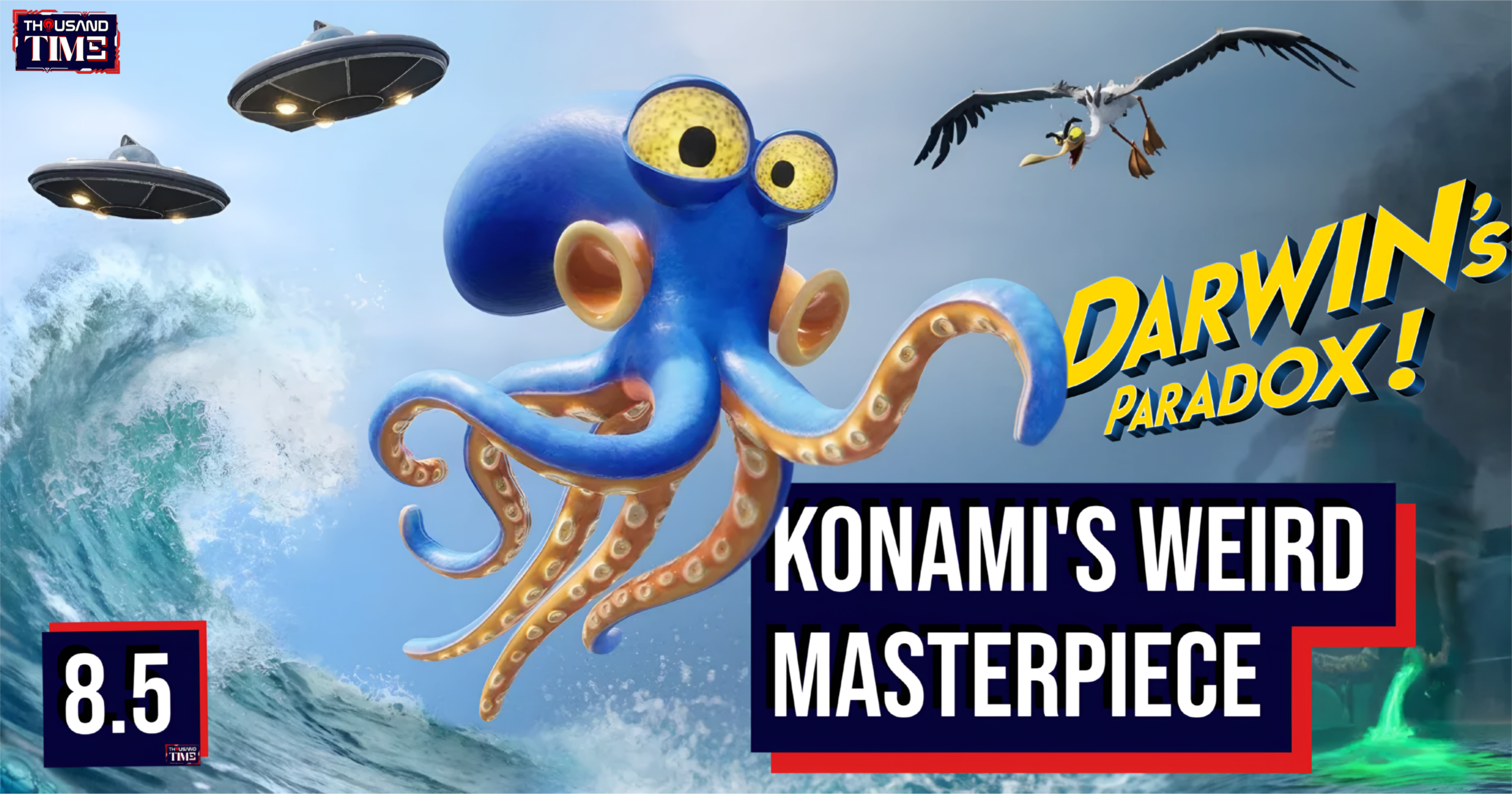
Critics docked Konami’s quirky stealth-platformer for its brutal puzzles and short runtime. Here’s why our 8.5 review proves the “Solid Octopus” adventure is perfectly paced.
If you have spent any time online this week, you have seen the memes. The “Solid Octopus” has arrived.
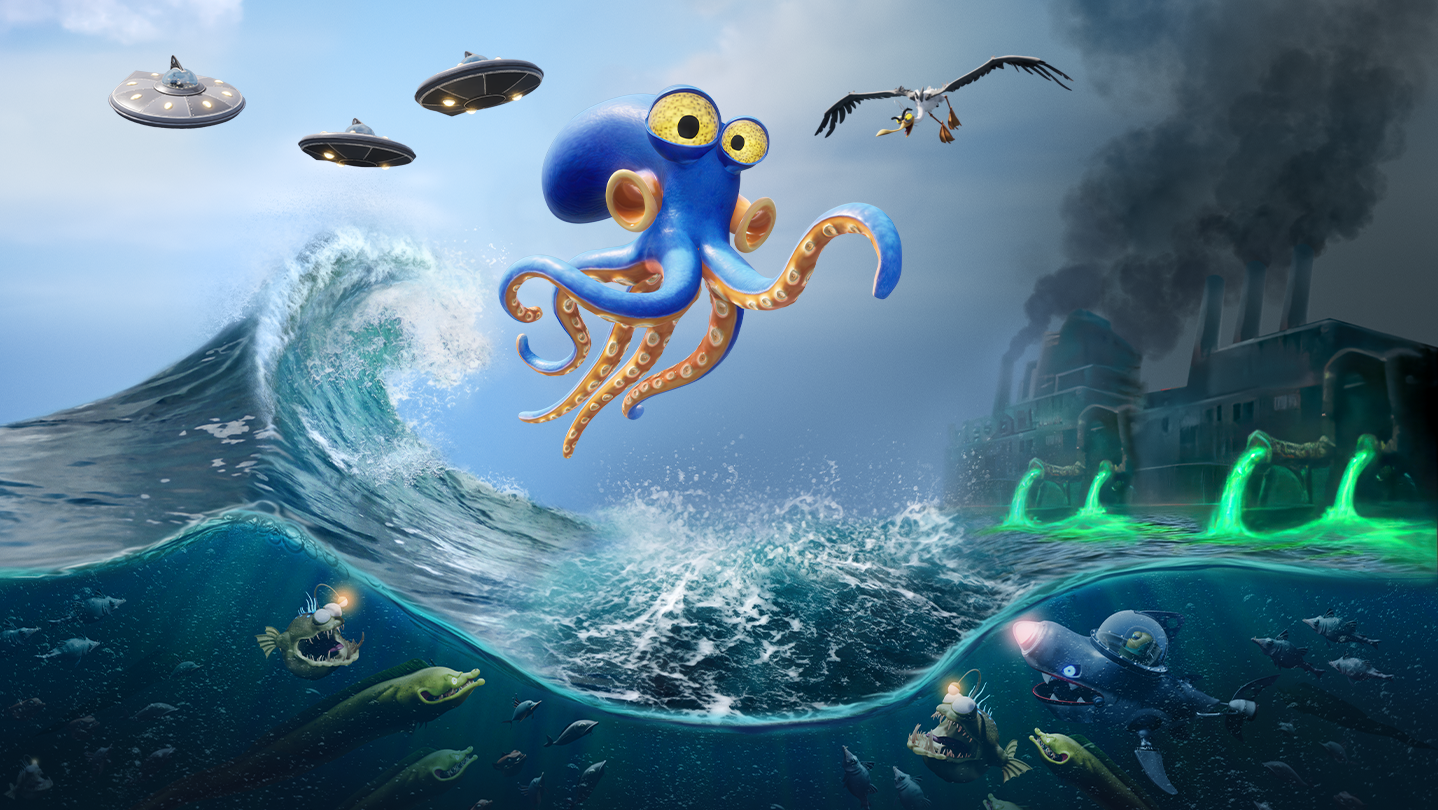
Konami’s stunning new cinematic puzzle-platformer, Darwin’s Paradox, launched just days ago, and its UFO-conspiracy art style has already hijacked the cultural conversation. You play as a cephalopod in a trench coat—metaphorically, though sometimes literally via shadow—slinking through the neon-lit underbelly of a mid-century government black site. It is gorgeous, weird, and undeniably captivating.
Yet, beneath the viral clips of our eight-legged hero squeezing through ventilation shafts, a familiar, exhausting debate is brewing. With a $24.99 asking price and a highly publicized 5.5-hour runtime, players are hesitating at the checkout screen. When it comes to a Darwin’s Paradox review: is the playtime worth it? Mainstream critics treated the brevity as a fatal flaw, slapping the game with a tepid 74 average on Metacritic. They docked points for the short length and the punishing trial-and-error mechanics.
But look closely at the Darwin’s Paradox Steam rating. The players—the ones actually sitting in the dark, white-knuckling their controllers—are pushing back. We are, too. We gave the game an 8.5, not in spite of its brevity, but because of it.
The “Solid Octopus” Experience: Escaping the Lab
Darwin’s Paradox casts you as an absurdly fluid, genetically modified octopus desperate to escape the confines of a paranoid, 1950s-style testing facility. The tactile feel of moving this creature is nothing short of a technical marvel. You don’t merely walk from room to room. You pour yourself over obstacles. You suction to glass barriers, flatten your body against sterile laboratory tiles, and manipulate the environment with a deliberate, unsettling grace.
It is, unapologetically, a Solid Octopus game.
The stealth mechanics here demand total patience. You are fragile. You are entirely unarmed. The puzzles are brutal, and you will get caught. You will fail over and over again. But this trial-and-error design is not a flaw born of lazy development; it is the entire point.
Darwin’s Paradox borrows heavily from the punishing, deeply satisfying logic of early 2000s stealth games. There are no glowing objective markers here. You will not find forgiving checkpoints that miraculously teleport you past the hard parts. The game forces you to observe patrol routes, understand the physics of your own squishy body, and execute plans with pixel-perfect precision. When you finally slip past a patrol of hazmat-suited guards, sliding silently into a drainage pipe just as a flashlight sweeps across your former hiding spot, the relief is palpable. You earned that survival. The tension is genuine because the consequences of failure are absolute.
How Long to Beat Darwin’s Paradox (And Why Shorter is Better)
For a $24.99 entry fee, a vocal segment of the gaming community balks at that math. It equates to about five dollars an hour. But equating the value of digital art to a minimum wage calculation completely ignores the sheer density of what Konami has delivered. Every single room in this game features bespoke, high-fidelity animation. There is no asset flipping. There are no procedurally generated hallways. More importantly, there are no mandatory fetch quests designed to artificially inflate the runtime and keep you on the hook. Every minute of Darwin’s Paradox is meticulously crafted to advance the UFO-conspiracy narrative or introduce a new layer of mechanical complexity.
When you look at the pantheon of modern narrative adventures—indie games like Little Nightmares, Inside, or even the cyberpunk cat simulator Stray—they all share this exact DNA. They are brief, potent experiences that leave a lasting mark. Darwin’s Paradox belongs firmly in that lineage. It tells its story, wrings your nerves dry with exquisite tension, and gracefully exits before you can grow numb to its tricks.
A longer version of this game would be a worse version of this game. Shorter is not just acceptable here. Shorter is a deliberate, brilliant design choice.
Who Should Play Darwin’s Paradox (And Why You Will Love It)
If you measure a game’s worth by how many radio towers you can climb, how many enemy outposts you can clear, or how many skill trees you can endlessly optimize, this shadowy government facility is not for you.
Darwin’s Paradox is built for the exhausted gamer. It is for the player who values atmosphere, art direction, and focused mechanical tension over sprawling, open-world checklists. It is for the adult with a job, a life, and a finite amount of free time, who wants to sit down, be completely transported to another world, and actually finish a story.
It can be completed in a single, dedicated weekend. In an era where every major release demands an 80-hour commitment and essentially functions as an unpaid second job, a five-hour game feels like a luxurious act of rebellion. It is a feature, not a bug.
We need to stop pretending that filler equates to value. If you crave an experience that profoundly respects your time while delivering some of the most heart-pounding moments of the year, this is an absolute must-play. It easily stands as one of the best stealth puzzle games 2026 has to offer, proving that a sharp, condensed vision will always outshine a bloated one.
Thousandtime Thoughts
The conversation surrounding Darwin’s Paradox reveals a quietly unsettling truth about the modern digital landscape. We have developed a toxic obsession with “content by the pound.” In our rush to optimize the dollar-to-hour ratio, we have started measuring art entirely by how long it takes to consume, rather than how it actually makes us feel.
This mindset turns entertainment into an endurance test. We celebrate bloated, hundred-hour digital worlds not because they are inherently better, but simply because they occupy more of our fleeting free time. It is a strange, metrics-driven hunger that forgets the value of a perfectly executed, self-contained vision. The backlash against a brief, brilliant experience like this one suggests a medium at odds with its own maturity. If we continue demanding endless engagement loops over curated design, we risk suffocating the very creativity that moves the industry forward. It leaves us with a lingering, uncomfortable question: Are we asking games to be good, or just asking them to be long?