It isn’t just the Pokémon branding. Omega Force’s spin-off tapped into a specific “cozy sandbox” void that is secretly driving Nintendo Switch 2 hardware sales.
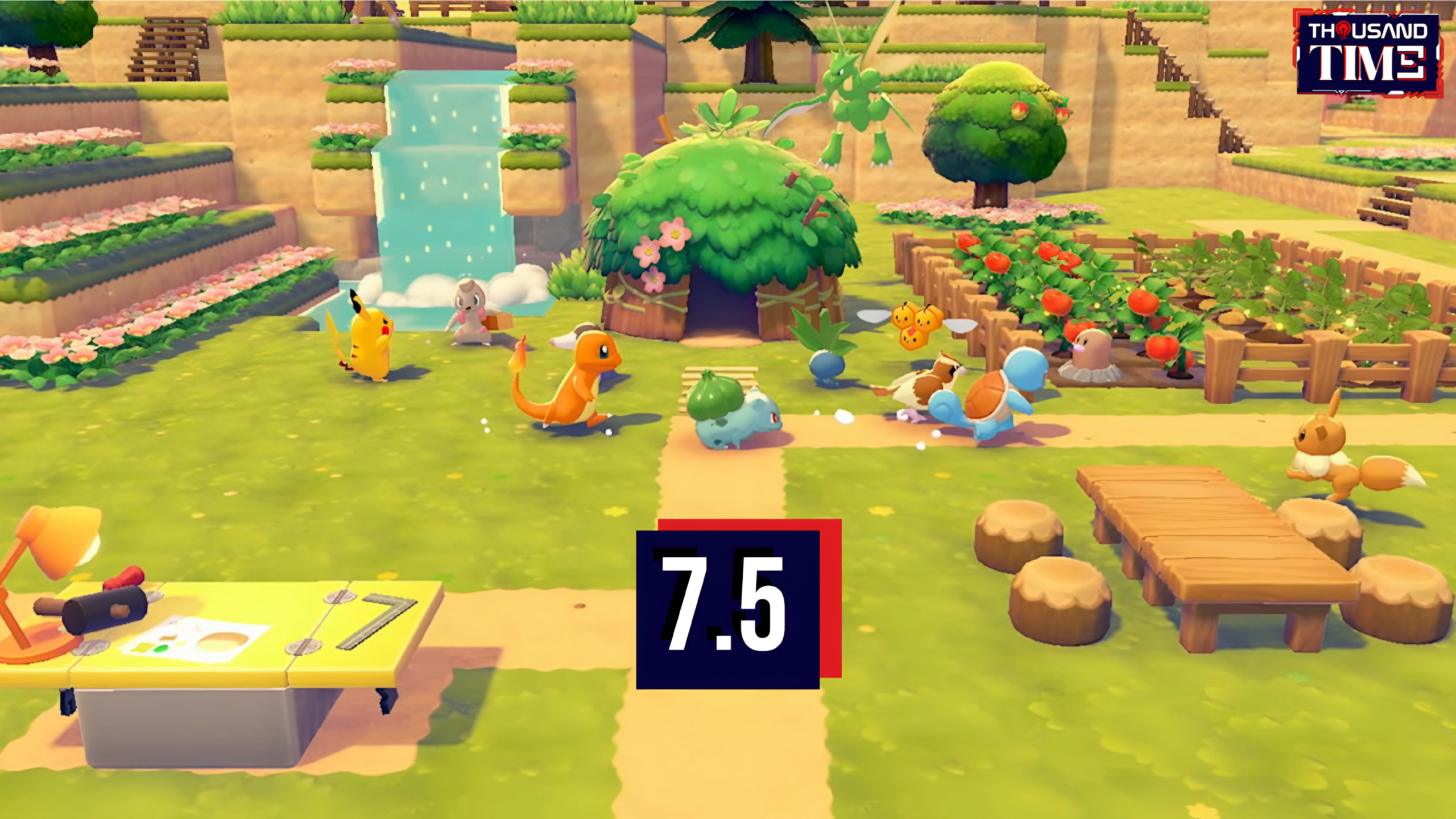
Here is a scene playing out in living rooms right now: a grown adult, possibly someone who owns a mortgage or is at least thinking seriously about getting one, has just spent forty-five minutes carefully irrigating a virtual field using Squirtle’s water gun. There is no battle. There is no gym leader waiting. There is just soil, a row of seedlings, and the quiet satisfaction of having helped a Bellsprout grow somewhere it hadn’t been able to before.
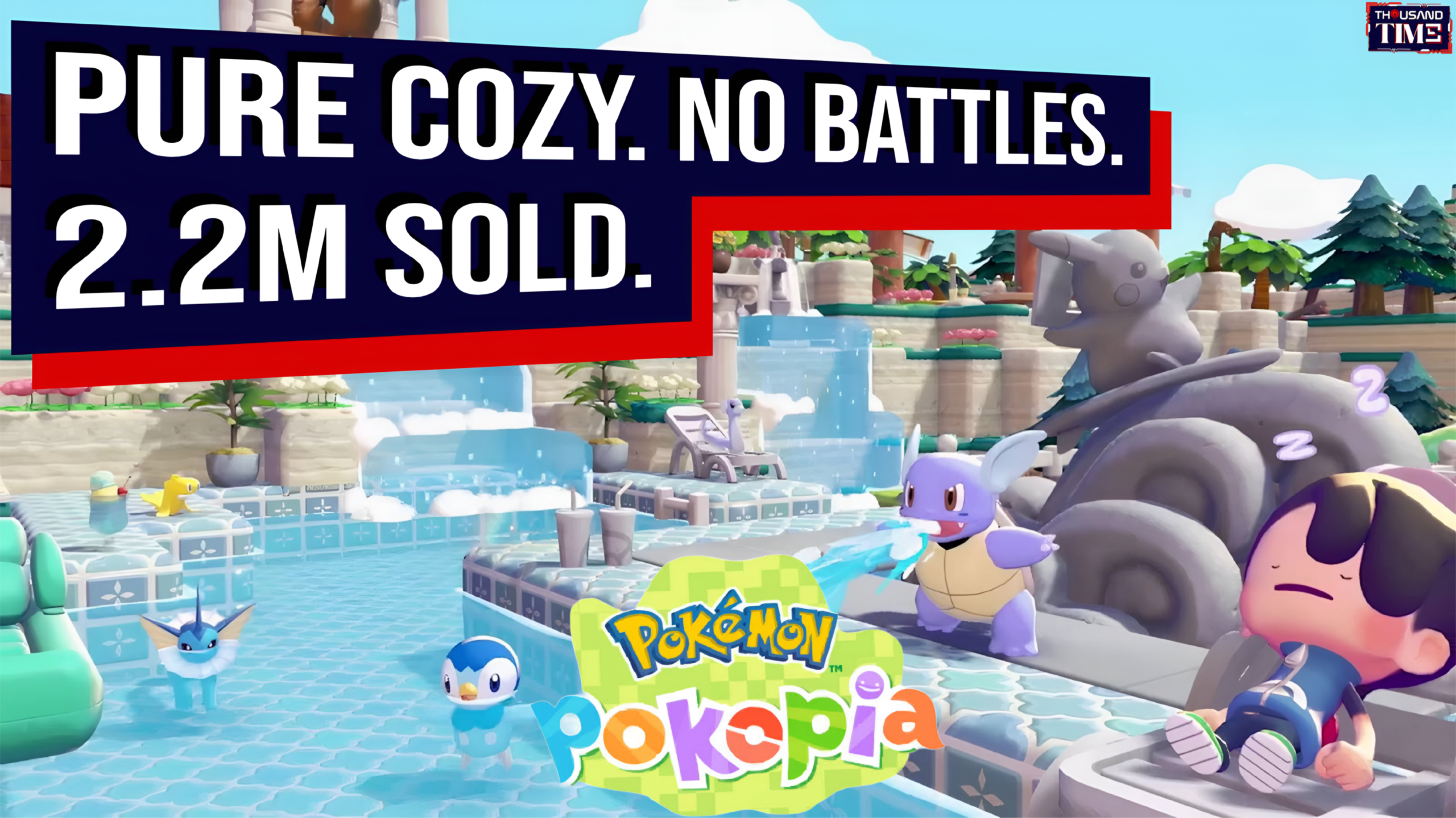
If you want to understand why Pokémon Pokopia sold 2.2 million copies in its first four days, you probably need to start there — not with the sales figure itself, but with the feeling behind it. Pokopia, the Switch 2 exclusive developed by Omega Force in collaboration with Game Freak, is a game about playing as a shape-shifting Ditto. You arrive in a ruined Kanto. Humanity has already left.
The land is fractured, the towns are empty, and somewhere embedded in a vast computer network, the Pokémon are still waiting. Your job — if it can be called that — is to restore things. Attract Pokémon back. Rebuild. Tend. You are not a Pokémon Master. You are something closer to a caretaker.
The premise sounds like a significant commercial risk. It turned into one of the fastest-selling Pokémon spin-offs in franchise history.
The Cozy Void Nobody Was Filling
Animal Crossing: New Horizons peaked somewhere around 2020, becoming the cultural comfort object of a year that desperately needed one. It sold forty-five million copies and made the entire concept of low-stakes, creative, habitation-focused games feel like a mainstream appetite rather than a niche preference. But a meaningful follow-up never materialized. Fans who fell deeply into New Horizons were left circling, trying to recreate that particular feeling in other titles — Stardew Valley, Disney Dreamlight Valley, various farm sims of varying quality. Some looked toward Dragon Quest Builders, which offered something more structurally satisfying but lacked the warmth.
Pokopia landed in that exact gap. Its zero-combat loop asks you to use the abilities of Pokémon you’ve temporarily become — Squirtle for irrigation, Machop for clearing debris, Arcanine for burning away overgrowth — to gradually make a world hospitable again. The progression is slow by design. Rewards are environmental rather than statistical. You don’t level up your damage output. You level up the ecosystem.
What Game Freak and Omega Force understood, and what the sales figures seem to confirm, is that a significant portion of the Pokémon fanbase has aged into a very different relationship with these games. They grew up with the franchise. They remember Kanto as a place with genuine emotional weight. They don’t want to grind for perfect IVs anymore. They want to sit in a world they already love and just… live in it for a while.
That shift in desire — from mastery to inhabitation — is what Pokopia is actually selling.
The Game That Moved Hardware
Nintendo needed a killer app for the Switch 2 that could reach beyond the obvious audience. Mario Kart World and Donkey Kong Bananza were solid launches, but they were speaking to an already-converted crowd. Pokopia did something different.
The online conversation around Switch 2 adoption tells the story clearly. In the weeks after launch, threads across gaming communities filled with variations on the same confession: people who had been unmoved by the hardware announcement, who had decided to wait, who had no particular interest in anything on the initial lineup — until someone showed them Pokopia. The $70 price point, which had generated the predictable discourse at announcement, largely dissolved as a barrier once buyers actually got inside the game.
The maps are vast. The day/night cycle is properly implemented, affecting which Pokémon appear and what activities are available. The voxel-based building system goes deeper than it looks from the outside. Players weren’t complaining about value for money. They were posting about how many hours had quietly evaporated.
There is also something to be said about the platform fit. The Switch 2’s improved handheld performance means that the kind of slow, ambient play Pokopia invites — putting it down, picking it back up, spending twenty minutes before bed doing nothing but arranging a garden — works perfectly in the format. It is a game built for stolen time, and the hardware enables exactly that.
When Cozy Gets Complicated
The most interesting creative decision in Pokopia is one that shouldn’t work on paper: it is not, at its core, a cheerful game.
The setting is post-apocalyptic. Not in any violent, chaotic sense, but in a quieter, more unsettling one. Humanity decided to leave. They escaped to space and tucked the Pokémon into vast computer storage systems, presumably intending to return. They haven’t. The Professor guiding you — Professor Tangrowth, which is a choice — speaks in careful fragments, reconstructing memory from degraded data. The environment itself bears the marks of long neglect. Forests have grown into ruins. Rivers have rerouted around collapsed infrastructure. Towns that players of a certain age remember as busy, living places now exist as something closer to archaeological sites.
The risk here was real. Cozy games typically operate on a principle of low friction and high warmth. They don’t ask hard questions. They certainly don’t imply that the humans who created the world you’re restoring simply… chose to leave it behind. But this is precisely what makes Pokopia resonate so strongly with its core audience. Millennial and older Gen Z players didn’t just grow up with Pokémon — they grew up with environmental anxiety, with the experience of inheriting problems they didn’t create, with the sense that the world requires more maintenance than it currently receives. Pokopia translates all of that into something manageable and satisfying.
You cannot fix everything. But you can fix this field. You can bring back these Pokémon. You can make this small corner of a broken world livable again.
The game understands that restoration is its own kind of fantasy. Not escaping to somewhere perfect, but returning somewhere damaged to something better. That distinction matters enormously to how it feels to play.
The Shape of Things to Come
There is a version of this story where Pokopia is simply a clever spin-off — a smart gap-fill that happened to catch the right cultural moment. And perhaps that is part of it. But the more interesting possibility is that Pokopia represents the franchise genuinely testing where its most loyal audience has ended up. A generation of Pokémon fans has grown up, gotten tired, and stopped needing to win. They still love these creatures. They still love this world. They just want a different relationship with it now.
If 2.2 million people bought a new console to spend time quietly tending a broken Kanto back to health, that is not a footnote in Nintendo’s quarterly report. That is a signal about what people are actually looking for — and what a franchise with thirty years of accumulated emotional weight might be able to offer if it’s willing to look somewhere other than the battle screen. The Pokémon Company has spent decades building an audience that will follow these characters anywhere. Pokopia is the first time in a while it has asked where that audience actually wants to go.
Thousandtime Thoughts
There is something quietly strange at the center of Pokopia’s premise that deserves to sit with you for a moment. The most intimate, emotionally grounded Pokémon game in years is built entirely around the absence of people.
Humanity left. That is the lore. They made a decision, built the escape vessel, and went. The world you are restoring is one that human beings actively chose to abandon — and it is, somehow, better for you to move through than any game in which they were still present.
The fantasy Pokopia is selling isn’t really about Pokémon at all. It’s about being the kind of person who stays. Who tends. Who looks at something broken and decides, without any reward structure compelling them, that it’s worth fixing.
That this fantasy sells millions of copies in 2026 says something about where a lot of people currently are. If a shape-shifting creature made of pure adaptation can fix Kanto, you find yourself wondering — what else in this franchise, in this world, is waiting to be rebuilt rather than conquered?