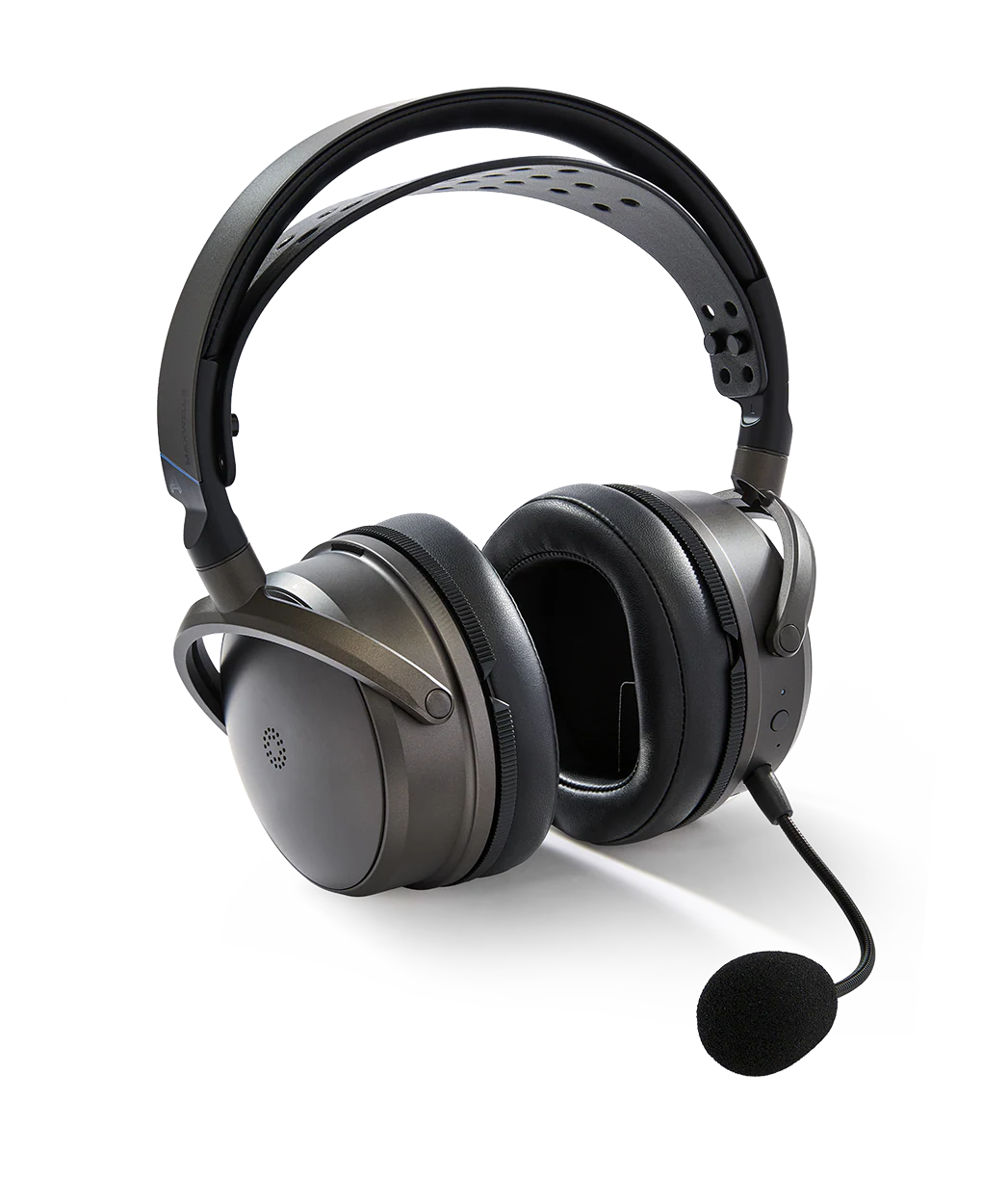
The base Maxwell 2 sounds incredible, but with a massive weight increase and an ANC version heavily rumored for late 2026, buying now might be a $329 mistake.
Right now, there is a massive disconnect between the tech press and the people actually wearing the hardware. If you read the reviews, Audeze has achieved a flawless victory in the premium audio space. The base Maxwell 2 is officially out, it costs $329, and its refined planar magnetic drivers deliver a soundstage that makes standard gaming peripherals sound like they were recorded in a tin can.
But if you look at community forums and user reports, the narrative shifts entirely. The sentiment is less about audio fidelity and increasingly focused on physical fatigue. With the base model tipping the scales at a staggering 567 grams and notably lacking active noise cancellation, the obvious question arises: should you wait for the Audeze Maxwell 2 ANC?
This is not just about holding out for a software update or a slightly better battery. It is about deciding whether you want to participate in a staggered hardware release that feels increasingly hostile to early adopters. The audio press is largely ignoring the ergonomic reality of wearing a dense block of metal and magnets on your skull for hours on end, focusing solely on the frequency response curve. We need to look at the actual physical and financial math of upgrading right now.
The 567-Gram Reality Check
Audeze has always prioritized acoustic performance over ergonomics. That is the fundamental trade-off of planar magnetic driver technology. Unlike standard dynamic drivers, which are relatively light and simple, planar magnetics require heavy, precisely aligned magnet arrays to generate their signature rapid response and incredibly low distortion. But there is a line between “pleasingly substantial” and “actively uncomfortable,” and the current iteration crosses it.
The original Maxwell weighed 490 grams. Even then, that weight was pushing the absolute limits of what most people could tolerate for extended gaming sessions. The new audeze maxwell 2 weight comes in at 567g. To put that in perspective, the industry standard for a premium, comfortable gaming headset hovers right around 300 to 350 grams. By opting for the Maxwell 2, you are essentially strapping over half a kilogram of hardware to the top of your head.
This massive jump in weight fundamentally changes how you interact with the device. You do not simply forget you are wearing a 567-gram headset. It dictates your posture. Look down at your phone between matches, and the headset shifts. Lean back in your chair, and the momentum pulls at your neck. The sheer mass creates a localized pressure point on the crown of the head that no amount of suspension strap padding can fully mitigate. The resulting 567g gaming headset neck strain is a highly documented issue for a reason, effectively placing a hard time limit on how long you can actually enjoy the superior audio quality.
Headset Class | Average Weight | Expected Comfort Window |
|---|---|---|
Standard Gaming Tier (SteelSeries, HyperX) | 280g – 330g | Indefinite / All-day |
Premium Wireless (Astro, Turtle Beach) | 350g – 390g | 4–6 hours |
Audeze Maxwell (Gen 1) | 490g | 3–4 hours |
Audeze Maxwell 2 (Base) | 567g | < 2 hours |
This reality brings up a critical engineering tension regarding the unannounced but highly anticipated ANC model. Active noise cancellation requires additional hardware — internal and external microphones, specialized processing chips, and potentially a larger battery to handle the constant computational load. If Audeze simply bolts ANC hardware onto the existing 567g chassis, we are looking at a device that flirts with 600 grams.
The alternative, and the reason holding out is the smartest strategy, is that the delayed ANC version might introduce weight-saving chassis materials — perhaps carbon fiber composites or lighter alloys — to offset the added tech. If you buy the base model now, you are locking yourself into the heaviest possible iteration of this platform.
The ANC Version Timeline
Audeze’s historical product cycles, combined with the broader tech industry’s reliance on staggered hardware drops, suggest a maxwell 2 anc release date in late 2026, dropping precisely in time for the holiday purchasing window.
When you evaluate the Audeze Maxwell 2 vs. the ANC version, you are really interrogating the limits of passive isolation. The base Maxwell 2 relies entirely on its clamp force and thick leatherette ear pads to block out the physical world. In a quiet, climate-controlled home office, that works adequately. But in a shared living space, an apartment next to a busy street, or anywhere with a persistent low-frequency hum like an HVAC system or a loud PC case fan, passive isolation completely fails.
Dedicated audio technology has fundamentally moved past relying purely on tight seals. If you look at Why the Sony WH-1000XM6 Claims the 2026 Audio Throne, the gap between standard closed-back gaming headsets and true, algorithmically driven active noise cancellation has never been wider. Modern ANC does not just block noise; it creates an artificially silent soundstage that allows the drivers to perform at lower, safer volumes without losing dynamic range.
Buying a $329 headset in 2026 without ANC means you are paying a premium price for structurally incomplete technology. You are getting top-tier drivers housed inside a feature set from 2019. The anticipated ANC version will almost certainly carry a price bump, likely pushing the MSRP to $399 or higher. But that price difference buys you the single most important feature for maintaining immersion in unpredictable environments. It prevents external reality from bleeding into your audio mix. Purchasing the base model now is essentially a $329 bet that your environment will always remain perfectly silent.
Thousandtime Thoughts
The industry is rapidly positioning the base Maxwell 2 as the definitive best gaming headset 2026 has to offer. That assessment is factually premature. The purchasing decision right now is strictly binary.
Wait for the ANC version if:
➤ You play games in a shared room, a noisy apartment, or near loud environmental systems.
➤ You routinely play for sessions exceeding two hours.
➤ You have experienced any history of neck or upper back discomfort from heavy peripherals.
➤ You want the technically complete version of Audeze’s current-generation platform.
Buy the base Maxwell 2 right now only if:
➤ You have a dedicated, perfectly silent room.
➤ You have a proven, tested tolerance for headsets exceeding 500 grams.
➤ Your current headset is entirely broken and you require immediate replacement hardware.
For all other buyers, holding your money is the only logical move.
PRODUCT IN THIS POST