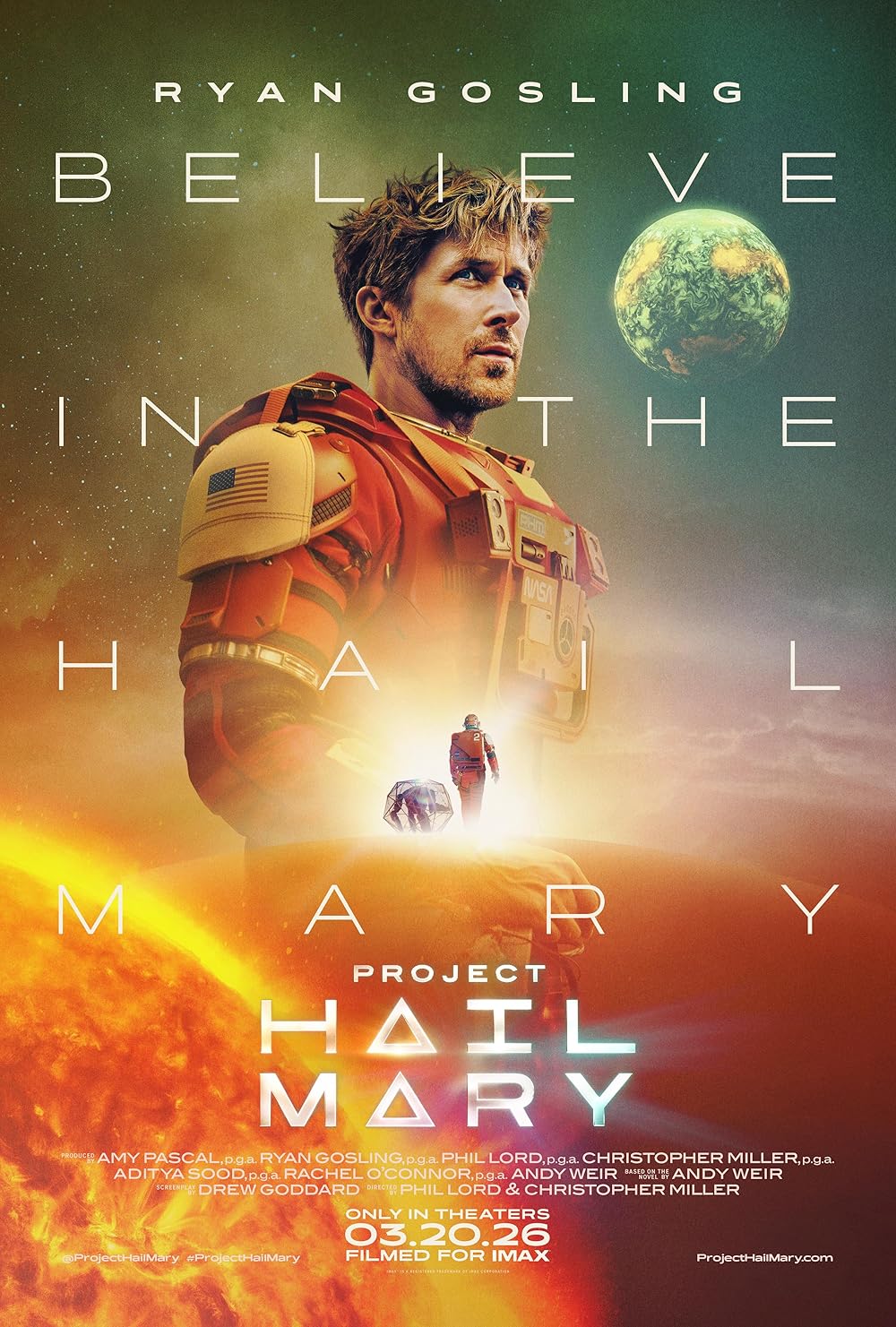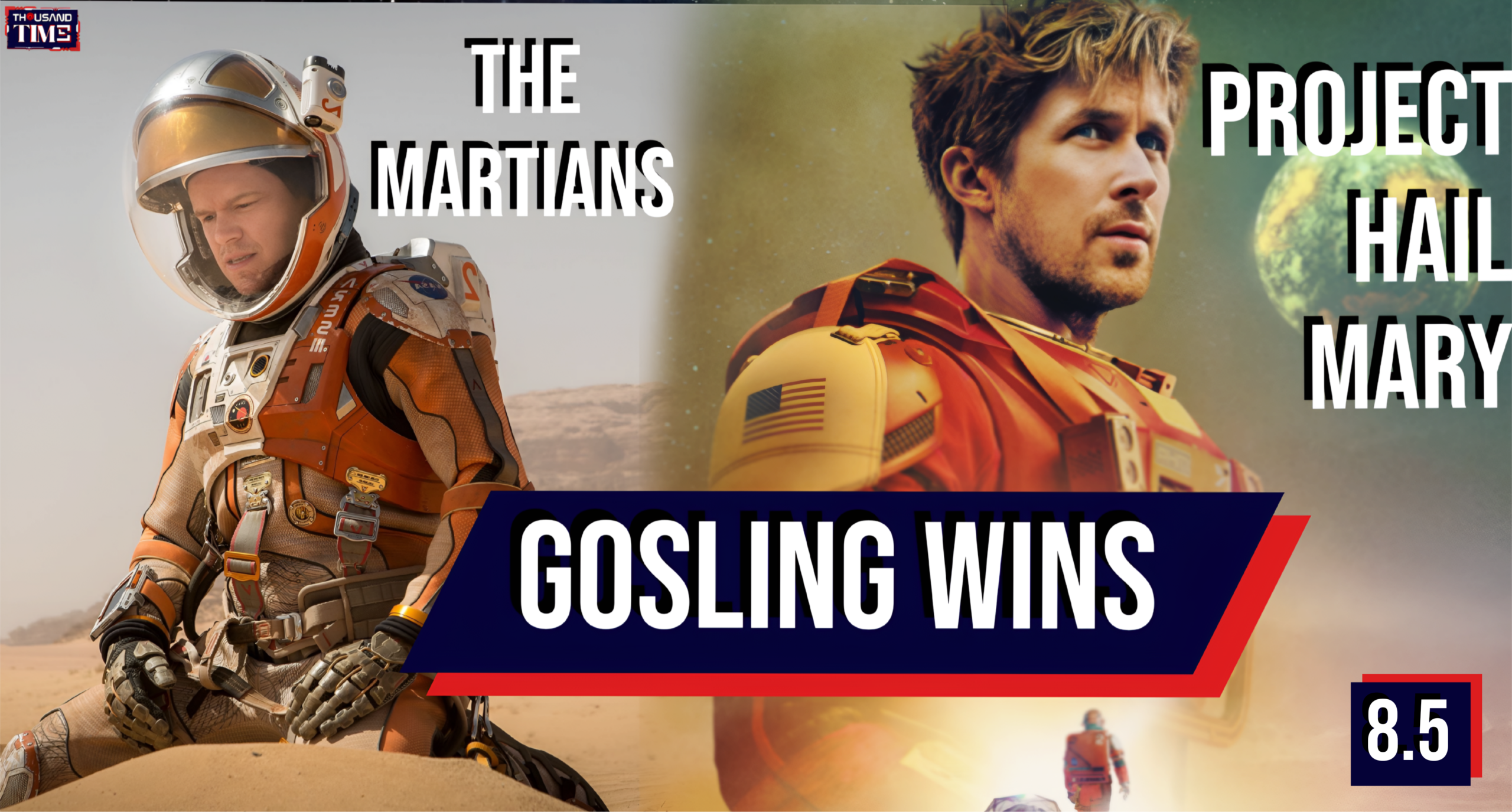
Matt Damon grew space potatoes, but Ryan Gosling saved two worlds. Here is why Andy Weir’s latest cinematic adaptation outshines its beloved predecessor.
The lights come up, the theater empties, and before you even hit the lobby, the debate begins. It is the natural reflex for any sci-fi fan walking out of cinemas this weekend. If you’re wondering what makes hail mary better than martian, you aren’t alone. It is the exact question anchoring every post-movie dissection over drinks and in group chats.
Both films are massive, sweeping adaptations of Andy Weir novels. Both feature A-list leading men stranded millions of miles from home, utilizing sheer scientific willpower to avoid dying in the dark. The Martian set the undisputed gold standard for modern hard sci-fi back in 2015. It was a masterclass in grounded, procedural survival. It made botany look badass.
But Project Hail Mary has shifted the paradigm. It takes that exact same “competence porn” optimism—the thrill of watching very smart people solve very hard problems—and injects it with massive emotional stakes and a profound sense of scale. The debate here isn’t about which source material had more accurate orbital mechanics. It is about how Project Hail Mary evolves the formula, delivering a cinematic experience that feels richer, wilder, and vastly more resonant.
Isolation vs. Connection: The ‘Rocky’ Difference
Mark Watney was relentlessly charming. Watching Matt Damon essentially vlog his way through zero-gravity experiments and near-death experiences on a desolate red planet was deeply entertaining. But solo survival stories have an inherent cinematic ceiling. You are, for the majority of the runtime, watching a man talk to a piece of glass.
The dynamic between Ryan Gosling’s Ryland Grace and an alien engineer built like a heavily armored, hyper-intelligent spider fundamentally rewires the narrative. This isn’t just a survival story anymore. It is an intergalactic buddy comedy wrapped in a high-stakes physics exam.
Having a scene partner changes everything for the film, and specifically for Gosling. Instead of delivering heavy-handed exposition to the audience masquerading as captain’s log entries, the complex science is hashed out organically between two desperate beings. They argue. They experiment. They routinely misunderstand each other.
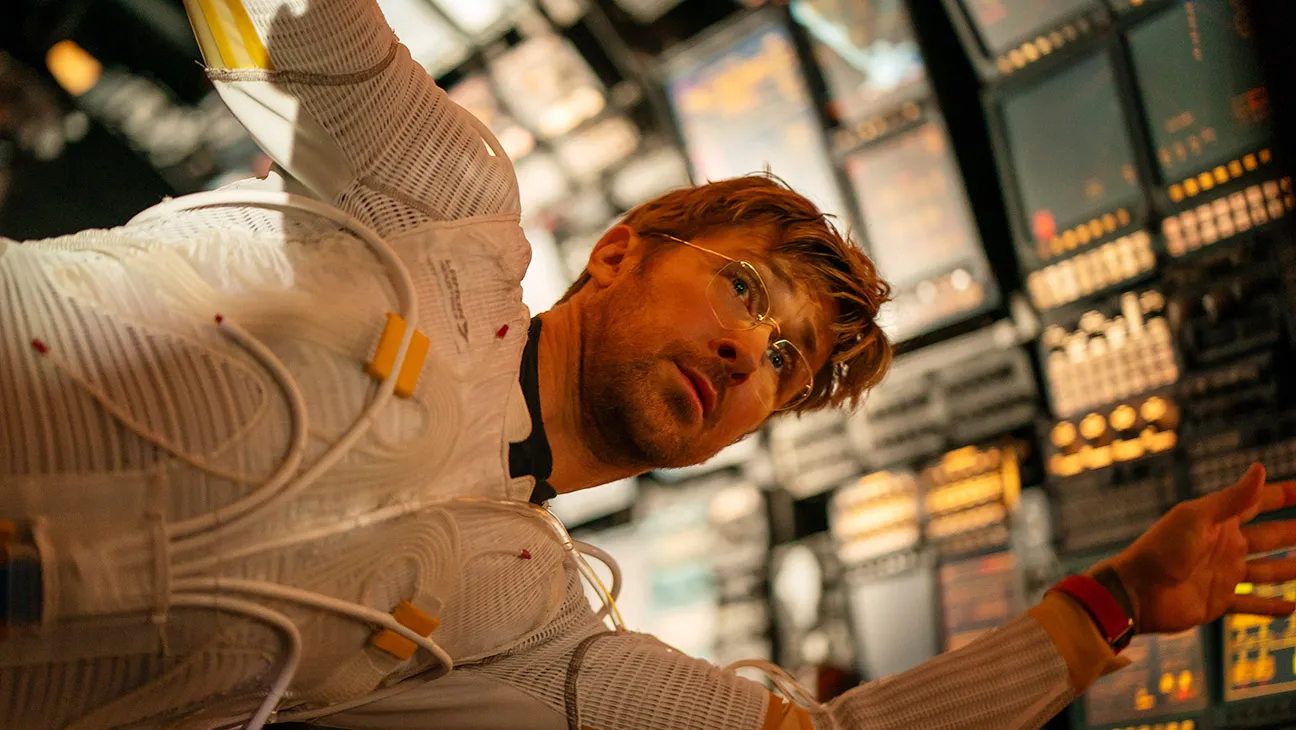
When you look at Ryan Gosling Project Hail Mary scenes, you are seeing an actor liberated by having someone to play off of. It allows him to tap into genuine emotional vulnerability, raw frustration, and his perfectly timed, dry comedic disbelief. We are watching a friendship form across the ultimate language barrier. Rocky is not a pet or a sidekick; he is a peer. That connection makes the cold, hard science feel profoundly human. It gives the audience a relationship to root for, which is a much stronger theatrical hook than simply hoping a man doesn’t run out of potatoes.
The Cinematic Stakes: Saving One Man vs. Saving Two Worlds
The Martian was a story of hyper-focused intimacy. The narrative engine was driven by a comforting, if slightly naive, premise: the entire planet Earth will unite, spending billions of dollars and risking international relations, simply to bring one guy home. It was a beautiful sentiment.
Project Hail Mary flips that calculus entirely.
Ryland Grace is just one guy trying to save the world. Two worlds, actually. This shift in scale translates beautifully to the big screen. A Martian dust storm or a blown habitat airlock is terrifying, but it remains a localized threat. The Astrophage—a microscopic, star-eating organism actively dimming the sun—feels biblical. The sheer weight of what happens if Grace fails is suffocating. He isn’t just trying to avoid starving; he is trying to prevent human extinction.
For a weekend box-office crowd, this heightens the theatrical payoff exponentially. The math scrawled on a whiteboard suddenly holds the fate of billions of lives.
It also changes the visual language of the film. Mars, while visually stunning in its stark red emptiness, was ultimately static. The journey of the Hail Mary is dynamic. We are thrust into the Tau Ceti system, navigating the mind-bending realities of relativistic travel, memory loss, and the oppressive, claustrophobic nature of a suicide mission. It takes the grounded realism of andy weir movie adaptations and stretches it across a cosmic canvas. The result is a blockbuster that manages to feel both intimately personal in its quiet moments and staggeringly massive in its scope.
The Theatrical Experience
You cannot adequately dissect why this film outshines its predecessor without talking about the sound design. The Martian gave us a memorable soundtrack of leftover disco music playing against the eerie silence of a dead planet. Project Hail Mary had a much more difficult sensory mountain to climb: it had to invent a language out of musical chords.
Because Rocky communicates entirely through complex tones and pitches, the audio landscape of the film is a technical marvel. The sound design team had to make an alien dialect feel expressive, urgent, and eventually comprehensible to the audience through Grace’s makeshift translation software. It is a deeply tactile auditory experience that demands the subwoofers of a premium theater. You don’t just watch this movie; you listen to it figure itself out.
Does project hail mary have a post credit scene?
The short answer is no. You can gather your coat and head for the exits.
Unlike the sprawling cinematic universes that have conditioned modern audiences to sit through ten minutes of scrolling names for a thirty-second teaser, this film respects its own structural integrity. There is no mid-credit stinger setting up a sequel. There is no audio easter egg teasing another mission. The emotional climax of Grace and Rocky’s journey stands entirely on its own. The story is whole. Tacking on a Marvel-style tease would only cheapen the final, lingering resonance of what was just achieved on screen.
The Martian proved that audiences would show up for smart, science-first storytelling. It walked so that this film could run. But by raising the stakes, introducing a compelling extraterrestrial dynamic, and letting its protagonist save a lot more than just himself, Project Hail Mary doesn’t just adapt a great book. It cements itself as the superior cinematic journey.
Thousandtime Thoughts
We have spent the better part of two decades drowning in dystopian cinema. Audiences have been thoroughly trained to expect the cinematic future to be bleak, for humanity to inevitably turn on itself, and for our technological advancements to be the very things that undo us. The surging success of these Andy Weir adaptations signals a quiet, desperate cultural hunger for the exact opposite.
We are starved for optimistic competence. There is something profoundly soothing about watching smart people approach an impossible, existential problem without malice, cynicism, or hidden agendas. They just do the math, trust the science, and work together. Project Hail Mary proves that you don’t need a cartoonish villain to create tension, and you don’t need a bleak worldview to make a story feel realistic. It is a triumphant rejection of the idea that humanity’s default state is selfish destruction. But it also leaves us with a lingering question for the industry. If Hollywood has finally perfected the formula for the smart, optimistic space survival epic, what exactly are they going to do when they run out of Andy Weir books?
MOVIE REVIEW
Outstanding
8 . 5 / 1 0
FILM IN THIS POST