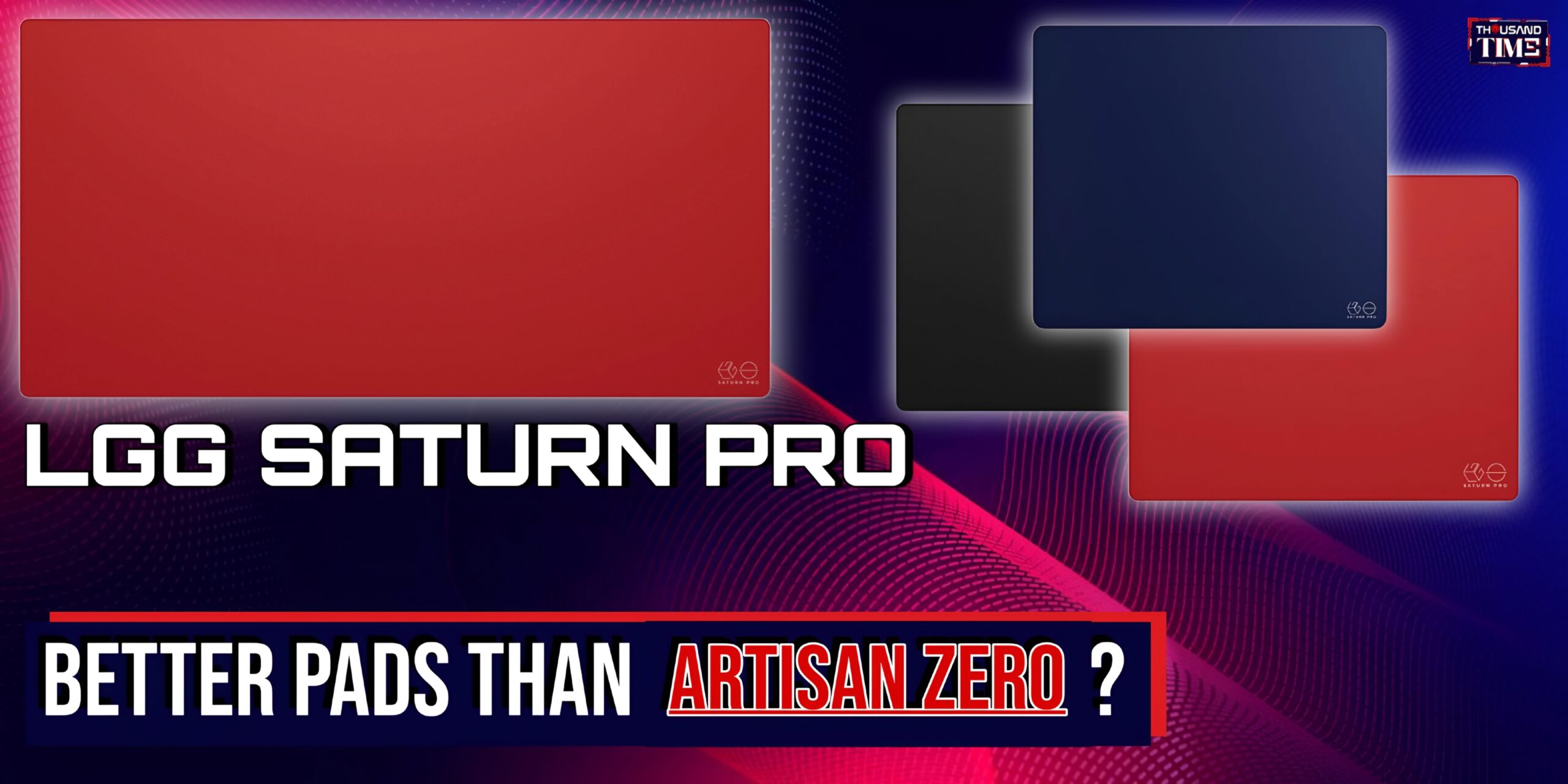
Lethal Gaming Gear’s premium control pad is often called the ‘Artisan killer.’ Here is everything you need to know before upgrading your desk setup.
There is a peculiar kind of frustration that only competitive FPS players know. It does not happen overnight. It creeps in. You start noticing that your crosshair placements feel slightly off. Your micro-adjustments are lagging a half-beat behind your intent. You recalibrate your sensitivity. You update your drivers. You blame the game.
Then you look down at your desk.
The cloth pad you bought eighteen months ago — the one that felt perfectly fine out of the box — has turned into something closer to damp felt. The surface is muddy. The fibers have compressed and shifted under the weight of daily use, and the tracking consistency you relied on has quietly degraded. It is the peripheral nobody blames until they replace it and immediately wonder how they played like that for so long.
If you’ve recently started asking is the LGG Saturn Pro worth it, you are probably already at this crossroads.
The answer, for most tactical FPS players, is yes. But it is worth understanding exactly why — and who this pad is and is not designed for.
What the Saturn Pro Is Actually Made Of
The Saturn Pro is not a complicated product to understand once you move past the spec sheet language. At its core, it is a control-oriented mousepad built around two key choices: what is on top and what is underneath.
The surface uses a circular knit polyester fabric — smooth, lightly textured, and cut without the raised stitching edges that cause wrist drag during wide movements. The texture is subtle enough that it does not create resistance on fast swipes, but present enough to provide the tactile feedback that slows your mouse down exactly when you want it to. It is a surface engineered for deliberate movement: crosshair placement, micro-corrections, the kind of precision that separates a clean headshot from a miss in Valorant or CS2.
The more interesting story is the base.
The Saturn Pro uses a SlimFlex base system that comes in three variants — Firm, Soft, and XSoft — and the differences matter more than marketing language typically suggests. The Firm variant sits at 3mm and offers the closest experience to a traditional hard surface: predictable, stable, with almost no give. The Soft and XSoft variants both measure 4mm and introduce a Poron foam layer that compresses slightly under pressure. With XSoft especially, players can push into the pad during a shot to generate additional stopping friction — a technique that sounds marginal until you try it and realize it fundamentally changes how flick shots land.
Flat-pack shipping means the pad arrives table-ready. No overnight book stacking to flatten curled edges. That detail is a small thing, but for anyone who has received an Artisan pad only to spend three days coaxing the corners flat before a tournament, it carries genuine weight.
The “Artisan Killer” Question
The comparison to Artisan — the long-established Japanese enthusiast brand — is not just community hyperbole. It reflects something real about what has shifted in the premium mousepad market over the last few years.
For most of the past decade, getting the best control surface meant importing from Japan, navigating limited stock windows, and paying a premium that often included international shipping costs and currency conversion risk. Artisan pads earned their reputation through genuine quality, but accessing them as a Western player required effort and patience that most people found exhausting.
The integration of LGG’s expertise into the Pulsar product line was framed explicitly as a move to bring competitive mousepad designs to a global audience with broader availability and guaranteed consistency. That is the commercial language version of something the community had already noticed: the Saturn Pro is genuinely easier to obtain, easier to replace when worn, and priced competitively against pads that require international orders to get your hands on
For many players, the Saturn Pro does not just rival the Artisan Zero in performance. It has quietly replaced it as the default recommendation.
Who Should Buy This — And Who Absolutely Should Not
The Saturn Pro is a control pad. This sounds obvious when stated plainly, but it is the most important thing to understand before spending the money.
For tactical FPS players — Valorant, CS2, anything built around precision aim and deliberate crosshair placement — the Saturn Pro’s slow, sticky glide profile is not a limitation. It is the feature. It allows easy micro-adjustments and provides a stable, controlled glide that directly supports the kind of aim mechanics that win rounds in high-stakes scenarios. The base suctions to the desk with exceptional grip, which means the pad does not shift or drift during an extended session. That consistency compounds over time in ways that players who have never used a truly high-end surface tend to underestimate.
For players who spend most of their time in faster-paced tracking games — Apex Legends, Overwatch 2, anything that rewards wide, sweeping mouse movements — the Saturn Pro will feel like playing through wet concrete. The stopping power that makes it exceptional for tactical flick shots becomes active friction for players trying to track an erratically moving target. This is not a flaw. It is a design philosophy, and it is the wrong philosophy for that style of play.
Budget is the other conversation. The Saturn Pro is not cheap. For players who have never owned a premium surface before, the price asks for a leap of faith that is hard to make without the reference point of having experienced the difference. It is worth it. But it is not for everyone.
Building Around the Pad
A premium control surface rewards premium complementary gear, not because cheaper mice will not work, but because the Saturn Pro’s performance ceiling is high enough that the mouse becomes the variable.
Lightweight wireless mice — the Logitech G Pro X Superlight 2, Razer DeathAdder V3 Pro, Pulsar X2 series — pair cleanly with the Saturn Pro’s resistance profile. The lower the mouse weight, the more the surface’s stopping power is felt as precision rather than drag. Heavy mice on a slow control surface tend to feel sluggish in a way that undermines the whole point.
Mouse skates are worth considering too. PTFE-based skates — Corepad Skatez are the common recommendation — reduce base friction between the mouse feet and the surface in a way that lets the pad’s built-in stopping texture do its job without the mouse glide becoming the dominant variable. It sounds granular, and it is. That is the level this pad is designed to operate at.
For extended sessions, gaming arm sleeves are a reasonable investment. The circular knit fabric is not rough, but it is textured, and arm-to-surface friction becomes noticeable over a long session in a way that affects focus before it affects aim.
Thousandtime Thoughts
The deeper shift the Saturn Pro represents is not really about the pad itself. It is about what the peripheral market has quietly decided a mousepad is.
For years, the surface was the piece of hardware that players bought cheap and replaced often. It was the consumable in the setup — the thing you upgraded when everything else had already been upgraded. The idea that a serious competitive player would spend meaningful money on a mousepad was, not long ago, the kind of thing that required explanation.
That is no longer true. Aim consistency is now understood as a hardware problem as much as a skill problem, and the surface a player uses directly determines the ceiling on what their aim can achieve. The Saturn Pro did not create this shift, but it is the product that made it accessible.
PRODUCT IN THIS POST
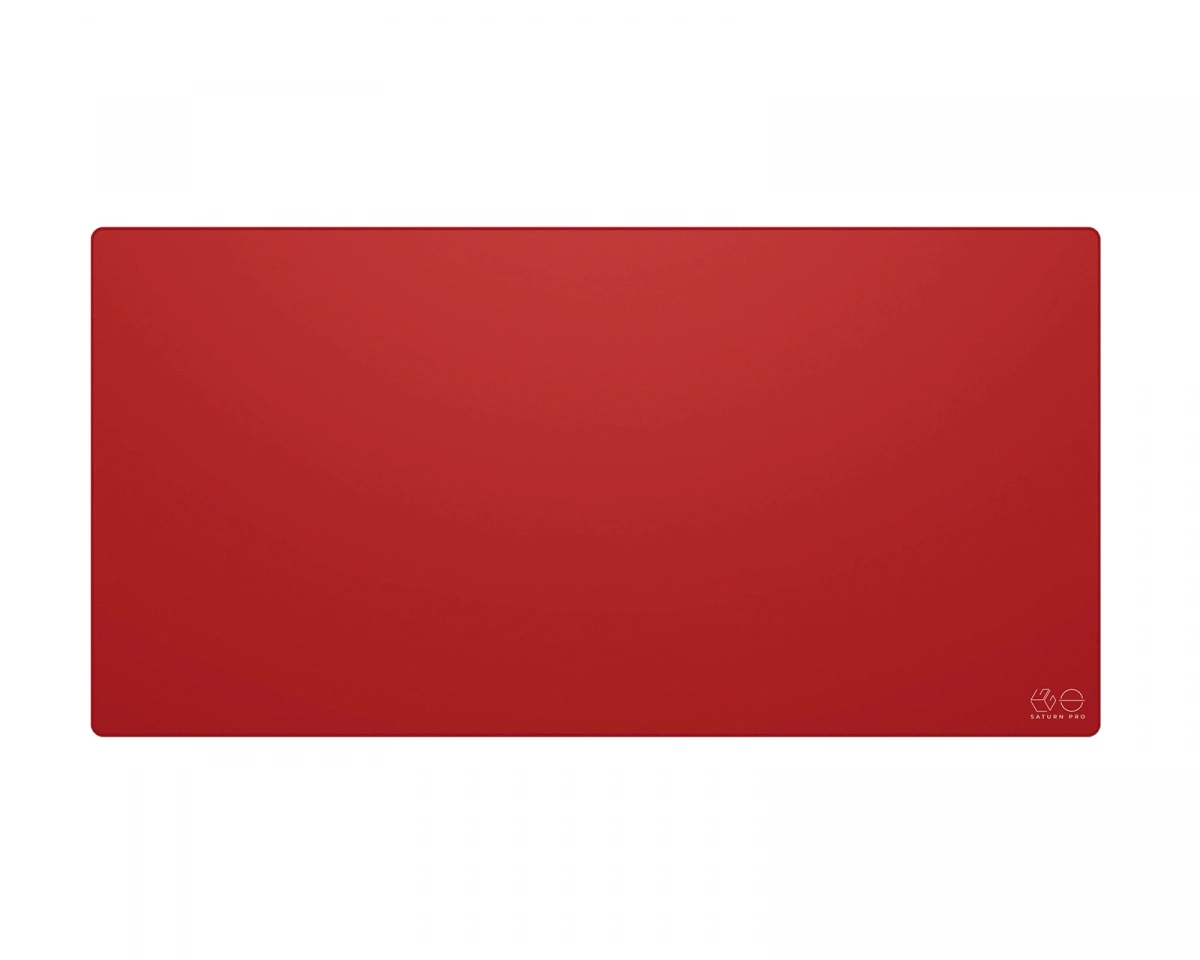
LGG SATURN PRO DESKPAD
Content you might like after reading this
NASA Artemis Watch 2.0: The…
Is the MacBook Neo Good…
Is the Corsair Vanguard Air…

Should You Wait for the…
The iKKO Mind One: 2026’s…