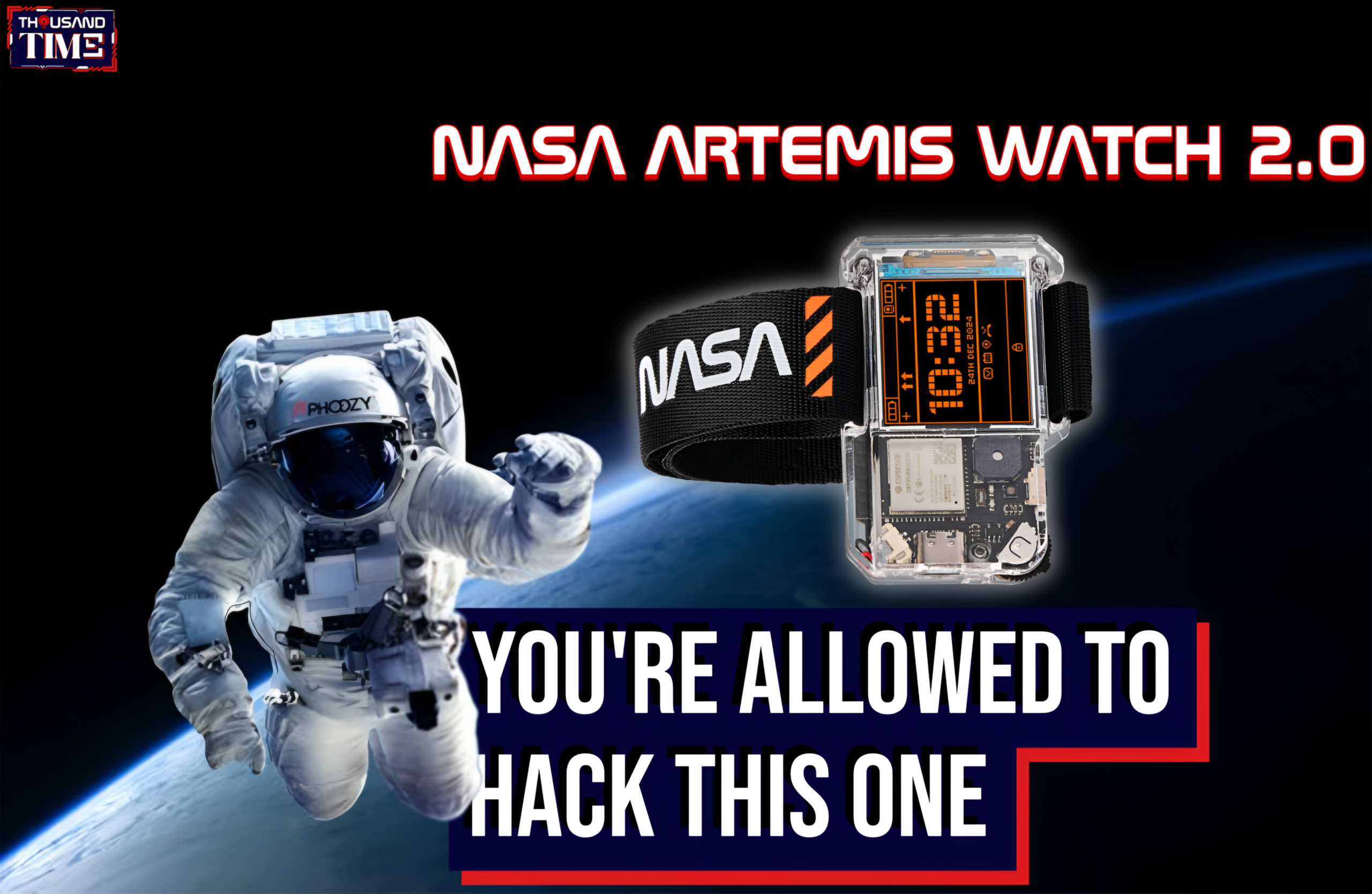
While mainstream wearables lock you out, this open-source, ESP32-powered smartwatch from CircuitMess practically begs you to tear it apart and rewrite its code.
At some point in the last decade, owning a piece of technology stopped meaning you understood it. Your smartwatch tracks your sleep, logs your steps, and quietly judges your resting heart rate — and you have absolutely no idea how. The software is sealed. The hardware is hidden behind glass and brushed aluminum. The company that made it will void your warranty if you look too closely.
This is the quiet frustration behind the growing demand for hackable smartwatches you can program yourself. Not just customize — actually program. Devices where the relationship between you and the hardware is honest.
The CircuitMess NASA Artemis Watch 2.0 is one of the more interesting answers to that frustration. It arrived in early 2026, timed impeccably alongside NASA’s Artemis II mission — the first crewed lunar flight since Apollo 17 in 1972, carrying Reid Wiseman, Victor Glover, Christina Koch, and Canada’s Jeremy Hansen on a flyby that took them farther from Earth than any humans in over fifty years. Space felt urgent again. And here, on your wrist, was a $129 open-source smartwatch you could pull apart and reprogram the same afternoon.
Hardware You Can Actually See
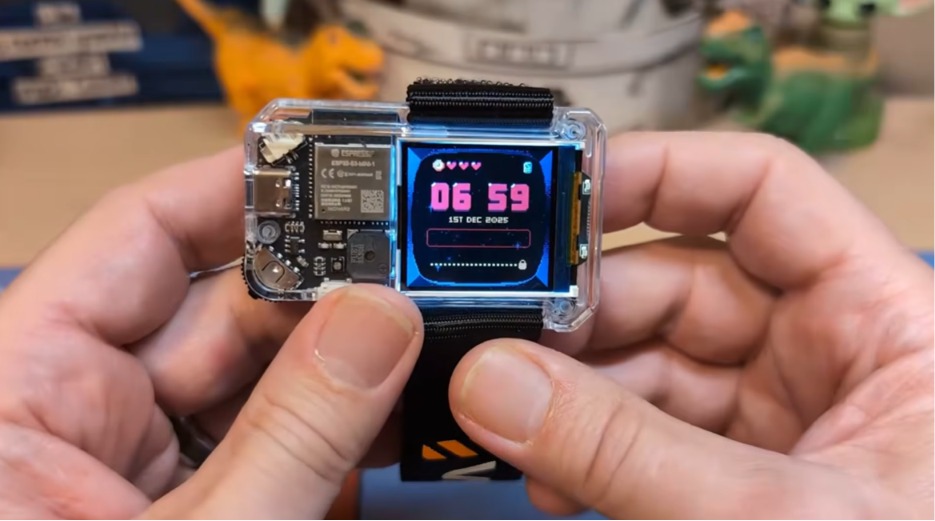
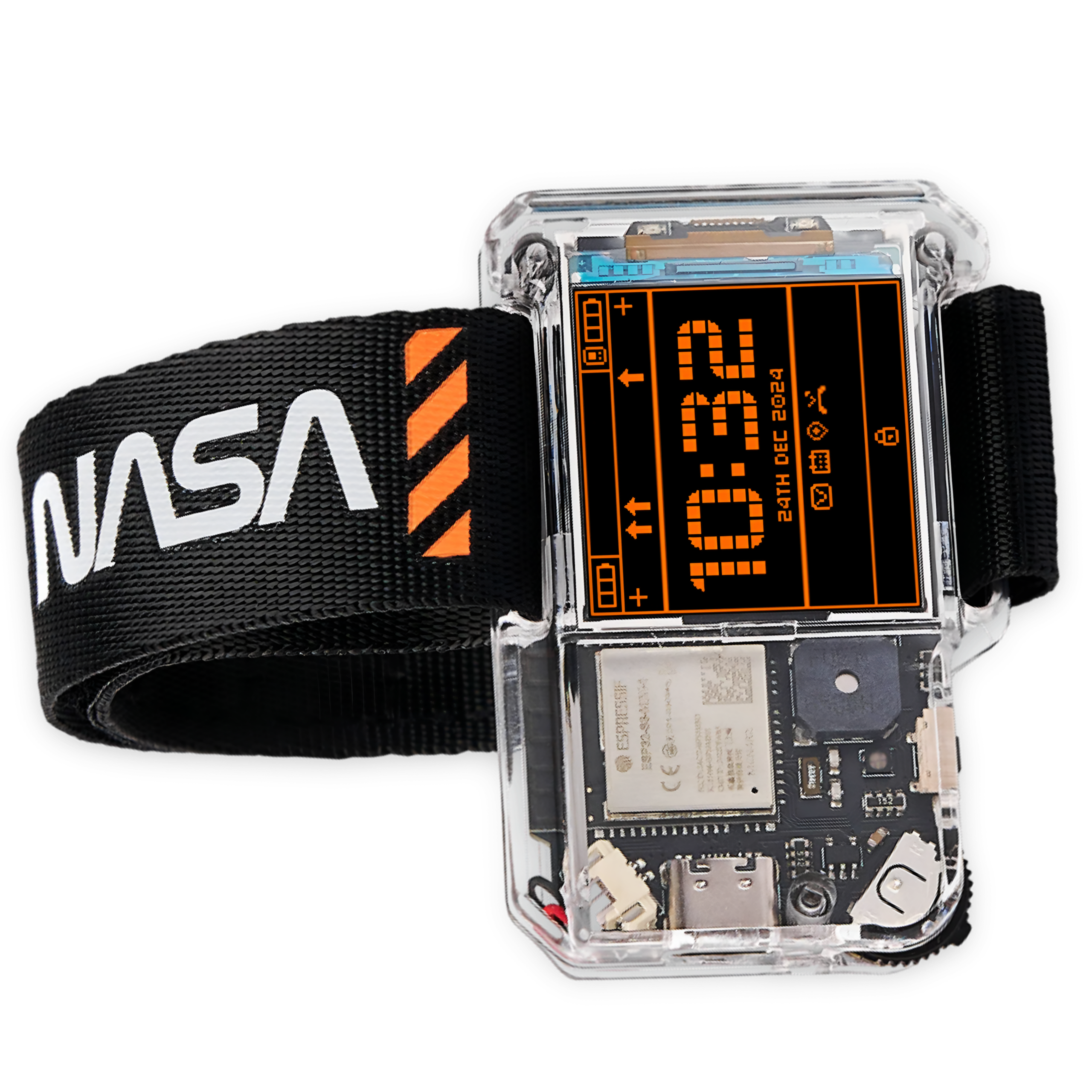
The first thing you notice about the Artemis Watch 2.0 is that it does not look like a smartwatch. It looks like a prop from a science fiction film where the characters haven’t figured out how to make things sleek yet.
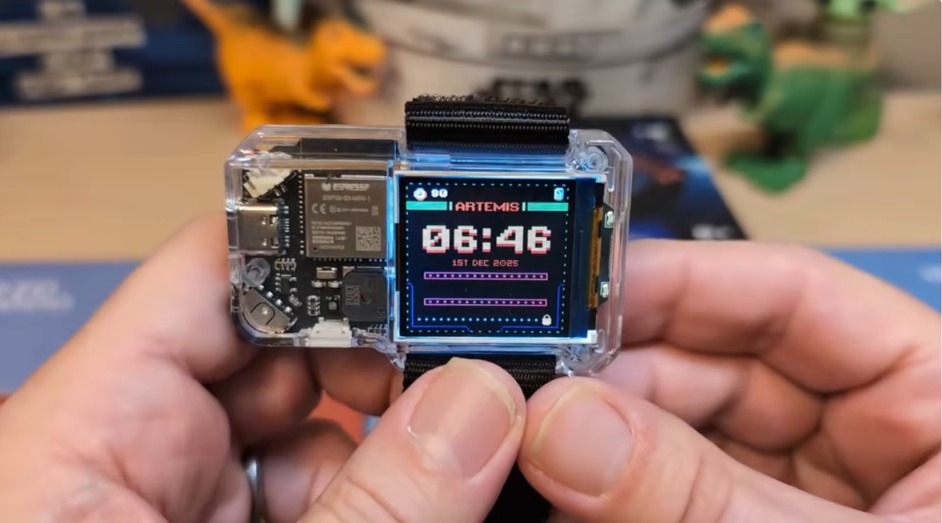
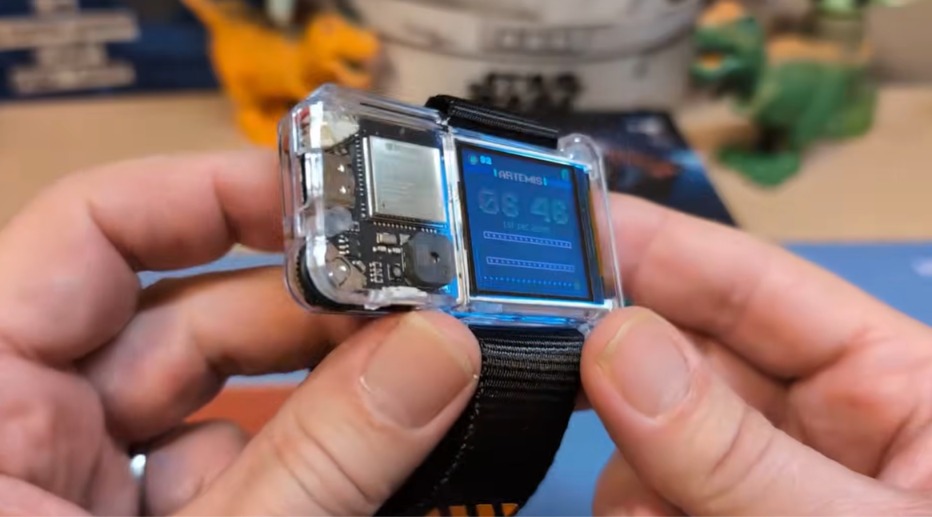
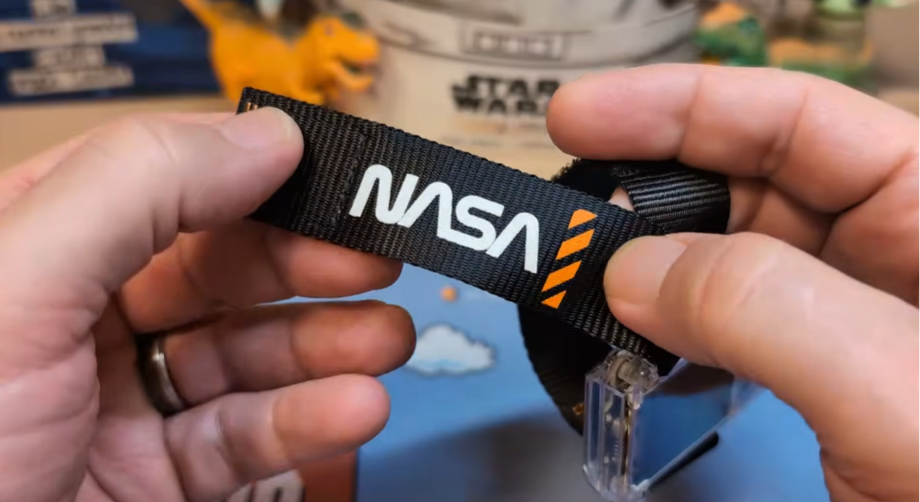
The main body is a transparent plastic rectangle, roughly 1.77 by 2.76 inches, with black strap and orange accents — retro-futuristic in a way that leans into function rather than apologizing for it. The comparisons to the Pip-Boy from Fallout are difficult to avoid once you see it. That’s not an insult. It’s the point.
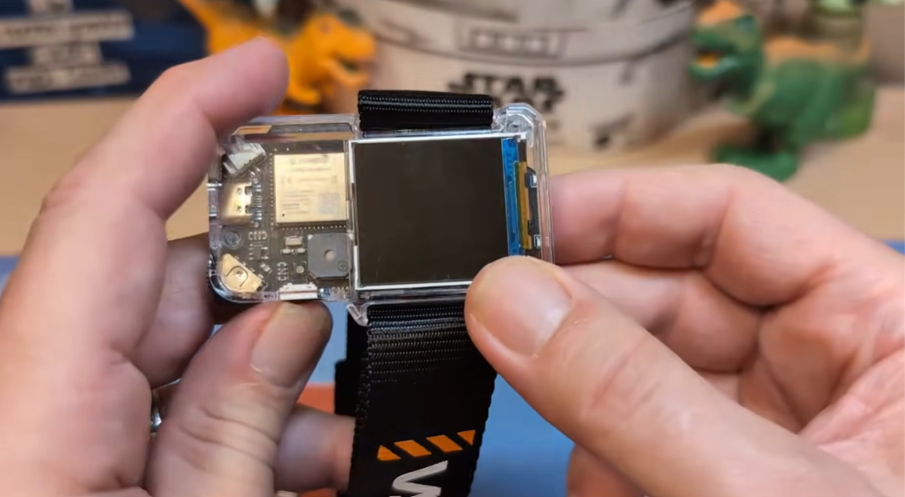
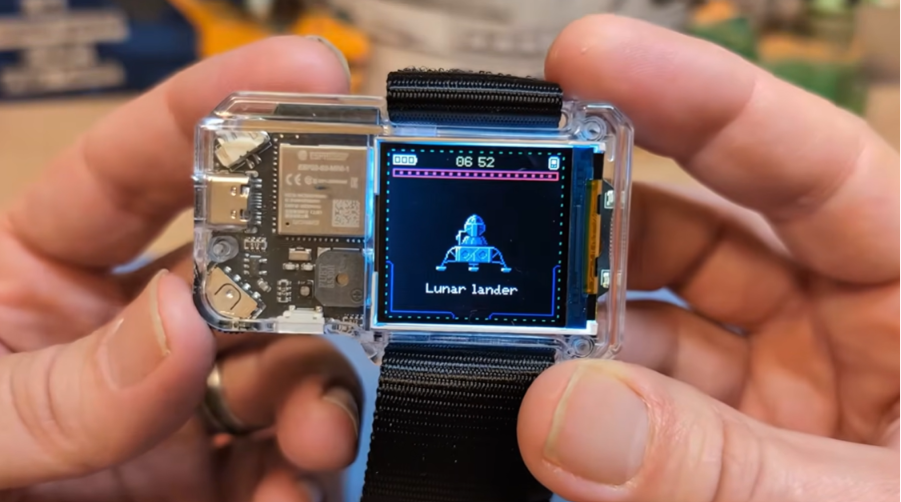
Inside that transparent housing, the mainboard is put on full display. You can see the accelerometer, gyroscope, display, and Bluetooth module doing their jobs, right there on your wrist, in plain sight. There is something oddly satisfying about this. Most consumer electronics treat their internals as an embarrassment — something to be hidden behind premium materials and corporate minimalism. CircuitMess makes the opposite bet: that seeing your hardware working is not an aesthetic compromise, but a feature.
Inside, a dual-core ESP32 chip runs the show alongside a full-color LCD screen. The sensor suite includes an accelerometer, gyroscope, compass, and temperature sensor — modest by flagship standards, but more than enough to build real projects with. The ESP32 is a well-documented, genuinely accessible microcontroller with a strong community behind it, and CircuitMess leaning on it here is a reasonable choice for something designed to be opened up and modified. The GadgeteerTwo Broke Watch Snobs
Coding Your Wrist
The software approach here is where CircuitMess makes its strongest case. Three coding paths cover different skill levels. CircuitBlocks uses a visual drag-and-drop system for total beginners. Python lets you write real scripts and work with variables. The Arduino IDE opens up full control over the hardware for experienced users.
That progression — blocks to Python to Arduino — is not arbitrary. It follows the same path a large portion of working developers actually took. It is structured like a curriculum without calling itself one. A nine-year-old with no prior experience can start designing watch faces in CircuitBlocks on day one. A teenager who has already written some Python can go deeper the same week. An adult with Arduino experience can go deeper still. The watch grows with the person wearing it.
You can design custom watch faces with mission-inspired images, build games that respond to arm movements, monitor temperature changes while hiking, or create apps that activate the buzzer and LEDs based on compass headings. The sensor suite — accelerometer, gyroscope, temperature sensor, compass — feeds live data directly into whatever you are building. These are real sensors. Real data. Real projects.
What CircuitMess has done, quietly but effectively, is build a device where the learning process and the making process are the same thing. You are not studying how to eventually build something. You are building it. The watch on your wrist is the output of your own work.
CircuitMess gave users a real toolkit, not a locked-down toy with a coding label. That phrase lands harder than it should in 2026, when “educational technology” has become a genre defined by managed experiences and sandboxed creativity. The Artemis Watch 2.0 is genuinely open in a way most products that claim to be open are not.
Who Should Wear It — And Who Really Shouldn’t
The age recommendation is 9 and up, and that framing is actually useful for adults too. If you are looking for a daily driver — something to quietly track your workouts, ping you when a text arrives, and look good in a meeting — this is not your watch. The battery is a 600 mAh cell. Notification syncing via Bluetooth works, though iOS support appears limited, with the Bangle.js Gadgetbridge app currently required for pairing. The finish is transparent plastic, not sapphire crystal. It does not track your heart rate.
The Artemis Watch 2.0 is built for makers, Python beginners, right-to-repair advocates, and anyone who views their wristwear as a project rather than a passive utility. It is for the person who has ever looked at a piece of technology and wondered — genuinely wondered — what’s actually happening inside it. If that is you, then $129 is a remarkably low price of entry.
CircuitMess ships it fully functional, but every layer of the software is accessible and modifiable. That distinction matters. You are not buying a kit you have to finish before it becomes useful. You are buying a working device that also happens to invite you in. The out-of-the-box experience is fine. What it can become once you start coding it is the actual product.
The Right Moment for This Watch
NASA’s Artemis II lifted off from Kennedy Space Center on April 1, 2026, carrying four astronauts on humanity’s first crewed lunar mission in over 50 years. The timing gave the Artemis Watch 2.0 a second life in the cultural conversation — a programmable NASA-licensed wearable arriving at precisely the moment real astronauts were circling the Moon. As one reviewer put it, it’s the kind of moment marketing can’t manufacture.
But the timing matters for a reason beyond the optics. Space exploration has always carried a particular cultural message: that complex systems can be understood, that problems can be solved by people willing to learn how things work. That ethos is exactly what the Artemis Watch 2.0 is selling. Not just a gadget. A mindset.
In an era where right-to-repair legislation is creeping forward country by country, where manufacturers are increasingly challenged on their rights to seal their devices from the people who own them, the Artemis Watch 2.0 is a small but coherent act of counter-programming. It is not fighting Apple. It is not pretending to be Apple. It is simply building something for the people who never wanted to be passive consumers of hardware in the first place.
The value of this watch is not what it does out of the box. It is what you make it do. That is an unusual proposition in 2026. It is also, increasingly, a necessary one.
Thousandtime Thoughts
The NASA Artemis Watch 2.0 is an educational device, not a consumer wearable. That distinction is the most important thing to understand about it. If you buy it expecting a smartwatch that competes with established fitness trackers or notification-heavy wrist devices, you will return it within a week. If you buy it understanding that you are purchasing a programmable hardware platform that happens to sit on your wrist, you will probably get real value from it.
At $129, it is priced reasonably for what it actually is: a working introduction to embedded programming, open-source hardware, and physical computing. The three coding tiers mean it has a genuine shelf life — it does not become useless once you outgrow the beginner level. The sensor hardware is functional and real.
Is this a sign of a broader shift toward devices people actually control? Maybe. There is clear demand. Whether that demand ever scales beyond a dedicated niche is a genuine open question. For now, the Artemis Watch 2.0 is a solid tool for a specific kind of person. That person knows who they are.
PRODUCT IN THIS POST
NASA Smartwatch Artemis 2.0
Content you might like after reading this

Is the MacBook Neo Good…

Is the Corsair Vanguard Air…

Should You Wait for the…

The iKKO Mind One: 2026’s…