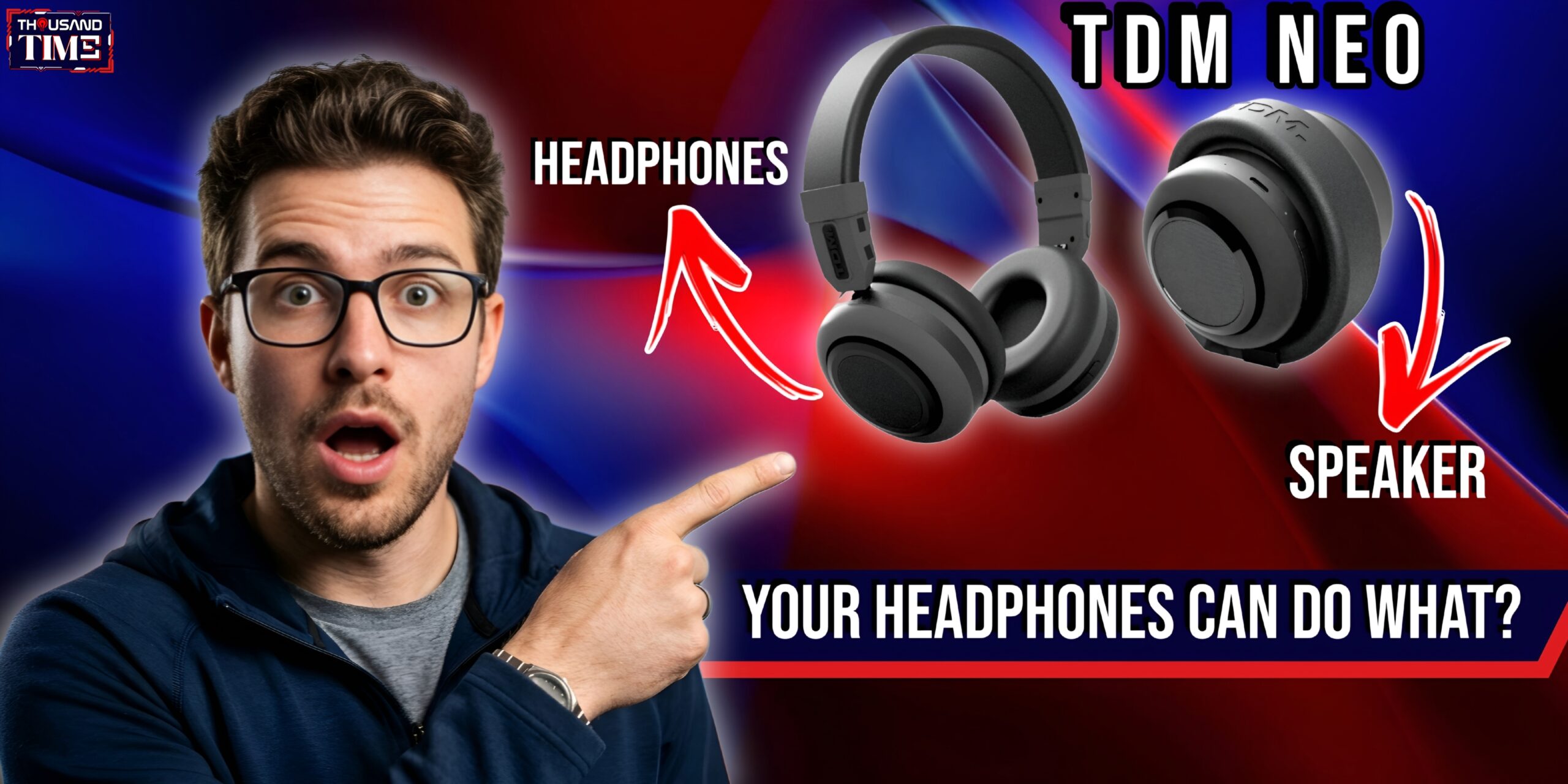
A 200-hour battery, modular parts, and a physical twist mechanism. We dissect whether this audio shape-shifter is a genuine tech evolution or beautifully chaotic over-engineering.
The graveyard of ambitious 2-in-1 gadgets is long and undignified. There’s the smartphone with a built-in pico projector that made everything look like a PowerPoint in a dimly lit closet. The smartwatch with a removable camera module that exactly nobody wanted. The laptop-tablet hybrid with a keyboard dock so heavy it defeated the entire point of tablet mode. The Swiss Army philosophy applied to consumer electronics has, historically, produced a lot of knives that do nothing particularly well.
So when Tomorrow Doesn’t Matter — a startup with a name that sounds like either a philosophical stance or a loose attitude toward shipping timelines — unveiled a pair of headphones that physically transform into a portable Bluetooth speaker, the reasonable response was measured skepticism. The question on the table isn’t whether the TDM Neo is impressive as a concept. It clearly is. The question is whether the TDM Neo is worth it for someone who just wants to listen to music without performing a magic trick first.
The short answer is: yes, for a specific kind of person. The longer answer requires understanding what TDM actually built here — and why it feels so weirdly out of step with modern consumer electronics in a way that might actually be a compliment.
The Anatomy of the Twist
The mechanism is the whole story, so it’s worth slowing down on it.
Twist the earcups and the headband folds inward, wrapping around them. The outward-facing drivers — two of them, independently tuned 40mm units — take over automatically from the two inward-facing headphone drivers. The result is a palm-sized speaker that didn’t require you to unclip anything, connect anything, or open a companion app. You just wrenched it.
The sensation is somewhere between cracking a glow stick and solving the first layer of a Rubik’s cube. It has a satisfying tactile snap, the kind of physical feedback that’s been almost entirely designed out of modern electronics. Whether that’s a premium engineering achievement or clever exploitation of the fact that our brains are wired to enjoy clicking things is debatable. Either way, it works.
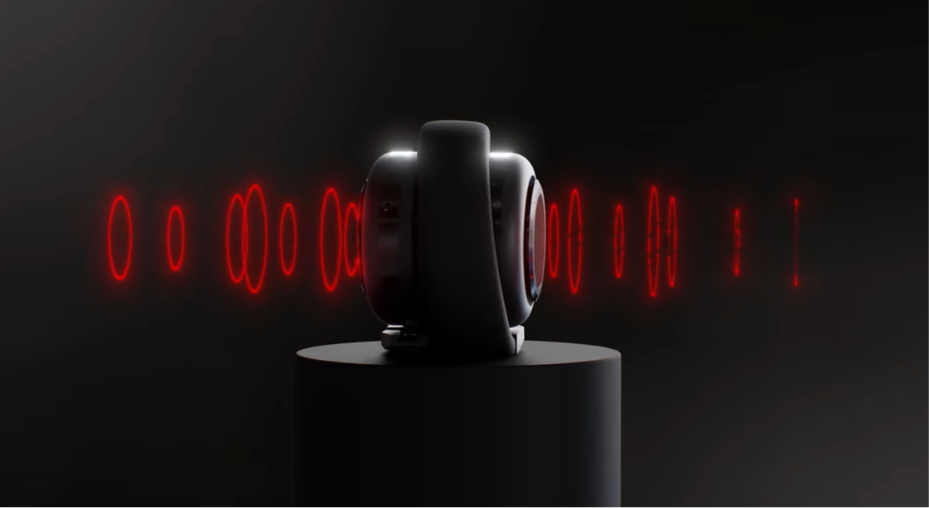
The stare factor, however, is real. Doing this in a quiet coffee shop — unhinging your headphones mid-song to share a track with a friend across the table — produces the kind of social moment that modern tech almost never generates anymore. People look up. It’s the AirDrop of physical gestures, except everyone in the room can see it happening.
Build quality feels solid. The chassis is 350 grams, which is meaningfully heavier than most over-ear headphones. After a long listening session, you feel it. Not in the jaw-clenching way of a genuinely uncomfortable headset, but as a slow awareness that something denser than usual is resting on your skull. That weight is the acoustic chamber doing its work. You can’t have the speaker without paying the tax.
The twist mechanism itself carries a question that only time will answer: how does it hold up at month nine? Swivel joints are mechanical components, and mechanical components fail. TDM has filed patents on the design, and the early units feel sturdy. But “feels sturdy at launch” and “feels sturdy after a year of commuting” are different assurances, and the second one requires ownership to know.
200 Hours vs. Pure Silence
Here is where the spec sheet becomes genuinely interesting, and also where the product’s personality really reveals itself.
The TDM Neo claims 200 hours of playback in headphone mode with its user-replaceable battery. That number is so far above the class average — most premium wireless headphones top out somewhere in the 30-to-40-hour range — that it initially reads like a typo. It isn’t. The device carries the kind of endurance that removes charging from your mental model of it entirely. You stop thinking about the battery the way you stop thinking about the structural integrity of the floor you’re standing on. It just holds.
The replaceable battery module is the understated hero of the whole package. At $249, the Neo could have been designed with a sealed, non-removable cell like virtually every other Bluetooth audio device on the market. Instead, TDM built a product you can keep. Years from now, when a fresh module is available, you replace it rather than binning the whole device. In a landscape where right-to-repair legislation is still fighting for relevance, a company proactively building repairability into a consumer audio product is a genuinely different posture.
But then there’s the other side of the spec sheet. No Active Noise Cancellation. At all. None.

At $249, the absence of ANC is a choice significant enough to define who this product is for. Sony’s WH-1000XM5, Bose’s QuietComfort line, and a dozen other competitors at similar price points offer ANC as a matter of course. For a category where blocking out the world has become the flagship feature, opting out is a statement. A 200-hour battery means you could theoretically survive an apocalypse with your soundtrack fully intact. The passive isolation means you’ll hear every bit of it — the sirens, the arguments, the crying infants in 30B. The world is right there.
What TDM traded was digital software sophistication — ANC algorithms, spatial audio processing, adaptive EQ — for raw hardware endurance and mechanical ingenuity. It’s a fundamentally different philosophy: fewer chips, more parts. It’s the opposite direction from where audio technology has been pointing for the last decade, and it’s interesting precisely because of that.
Passive isolation is functional, not transformative. In a calm office or a hotel room, you won’t miss ANC. On a long-haul flight or a packed train at rush hour, you will notice its absence. That distinction is less about whether the Neo is good and more about whether the Neo is right for how you actually live.
The Public Commuter Hazard
At $249, the absence of ANC is a choice significant enough to define who this product is for. Sony’s WH-1000XM5, Bose’s QuietComfort line, and a dozen other competitors at similar price points offer ANC as a matter of course. For a category where blocking out the world has become the flagship feature, opting out is a statement. A 200-hour battery means you could theoretically survive an apocalypse with your soundtrack fully intact. The passive isolation means you’ll hear every bit of it — the sirens, the arguments, the crying infants in 30B. The world is right there.
What TDM traded was digital software sophistication — ANC algorithms, spatial audio processing, adaptive EQ — for raw hardware endurance and mechanical ingenuity. It’s a fundamentally different philosophy: fewer chips, more parts. It’s the opposite direction from where audio technology has been pointing for the last decade, and it’s interesting precisely because of that.
Passive isolation is functional, not transformative. In a calm office or a hotel room, you won’t miss ANC. On a long-haul flight or a packed train at rush hour, you will notice its absence. That distinction is less about whether the Neo is good and more about whether the Neo is right for how you actually live.

The person who should probably not buy the Neo is anyone whose primary listening environment is public transit or open-plan offices. The lack of ANC isn’t a dealbreaker in isolation. The social dynamic of the twist mechanism in a commuter context is. Watching someone convert their headphones into a speaker on a packed train is not a social moment. It’s an incident.
The product is not confused about who it’s for. Its marketing leans hard into outdoor scenarios, spontaneous social listening, and the impromptu “put it on speaker” moment among friends. That framing is honest and accurate. The challenge is that “spontaneous outdoor social listening” describes a narrower demographic than “everyone who wears headphones,” and the $249 price point is asking that narrower group to commit.







Thousandtime Thoughts
The 2-in-1 category has a poisonous reputation because most of its entries do two things adequately by doing neither thing especially well. The TDM Neo mostly escapes this trap. It functions as a legitimate headphone and a legitimate speaker. The transformation mechanism is tactile and reliable rather than gimmicky. The battery situation is extraordinary. The repairability is genuinely ahead of its class.
It’s not for everyone. The weight is noticeable, the ANC absence is real, and the full speaker-mode battery drops to around 10 hours — which sounds like a lot until you realize it’s now in competition with dedicated portable speakers that run longer. The premium audio performance of a dedicated $249 headphone it is not.
But the question isn’t whether it beats the best standalone devices in either category. The question is whether it justifies replacing both. For the right user — traveling light, valuing mechanical simplicity, not needing ANC for their daily environment — the answer is yes.
Is the TDM Neo worth it? On balance: yes, with a clear-eyed sense of who you are and where you listen.
PRODUCT IN THIS POST
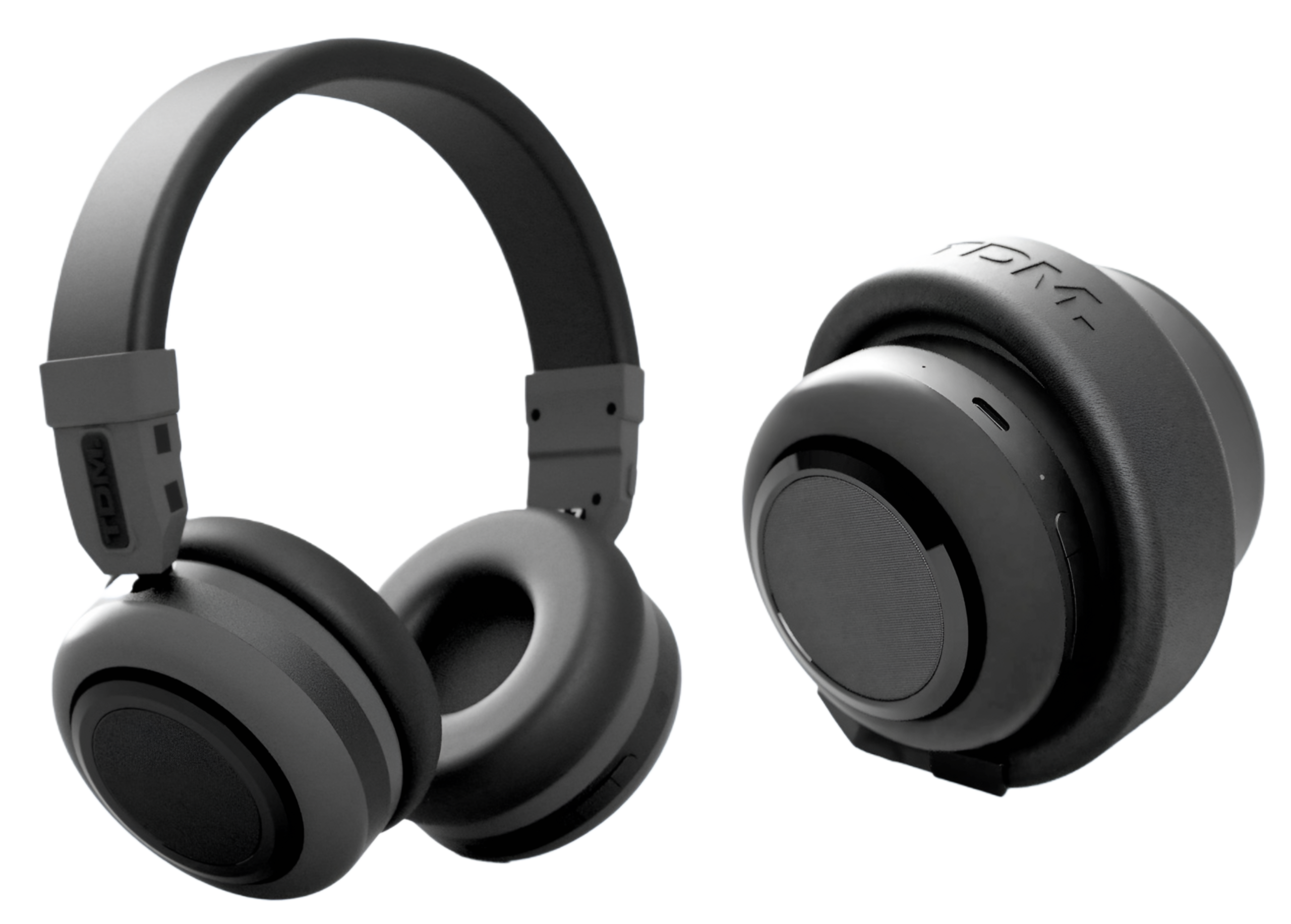
TDM NEO Hybrid Headphone
Content you might like after reading this

Is the LGG Saturn Pro…
AM Infinity Review: When a…

Valve’s Ibex Just Rewrote the…

Is the Corsair Vanguard Air…

Should You Wait for the…

Best Controller for Docked ROG…

GPD Win 5 Review: Can…

AndaSeat Novice Review: The “Stealth”…

Razer Viper V3 Pro vs.…

How Intel’s New “Binary Tool”…

The Mountain Everest Max: Is…

SteelSeries QcK Review (2026): Still…

Why the Sony WH-1000XM6 Claims…