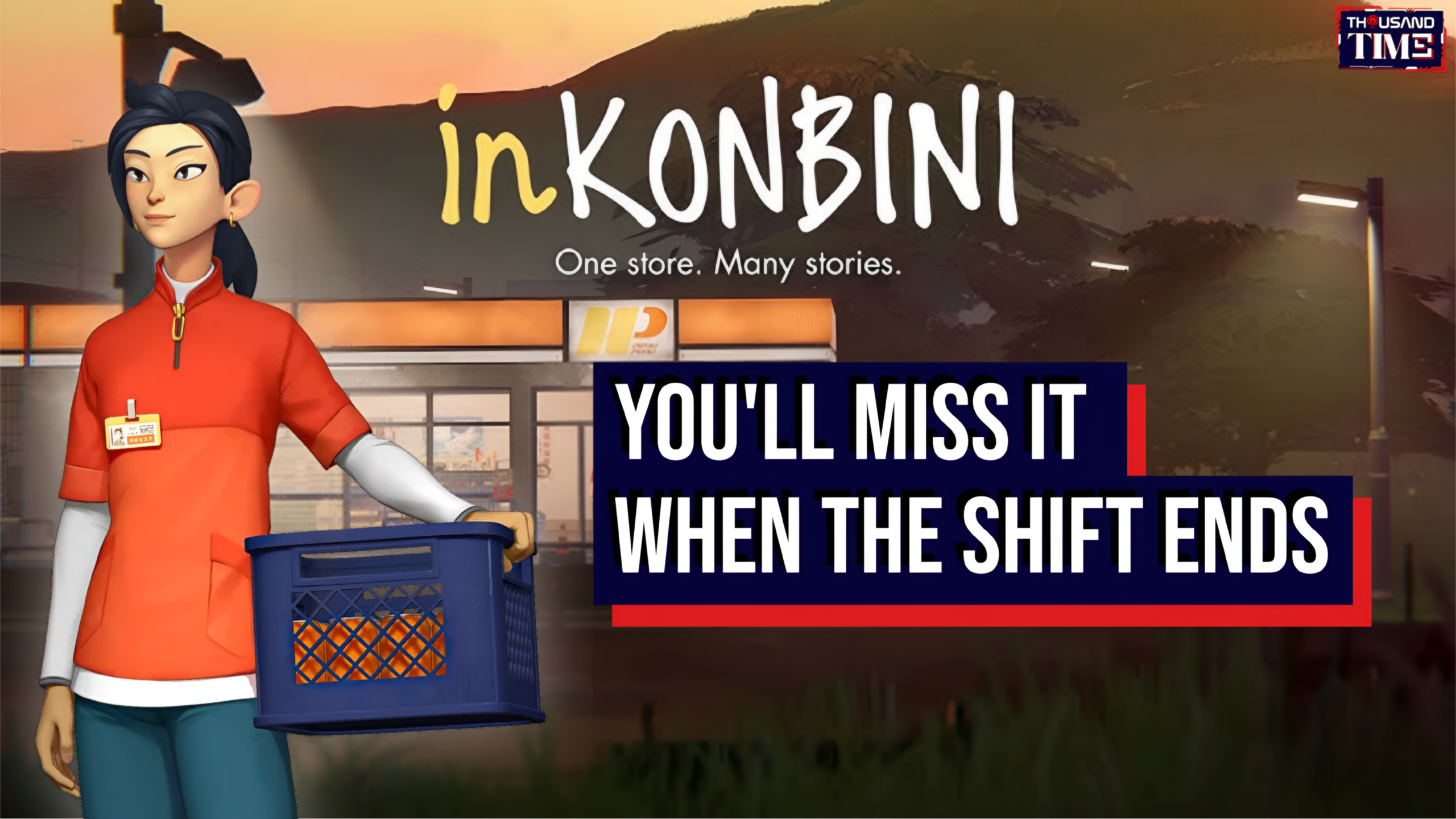
Forget farming simulators. The most relaxing indie game of 2026 wants you to stock shelves, arrange magazines, and listen to your customers in a 1990s Japanese konbini.
There is a particular kind of exhaustion that comes from modern gaming. Not the satisfying kind — the kind where you’ve finally cleared the dungeon or squeezed out a last-second win — but the ambient stress that arrives when a game treats every moment as a high-stakes emergency. Someone always needs saving. Something is always on fire. The world will end if you don’t figure out this puzzle in the next thirty seconds.
inKonbini: One Store. Many Stories is, in every conceivable way, the antidote to that.
The cozy Japanese convenience store game inKonbini — developed by Tokyo-based indie studio Nagai Industries and released on April 30th — is not asking you to save the world. It’s asking you to restock the milk. To sweep the floor before the morning rush. To listen, patiently, to the older gentleman who comes in every evening and has more on his mind than he lets on. In a gaming landscape that reflexively reaches for spectacle, this is a genuinely radical act of restraint.
The Store That Feels Like a Memory
There is a reason the konbini — Japan’s iconic convenience store — has become something of a cultural obsession beyond Japan’s borders. Tour operators in Tokyo now offer guided walks through their aisles. Travel writers devote entire essays to the onigiri selection. These are not just shops. They are a particular kind of third space: always open, always warm, reliably stocked, and somehow immune to the chaos of the street outside.
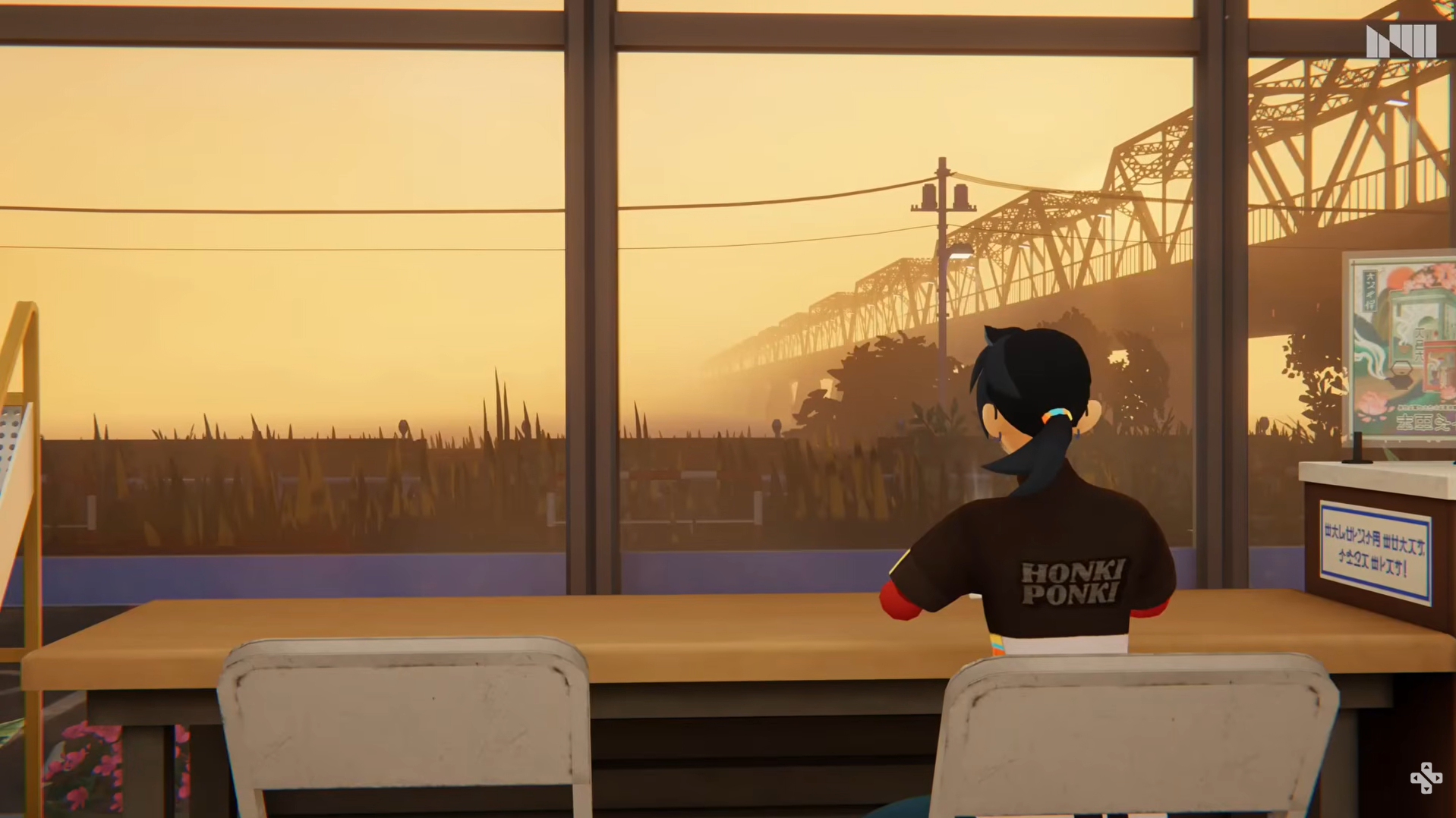
inKonbini understands this instinctively. The game’s setting is a small-town branch of Honki Ponki, run by the aunt of Makoto Hayakawa — a college student filling her summer behind the counter. The period is the early 1990s, and the art direction leans fully into it. Warm golden-hour light. Character designs that feel lifted directly from a mid-era Miyazaki production. The unmistakable visual grammar of an era before everything went sleek and minimal.
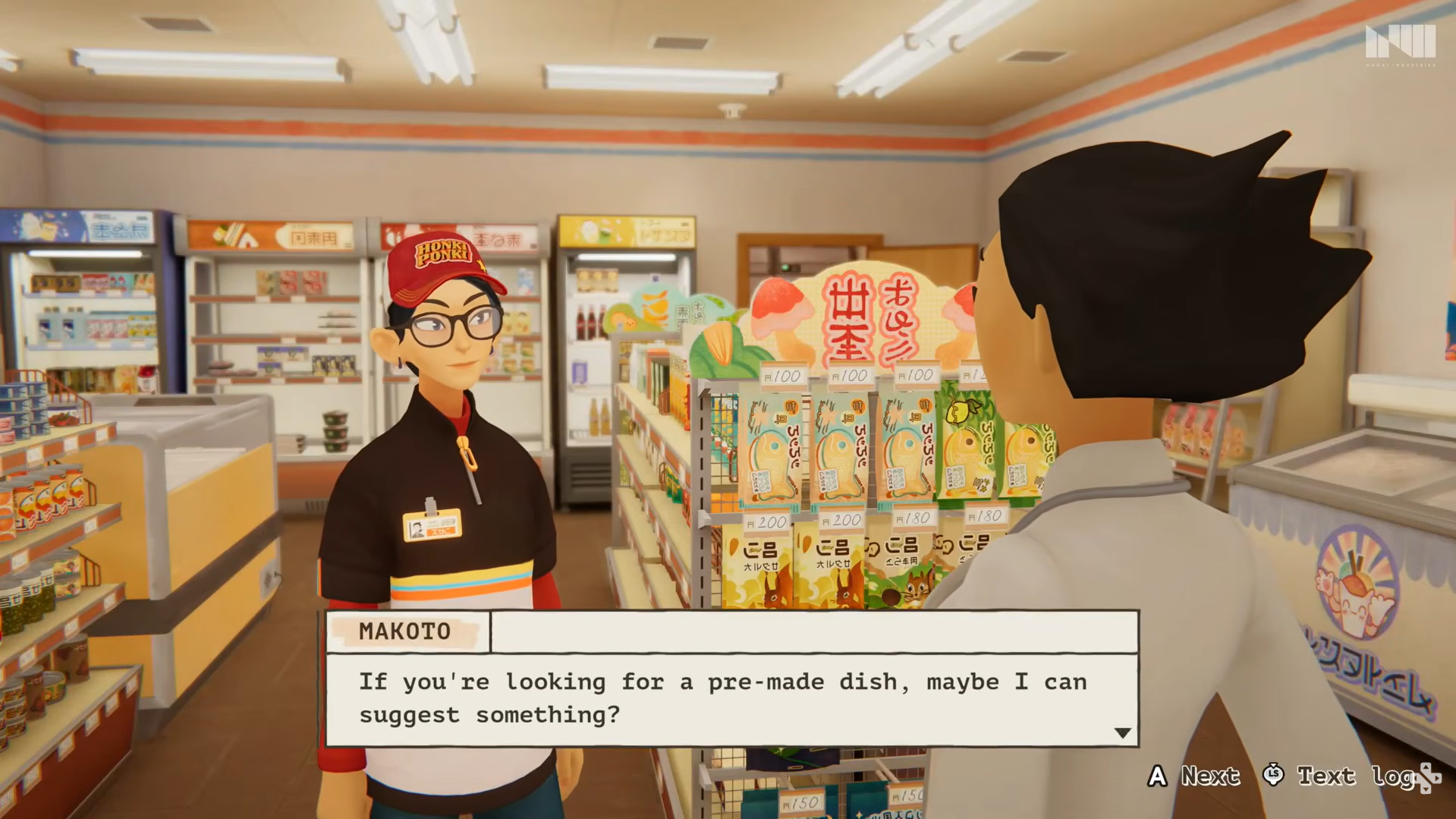
That specific temporal choice matters more than it might first appear. The 90s konbini existed before the standardization and corporate optimization that would later flatten so much of retail into anonymous efficiency. It was a neighborhood space in the truest sense — a place where the same faces appeared at predictable hours, where the staff knew which customer would always ask about the new magazine delivery, where small rituals accumulated into something that felt, over time, like belonging.
The game renders all of this with genuine care. It is not just aesthetically nostalgic. It is architecturally nostalgic — built like a space you want to inhabit, not one you want to conquer.
Stocking Shelves as a Spiritual Practice
What does the player actually do in inKonbini? That is, honestly, a harder question to answer than it sounds.
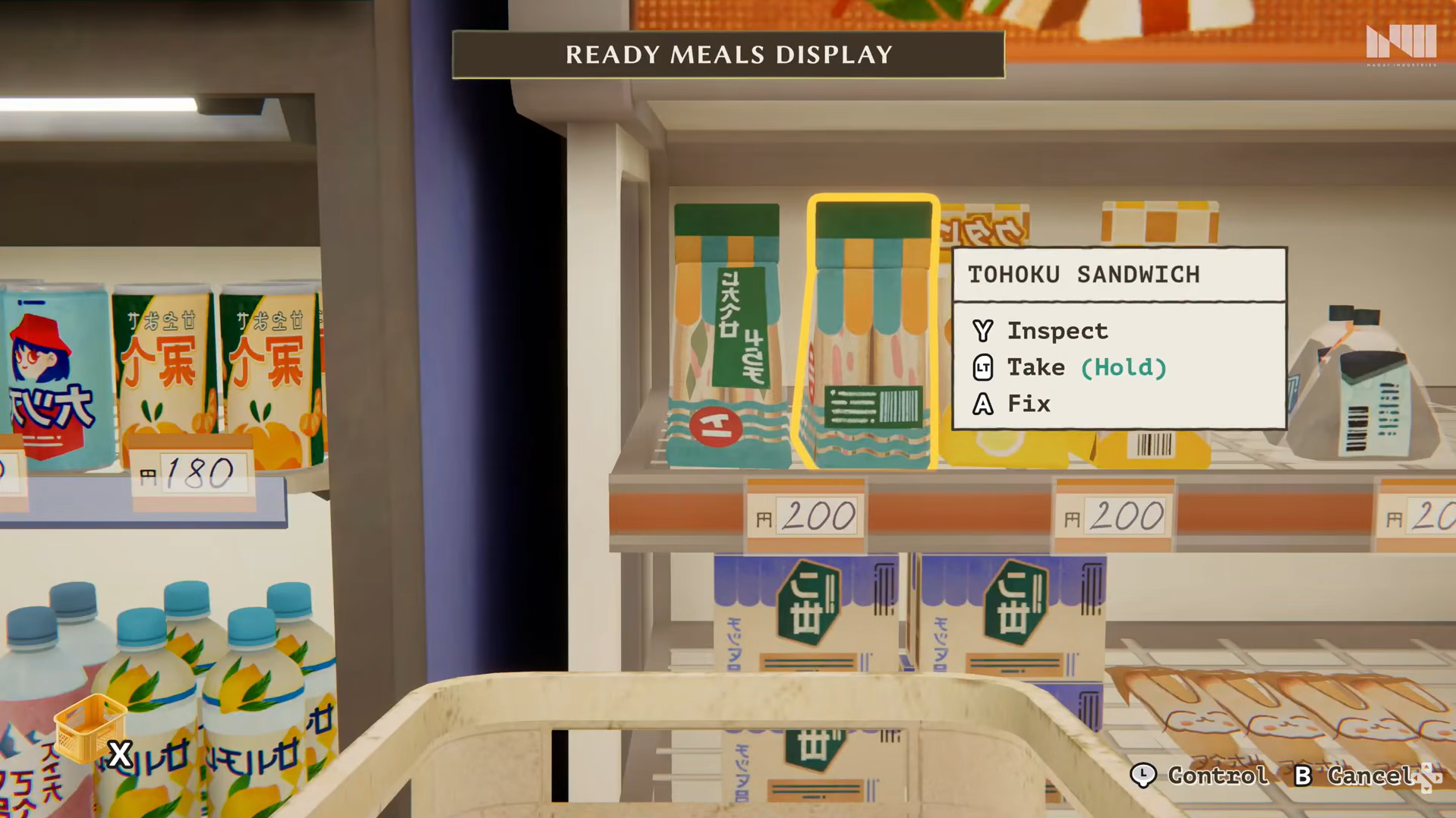
You restock shelves. You manage deliveries. You handle spills. You scan items at the register and make change for customers who come in at odd hours with things weighing on them. There are light mini-games — a retro phone order system, tidying displays to a satisfying standard — and there are no fail states waiting to punish your mistakes. Progress here is not measured in resources accumulated or levels cleared. It is measured in conversations had.
The customers are where the game earns its emotional weight. They are not randomly generated. They are recurring figures with lives that intersect with Makoto’s in ways that slowly become meaningful. A regular wrestling with a health issue. A kid burning through his pocket money at the capsule toy machine, obviously killing time waiting for something. An older woman who always arrives just before closing and never explains why.
These are not obstacles. They are the actual content. Each interaction functions less like a game mechanic and more like a narrative puzzle — one where paying attention is the only real skill required. The game leans into the Japanese concept of ichi-go ichi-e, the idea that ordinary moments carry real meaning. Whether you feel that philosophy or just notice it intellectually probably determines whether inKonbini becomes one of your favorite games of the year or a pleasant but forgettable afternoon.
The repetition is also, genuinely, the point. Restocking the same shelf twice is not a design failure. It is the game gently asking you to find comfort in the rhythm of a task, rather than always demanding novelty from it. There is a version of this that could feel hollow. In inKonbini, it mostly feels earned.
The Checkout Line: Who This Is Really For
inKonbini is not a simulation game in any rigorous sense. It is not trying to bury you in shop-management spreadsheets. Early Steam reviews have noted the lack of deep inventory tension — you will not find yourself white-knuckling a supplier negotiation or desperately pivoting strategy when the numbers go sideways. The management loop is gentle, deliberately so, and if you arrived hoping for something closer to a tycoon game, you will leave disappointed.
inKonbini belongs in the same conversation as Unpacking, Coffee Talk, and A Short Hike — games that treat the absence of pressure as a design philosophy rather than an oversight. It will resonate deeply with players who find ASMR content genuinely calming, who have ever felt soothed by the idea of a slow, well-organized space, or who consume Japanese slice-of-life media precisely because of its commitment to the unhurried and the small. If you have ever watched a Makoto Shinkai film and found yourself more moved by the ordinary domestic scenes than by the dramatic ones, inKonbini was made for you.
For players who need failure to feel investment, or complexity to feel engaged — it is worth trying the free Steam demo first. The game will tell you within twenty minutes whether its pace suits yours. That is genuinely useful for an atmosphere-driven game. The rhythm either clicks or it doesn’t, and there is no shame in discovering you need more friction to feel present in a game world.
Thousandtime Thoughts
What inKonbini ultimately argues — quietly, through the texture of its gameplay rather than any explicit statement — is that service work contains a kind of meaning that is almost never represented in the medium. Games are built around exceptionalism. The chosen one. The hero. The person who does something no one else could do.
Makoto Hayakawa is not exceptional. She is someone showing up, doing a job, and paying attention to the people around her. The game finds this sufficient. More than sufficient, actually — it treats that attentiveness as the most significant thing a person can offer.
The developers described wanting to create a place where small choices matter, where brief encounters can quietly change someone’s life, and where even the smallest moments can stay with you long after they’re gone. That ambition is either charming or slightly precious depending on your disposition, but the game largely delivers on it.
As gaming technology becomes more capable of rendering infinite universes — procedurally generated galaxies, physics engines of terrifying fidelity — there is something genuinely interesting about the fact that one of the most talked-about releases of 2026 confines you to a single, beautifully rendered room. Not as a limitation. As a premise.
In a medium obsessed with saving the world, inKonbini makes a radical pitch: just save the neighborhood, one egg sandwich at a time.
Content you might like after reading this
Scramble Knights Royale Explained: The…

Why Pragmata Makes Escort Missions…

Belmont’s Curse: The True Origin…
Rinthine Game Early Access: Survival…