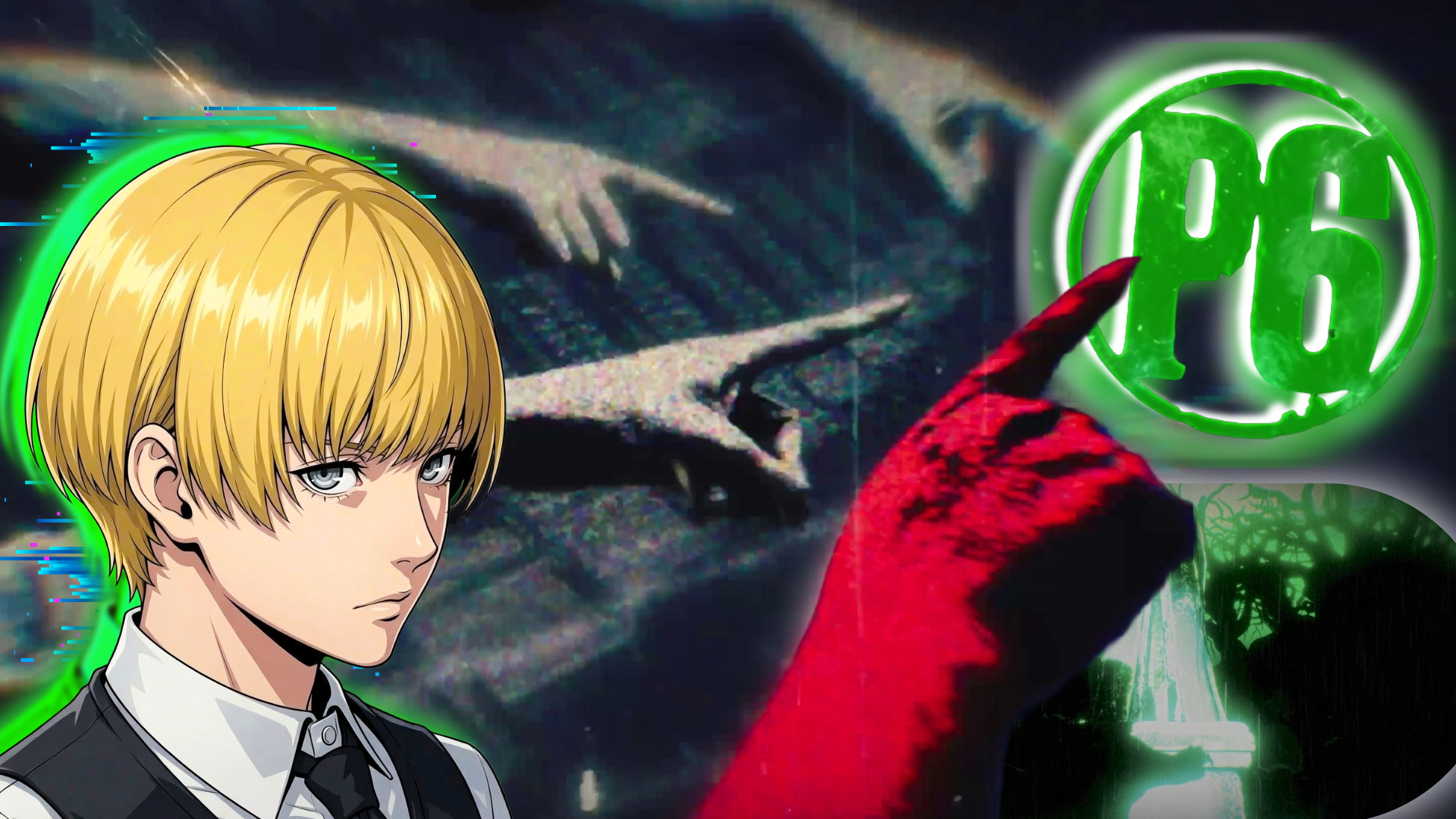
Decoding the latest digital leaks, neon green graveyard aesthetics, and how Atlus is trading Tokyo jazz for a dark, hyper-digital underworld.
For a franchise built on the idea that ordinary life is hiding something underneath, Persona has gotten unusually good at making its own marketing feel like a mystery you have to solve.
A few weeks ago, storefront pages for an unannounced game quietly went live on Steam, the PlayStation Store, and the Microsoft Store, all carrying the same eerie line about content too unsettling for all audiences and a story built around frequent violence, mature themes, and general dread. Days later, the game cleared an “M” rating submission in Australia, the kind of bureaucratic breadcrumb that usually means a release window is closer than anyone official is willing to admit. Then came the line that sent the fan forums into overdrive — a promise of “strange rumors, unsettling urban legends, and occult incidents” lurking under the surface of otherwise normal streets.
That game is Persona 6, and Atlus has now confirmed it exists. What it hasn’t confirmed is almost everything else, which is exactly why the internet has spent the last month building an entire mythology out of file names, train station concept art, and a few paragraphs of store-page copy.
Here’s what we actually know, what the leaks suggest, and why a theory about Yokohama, Vtubers, and a graveyard aesthetic might be the most interesting thing Atlus has done with this franchise in a decade — official confirmation pending.
What’s Actually Confirmed (And Why That Matters)
Atlus officially revealed Persona 6 at the Xbox Games Showcase on June 7, 2026, with a teaser that slow-panned across a field of densely packed gravestones in the rain before settling on a looming, headless statue. No gameplay. No characters. No release date. Just dread, and a neon green logo that confirmed two years of color-theory speculation in one stroke.
What we do know: the game is heading to PS5, Xbox Series X|S, Xbox on PC, and Steam, with day-one inclusion on Xbox Game Pass and PC Game Pass. The official description promises a fresh, standalone cast — no prior Persona knowledge required, a deliberate onboarding move for a series that’s about to ask a new generation of players to commit sixty-plus hours to a calendar-based life simulator. And sitting quietly in the release calendar next to it is Persona 4 Revival, the full remake of the 2008 original, locked in for February 18, 2027.
Everything else — the setting, the protagonist, the soundtrack, the mascot, the supposed September 2027 window — comes from leaks. Mostly good ones, as it turns out. The same insider who correctly called the protagonist’s concept art weeks before the reveal also called the color scheme, the tone, and the platform list, which is the only reason any of what follows is worth taking seriously instead of filing under wishful thinking.
Coastal Reality vs. Digital Underworld: Why Yokohama Changes Everything
Every mainline Persona game picks its city like a thesis statement. Tokyo gave Persona 5 its glittering, claustrophobic adult world to rebel against. Inaba gave Persona 4 a small town’s suffocating gossip economy. If the leaks hold, Persona 6 is headed somewhere the series has genuinely never been: Yokohama, Japan’s second-largest city and, for over a century, its primary window to the outside world.
The evidence is circumstantial but consistent. Concept art that surfaced ahead of the reveal showed a train station that fans and outlets alike noted bore a striking resemblance to Sakuragicho Station in Yokohama, and a credible Atlus-adjacent leaker backed the designs as legitimate days before they were proven right about everything else. It’s thin evidence in isolation. It’s a lot less thin once you remember this is the same source that nailed the color palette.
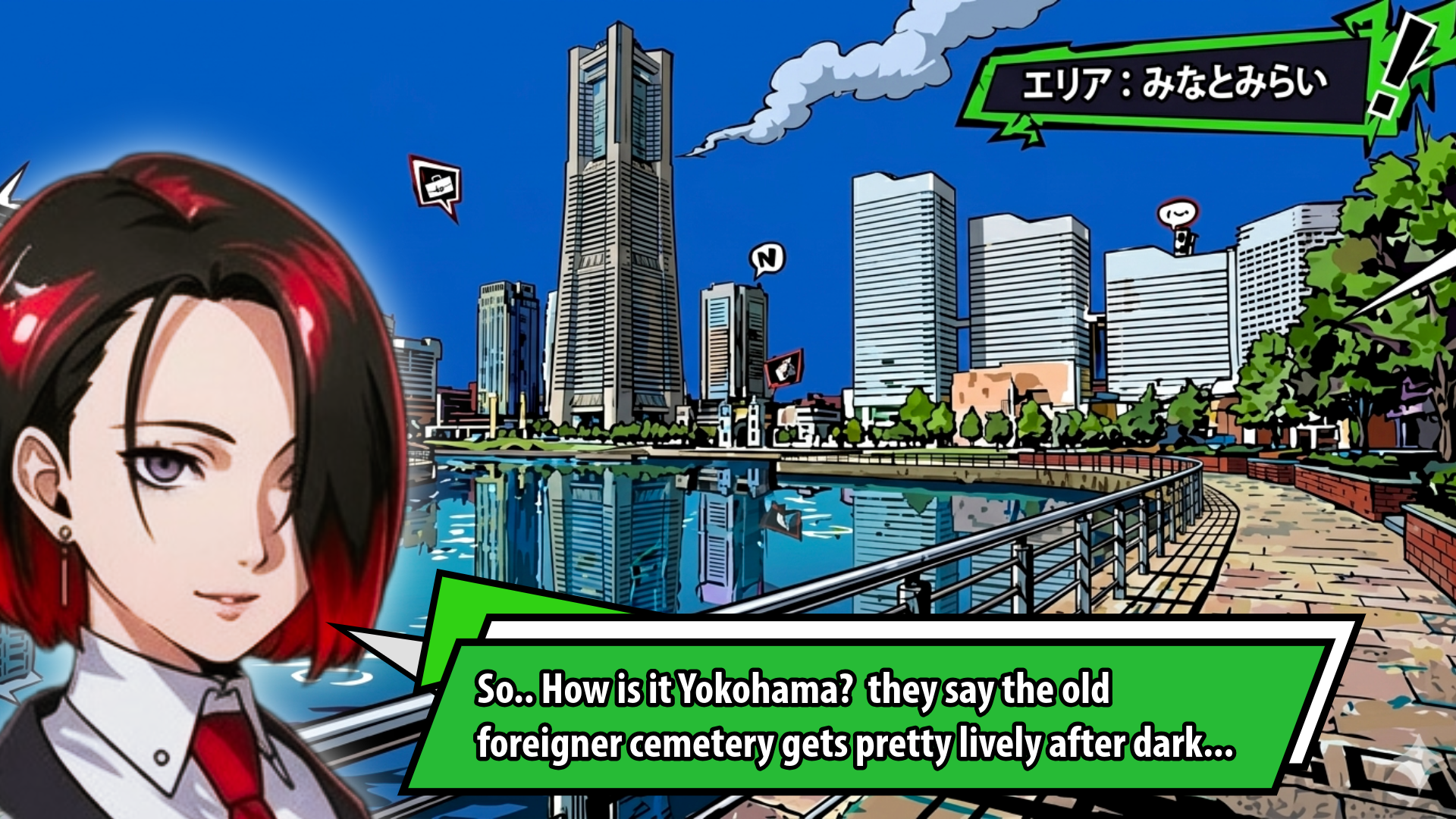
Here’s where it gets interesting from a writing-room perspective, not just a trivia one. Yokohama isn’t just “Tokyo, but with a harbor.” It’s historically the port where Japan’s modern relationship with the rest of the world began — the city that absorbed foreign trade, foreign architecture, and foreign people earlier and more visibly than almost anywhere else in the country. If the leaked protagonist really is the blond-haired, green-eyed character circulating in fan art, that’s not a random aesthetic choice. It’s a character built to literalize the city’s identity: someone who looks like an outsider standing in a place that has always quietrly absorbed outsiders. Call it the transfer-student premise, run in reverse — instead of a normal kid dropped into a new town, you get a kid who already looks out of place dropped into the one Japanese city built around looking out of place gracefully.
It also changes the texture of the daily-life half of the game, which matters more than people give it credit for. Persona 5’s Tokyo was about pressure — trains, deadlines, a city designed to grind you down until you put on a mask and fight back. A Yokohama setting trades that for open bay views, sea breeze, and a slower, more cosmopolitan rhythm. Which makes the contrast with the game’s other half hit that much harder. A calm, sunlit, international port city is exactly the kind of place where you don’t expect to find something rotting underneath. That’s the job the geography is doing here: making the eventual descent into “occult incidents” feel like a betrayal of the setting, not a continuation of it.
The Two Worlds: How a Vtuber Theory Became the Internet’s Best Guess at the Plot
If Yokohama is the leak everyone agrees on, the Vtuber angle is the one everyone is still arguing about — and it’s worth being honest about how speculative this corner of the theory actually is.
Leaked file listings tied to the game’s development included a roster of placeholder character names alongside a file for a Teddie- or Morgana-style mascot, commonly romanized in leak threads as Nilfer. Online observers also flagged a train station drawing in the same batch as visually consistent with Sakuragicho Station, which is the connective tissue between this leak and the setting theory above. Separately, and through different leak channels entirely, an Atlus insider with a strong track record stated plainly that streaming-influencer culture — Vtubers, specifically — will appear somewhere in the game’s world, while also clarifying that the mascot character itself is not one. Community reaction to that detail split almost immediately into camps, with some fans dreading a Vtuber mascot as a worst-case outcome and others treating the confirmation that it isn’t one as a minor relief.
What nobody has leaked, confirmed, or even strongly hinted at is plot mechanics. So the “Two Worlds” theory that’s circulating widely on Reddit and YouTube right now is, candidly, fan synthesis dressed up as insider knowledge: the idea that Yokohama functions as the stable, real-world half of the game, while a corrupted digital space — built from streaming platforms, parasocial fandoms, and algorithm-driven attention — serves as this entry’s answer to the Metaverse or the TV World.
It’s worth sitting with why that theory caught on so fast even without direct confirmation, because the appeal isn’t really about plot mechanics. It’s about timing. Persona’s shadow realms have always been built from whatever psychological pressure defines the moment — distorted desire in Persona 5, isolation and gossip in Persona 4, mortality and grief in Persona 3. Vtuber culture, with its layered identities, its audiences who form real attachment to performers who may not exist as presented, and its well-documented grief responses when a channel goes dark for good, is arguably the most period-appropriate psychological pressure Atlus could reach for in 2027. A dungeon built from a corrupted parasocial relationship isn’t a stretch. It’s almost the obvious next step, which is precisely why fans assembled the theory before anyone official said a word.
What the Sound of Persona 6 Might Reveal
Music has never been incidental to this franchise; it’s closer to a thesis statement you can hum. Persona 5’s smoky acid jazz was the sound of cool, controlled rebellion. Persona 4’s bright synth-pop was small-town optimism with a knife behind its back. Nobody has officially confirmed a single track for Persona 6, which hasn’t stopped fans from building a remarkably specific theory anyway, extrapolating almost entirely from the visual identity Atlus has already shown.
The working fan theory goes something like this: a core sound built from harder, colder genres — industrial textures, dark electronic rock, maybe synthwave — for everyday Yokohama exploration, replaced entirely by breakcore, glitchcore, and frantic, distorted electronic textures whenever the story dips into its digital underworld. The contrast would mirror the setting theory almost exactly: smooth, composed reality versus chaotic, corrupted virtual space, scored accordingly.
What’s actually known is more modest but still notable. Composer Atsushi Kitajoh, who has anchored the series’ sound since Persona 4 and led the scores for Persona 5 Royal and Persona 3 Reload, is presumed to take the primary composing chair again, with franchise veteran Shoji Meguro — the architect of the series’ signature jazz-and-rock identity since the very first Persona — expected to contribute in some legacy capacity. Beyond that, the genre specifics are speculation extrapolated from mood boards and a trailer with no music at all. It’s a good theory. It is, right now, still just a theory.
Why Atlus Is Burying Persona 6 Behind Persona 4
The most underrated leak in this entire saga isn’t about Persona 6 at all. It’s about scheduling.
Atlus has deliberately put Persona 4 Revival — a full remake, not a remaster — first in line, locked for February 2027, with Persona 6’s marketing campaign kept conspicuously quiet by comparison even after the reveal. Dropping two mainline-adjacent Persona projects in the same calendar year isn’t an accident; it’s a 30th-anniversary victory lap with a specific shape. The theory worth taking seriously here isn’t about shared lore — Atlus has explicitly marketed Persona 6 as a standalone story requiring zero prior knowledge — but about audience conditioning. Persona 4 Revival re-teaches an entire generation what the franchise’s daily-life rhythms feel like right before Persona 6 asks them to live inside a much darker version of that same rhythm.
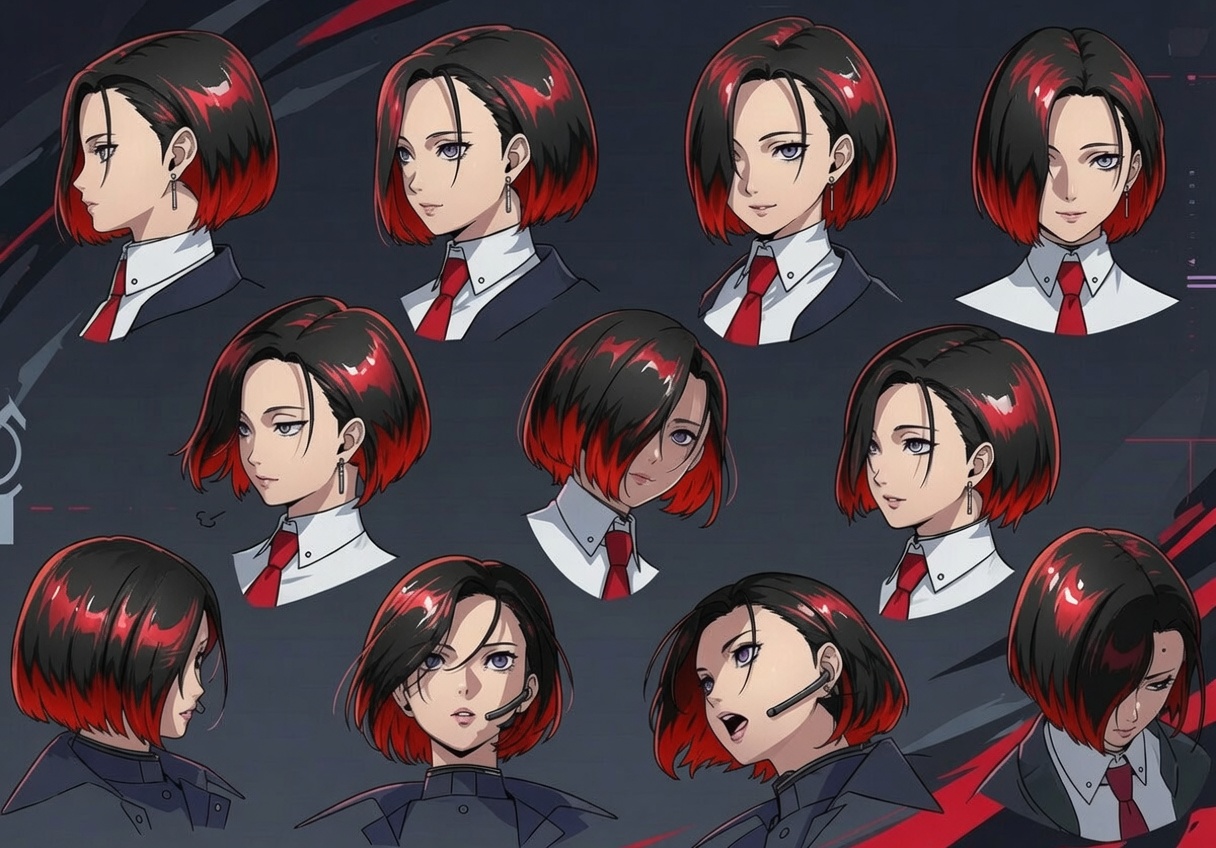
Layered on top of that strategy are the smaller, stranger threads still unresolved: a mascot character whose leaked file name suggests something stranger than a talking animal companion, and an earlier, now largely walked-back leak claiming dual protagonists — a boy and a girl with black-and-red hair — that the same credible insider later clarified was a misread; the girl, evidence now suggests, is a major supporting character rather than a second playable lead. Whether that scrapped dual-protagonist concept resurfaces later as an expansion or spin-off, the way Persona 5’s Phantom Thieves got their own continuation, is pure speculation. But Atlus has done it before, and the franchise’s post-launch playbook makes the idea more plausible than not.
Thousandtime Thoughts
Here’s the part of this story that has nothing to do with whether the leaks turn out to be right. Vtubing exists because audiences wanted intimacy without exposure — a face you could love without the discomfort of a real, unmanaged person behind it. That arrangement works beautifully until someone forgets which side of the screen they’re standing on.
Persona has spent thirty years insisting that wearing a mask is how you survive a world that demands one. Putting that philosophy inside a Vtuber framework is almost cruel in its precision, because it asks the question nobody in that culture really wants answered: if the mask becomes more beloved, more visible, and more real than the person performing it, what happens to the person?
Maybe nothing in this entire theory survives contact with the actual game. That’s fine. The fact that thousands of people built it from a graveyard and a green logo says plenty already.
Content you might like after reading this
LumenTale vs Pokémon: How It…
inKonbini: The Cozy Game That…
Scramble Knights Royale Explained: The…
Why Pragmata Makes Escort Missions…
Belmont’s Curse: The True Origin…
Rinthine Game Early Access: Survival…