The fitness audio trend has finally arrived for PC and console players. We explore if curing headset fatigue means sacrificing your competitive edge.
There’s a specific kind of pain that only gamers understand, and it shows up right around hour three of a raid night. Your headband has carved a groove into your hair. Your ears feel vacuum-sealed. And somewhere between “reviving the healer” and “wiping again,” you realize you’ve been shouting into your mic, because you genuinely couldn’t hear how loud your own voice was over the game.
Call it headset fatigue, and until recently, it was just a cost of admission. You wanted immersive audio, positional footsteps, a little chest-thump on the explosions? You paid for it in sweaty ears and a dent that outlasted the session itself.
Open-ear audio promised a way out. It’s spent the last few years quietly rewiring how people listen on runs and take calls at the gym, with brands building entire identities around the format, but the pitch was always fitness-first: stay aware of traffic, don’t cook your ear canal on a 10K. Which raises the obvious question, and the one this review exists to answer: are open ear earbuds actually good for gaming, or is this a wellness-aisle gadget wearing a costume that doesn’t fit the desk?
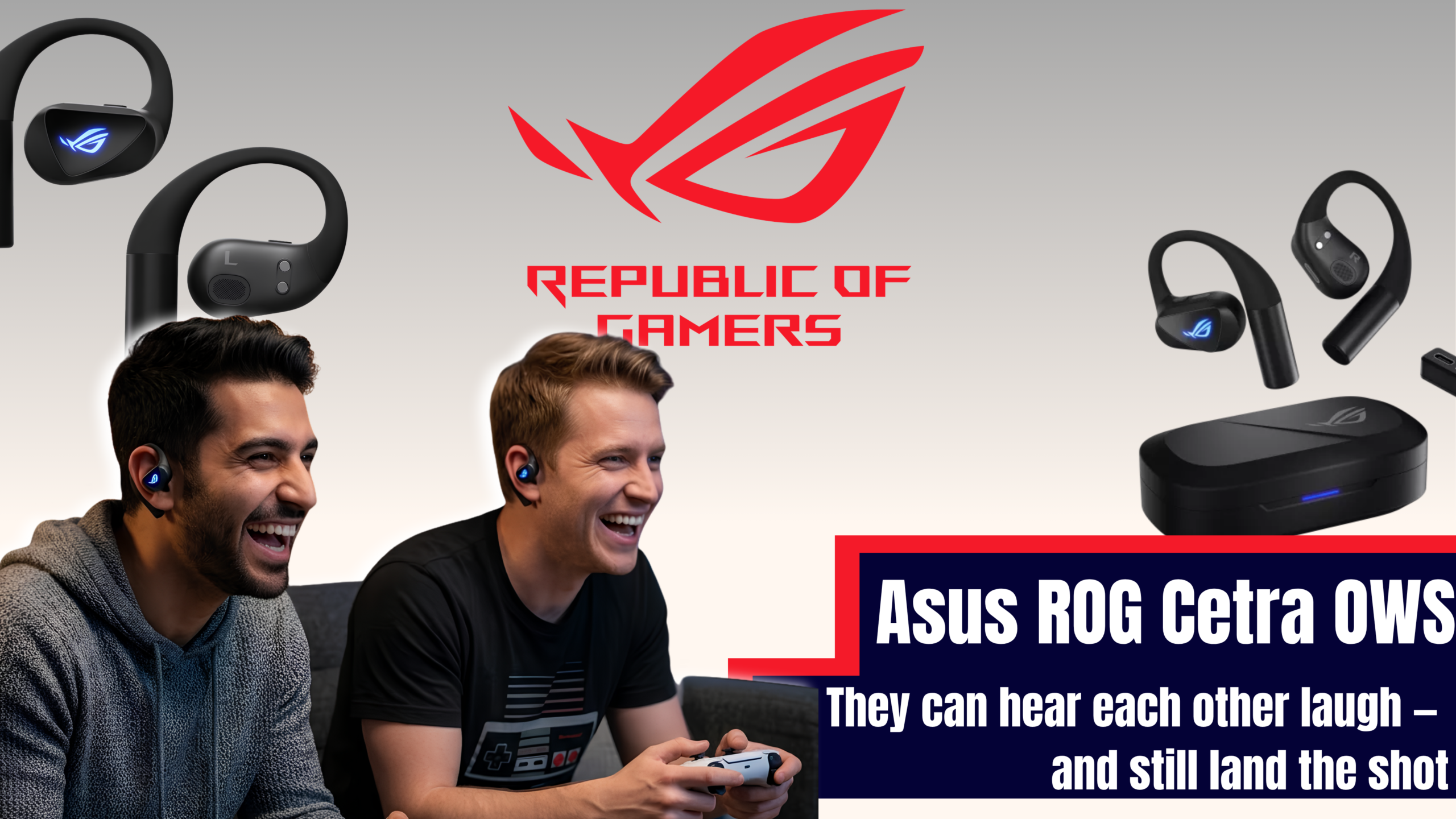
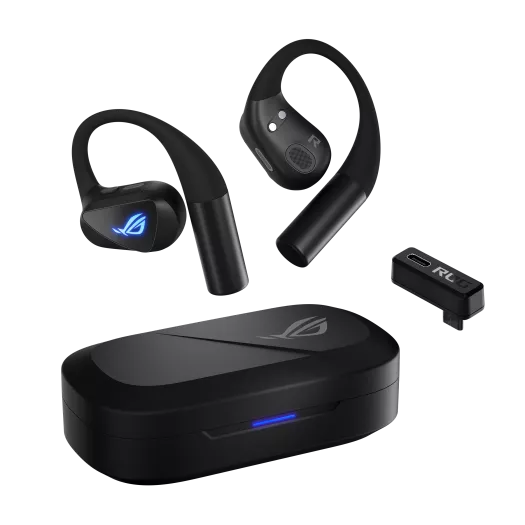
Asus decided to find out. The ROG Cetra Open Wireless is the company’s first attempt at bringing air-conduction, open-ear design into a category that has spent two decades optimizing for the opposite of openness — a genuine gaming product, dongle and RGB and all, that asks you to rethink what “gaming audio” is supposed to sound and feel like.
You Can Hear Everything. That’s the Problem, and the Point.
Here’s the trade nobody tells you about until you’ve already made it: in-ear and over-ear designs work partly because they seal. That seal is what lets a driver push air directly into your canal and produce the kind of low-end pressure that makes an explosion feel like it happened somewhere near your sternum. Take the seal away, and you’re asking a speaker to do its job in open air, a few millimeters from your ear rather than inside it.
The Cetra Open Wireless handles that job with a pair of 14.2mm carbon-coated drivers sitting just outside the ear canal, held in place by an ear hook rather than a tip wedged into your head. The frequency response is rated across the full range of human hearing, and on paper that looks like parity with a sealed design. In practice, reviewers who’ve spent real hours with them describe something closer to a personality shift than a downgrade.
Dialogue and footsteps come through genuinely well. Reviewers testing dialogue-dense games like Baldur’s Gate 3 and narrative-driven titles like Control reported that voices stayed distinct and textured even in busy scenes, with the earbuds doing an unusually good job of preserving vocal nuance — the tremor in a character’s voice, the flatness of an NPC meant to sound hollowed out. That’s not a small thing. In tactical shooters, that same clarity translated to footstep detection that held up during stealth sections of Cyberpunk 2077, letting players pinpoint enemy position by sound alone, even with a synth-heavy soundtrack playing over top of it.
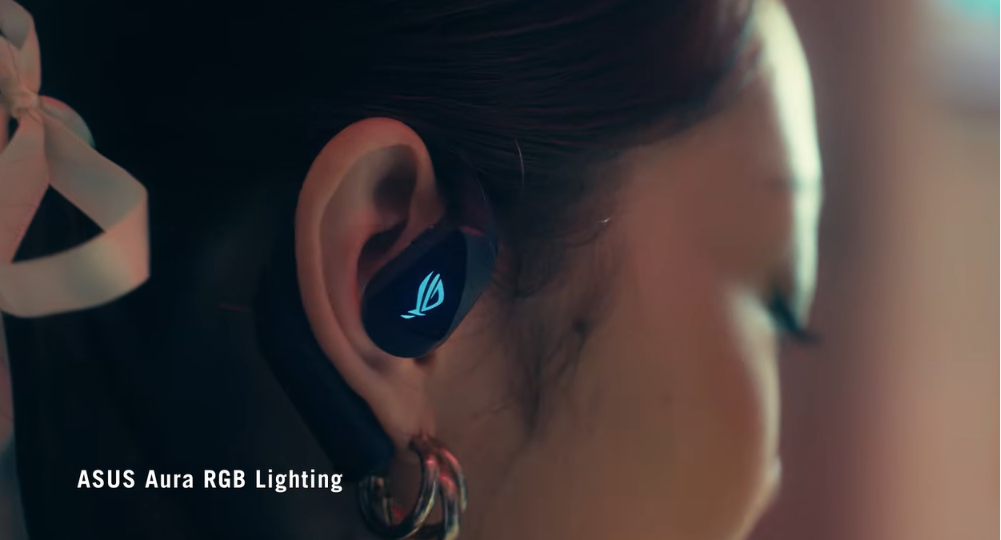
Bass is where the format shows its limits. Because there’s no seal to build pressure against, the sub-bass that makes an explosion feel physical rather than just loud has to travel through open air, and it arrives thinner than gamers are used to. Testing on horror-leaning titles like Control found the low end came across as more clinical than frightening — the creaking, dread-building rumble that a closed headset delivers as a felt sensation instead landed as something closer to background texture. Orchestral-heavy games fared similarly; big, weighty scores that are supposed to swell in your chest instead read as thinner, occasionally tinny at the top end, where treble tends to run hot on this design.
Asus clearly knows this is the format’s weak point, which is why the companion Gear Link software ships with EQ presets and features named, without much subtlety, Immersion Mode and Phantom Bass — software attempts to psychoacoustically recreate the low-end weight that the open design can’t physically produce. It helps. It doesn’t fully solve it. No amount of EQ trickery generates real air pressure against your eardrum, and if you’re the kind of player who counts a chest-rattling explosion as part of what makes a game fun, that’s a real and permanent trade-off, not a firmware update away from fixed.
Will Your Team Hear You Playing Along With Yourself?
This is the fear that stops most gamers from even trying open-ear audio, and it’s a reasonable one. If sound is leaking out of your earbuds instead of staying sealed against your skull, is it also leaking into your microphone? Is your squad about to hear your own gunfire coming through your voice line during a callout, garbled and half a second delayed, like you’re broadcasting from inside a tin can?
Asus addresses this with what it calls a directional sound transmission design, engineered to point audio toward your ear rather than broadcasting it outward, paired with an omnidirectional microphone running AI-based noise cancellation intended to isolate your voice and strip out everything else. The company’s own guidance is refreshingly specific about the failure point: leakage stays minimal as long as you’re not pushing the volume to its ceiling. That’s a real limitation, not marketing hedging, and it puts more responsibility on the player to manage volume than a sealed headset ever would.

Independent testing backs up the general shape of that claim, with some caveats. In one hands-on test, a reviewer recorded their own voice with a sitcom playing in the background at 90 percent volume — about as aggressive a stress test as you’d realistically encounter — and found the AI noise cancellation did a solid job isolating speech, with only a trace of the background audio bleeding through, not enough to bury the voice itself.
Translate that into actual gaming scenarios and the picture gets more specific. A frantic team fight, all cannon fire and ability sound effects and overlapping voice lines, is the loudest and most chaotic your in-game audio will ever get, which is exactly the condition where leakage has the best chance of becoming audible to teammates. It’s also, conveniently, the moment where nobody’s parsing your audio quality anyway; everyone’s shouting rotations over each other and the bleed disappears into the noise. A quiet 1v1 clutch moment is the opposite case: game audio is sparse, your mic gain has less to fight against, and the AI isolation has an easier job, which is also precisely the moment your teammates are listening hardest, so clarity matters more even though the raw leakage risk is lower.
The practical fix, and one worth calling out because it’s so simple: push-to-talk sidesteps most of this anxiety entirely. If your mic only opens when you choose to speak, a slightly leaky open-ear design becomes a non-issue rather than a paranoia spiral. Voice activation is where the format asks more of you, since it’s listening constantly and has more opportunity to catch stray bleed. If you’re chronically self-conscious about your comms, that’s the setting worth changing before you decide the hardware failed you.
Will Your Team Hear You Playing Along With Yourself?
At $229, the Cetra Open Wireless sits at a genuinely awkward price point. That’s roughly the cost of Asus’s own ROG Delta II over-ear headset, which delivers full-fat bass and a rated battery life north of 100 hours because it has the physical room for a bigger pack. It’s also more expensive than the SteelSeries Arctis GameBuds, a sealed true-wireless competitor that plenty of players will find simply sounds better for the money, if sound quality in isolation is your only metric.
But price-for-spec comparisons miss the actual value proposition here, because you’re not really buying an earbud. You’re buying a category. At the time of writing, this is the only open-ear gaming earbud that exists, which means the real comparison isn’t against other open-ear options — there aren’t any — but against whether you want this kind of hardware at all.
Who should genuinely consider it
Parents and caregivers who need to stay tuned into a household while playing benefit enormously from a design that never fully removes them from their environment. The same logic applies to anyone gaming in a hot climate or without air conditioning, where a sealed earbud or headset becomes genuinely uncomfortable after an hour, let alone a full session. Remote workers who bounce between video calls and gaming sessions all day will appreciate not having to alternate between two different sets of ear pressure. And solo, narrative-driven players — the Baldur’s Gate 3 and Clair Obscur crowd — get real upside here, since the format’s strength is dialogue clarity and its weakness is exactly the kind of bass-heavy bombast those games don’t lean on as hard.
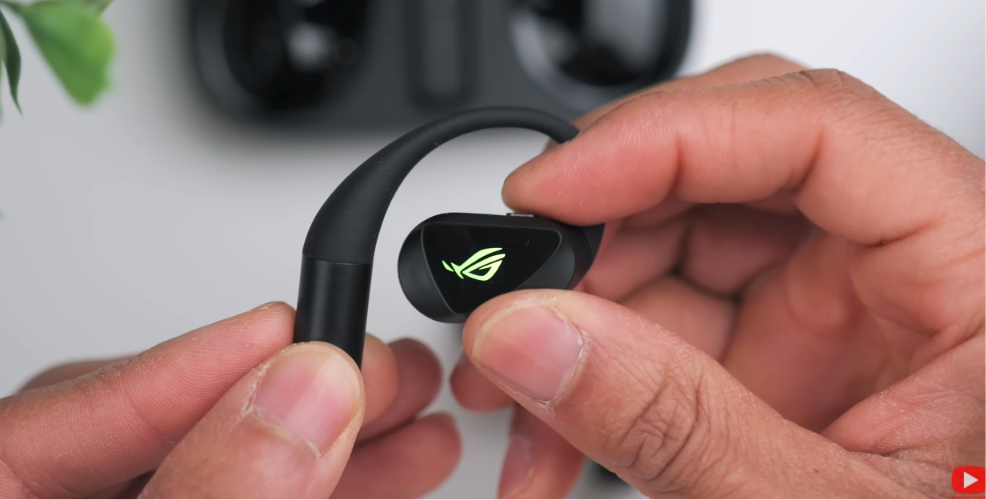
The battery life deserves a mention in this context too, less as a spec and more as a lifestyle fit: a rated 16 hours per charge with roughly 48 hours total including the case comfortably outlasts most sealed gaming earbuds on the market, which matters if you’re the type to forget to charge things until the low-battery chime goes off mid-session.
Who should skip it
Competitive players in fast-twitch, bass-cued shooters where an explosion’s physical impact is part of how you read the battlefield will feel the missing low end immediately, and no EQ preset closes that gap entirely. Anyone gaming in a loud shared space — a dorm room, a busy living room, a house full of roommates — loses the format’s core advantage, since the appeal of open-ear audio is situational awareness in a quiet room, not a noisy one where you’d need to crank volume to compensate, which is exactly the setting where leakage becomes most likely. And absolute bass purists, the players who consider chest-rattling low end non-negotiable, should treat this as a hard pass rather than something firmware might eventually fix.
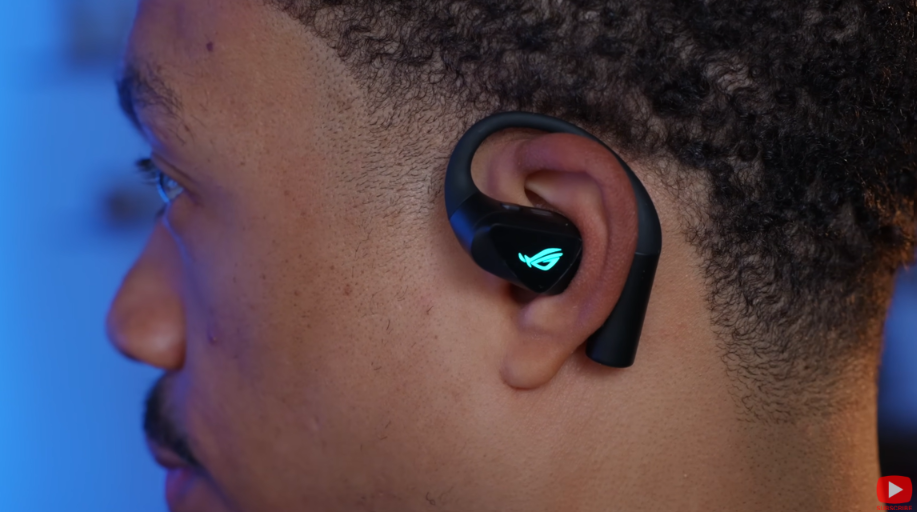
It’s also worth noting what this isn’t: a replacement for Asus’s own ROG Cetra True Wireless, the brand’s sealed in-ear gaming buds. That earlier design still exists in the lineup for a reason, and for players who want maximum isolation and bass impact with none of the open-air trade-offs, it remains the better fit. The Open Wireless isn’t an upgrade to that product. It’s a different tool for a different kind of session, and Asus, to its credit, seems to understand that rather than positioning one as a straight replacement for the other.
One more asterisk worth flagging for console players specifically: there’s no Xbox support here, a gap shared by most gaming earbuds in this category but still worth knowing before you buy, especially if your setup spans multiple platforms.
If you’re already rethinking the rest of your desk around comfort over raw performance — a lighter mouse, a keyboard that doesn’t wreck your wrists by hour four — this fits that same instinct. It’s peripheral shopping guided by how your body feels afterward, not just what the spec sheet promises during the demo.
The Real Question Isn’t About Specs
Strip away the driver sizes and the frequency charts, and the Cetra Open Wireless is really asking gamers a cultural question dressed up as a hardware one: how much isolation do you actually need to feel immersed? For a certain kind of player, raised on the idea that “real” gaming audio means blocking out the world entirely, the answer is going to be uncomfortable. For another kind, the ones who’ve started resenting the headset dent more than they enjoy the extra bass, this might be the first product built specifically for how they actually want to play.
Thousandtime Thoughts
For most of gaming’s modern history, “serious” audio meant total withdrawal — a sealed pair of cups, a closed door, the outside world reduced to a muffled rumor. That was never really about sound quality. It was about permission to disappear for a few hours, and hardware built the wall for you.
What’s interesting about open-ear gaming gear isn’t the driver technology. It’s that it exists at all, aimed at players who no longer want that wall, or can’t afford it, because they’re parenting through a boss fight or half-listening for a delivery or just tired of choosing between comfort and comms. That’s not a compromise. It’s an admission that gaming has quietly become something you do alongside a life, not instead of one.
So maybe the real question isn’t whether open-ear tech is good enough yet. It’s whether we ever needed the isolation as much as the industry told us we did.
PRODUCT IN THIS POST
ROG CETRA OPEN WIRELESS
Content you might like after reading this
How Jensen Huang Engineered RTX…
Is the LGG Saturn Pro…

NASA Artemis Watch 2.0: The…
AM Infinity Review: When a…
Valve’s Ibex Just Rewrote the…

Is the MacBook Neo Good…
Is the Corsair Vanguard Air…

Should You Wait for the…
Surface Pro 11 Long-Term Review:…
Best Controller for Docked ROG…
Galaxy Buds 4 Pro Without…

GPD Win 5 Review: Can…
AndaSeat Novice Review: The “Stealth”…

Razer Viper V3 Pro vs.…
How Intel’s New “Binary Tool”…
The iKKO Mind One: 2026’s…

The Mountain Everest Max: Is…
Samsung Galaxy S26 Ultra: How…

Zenbook Duo Review: Can One…