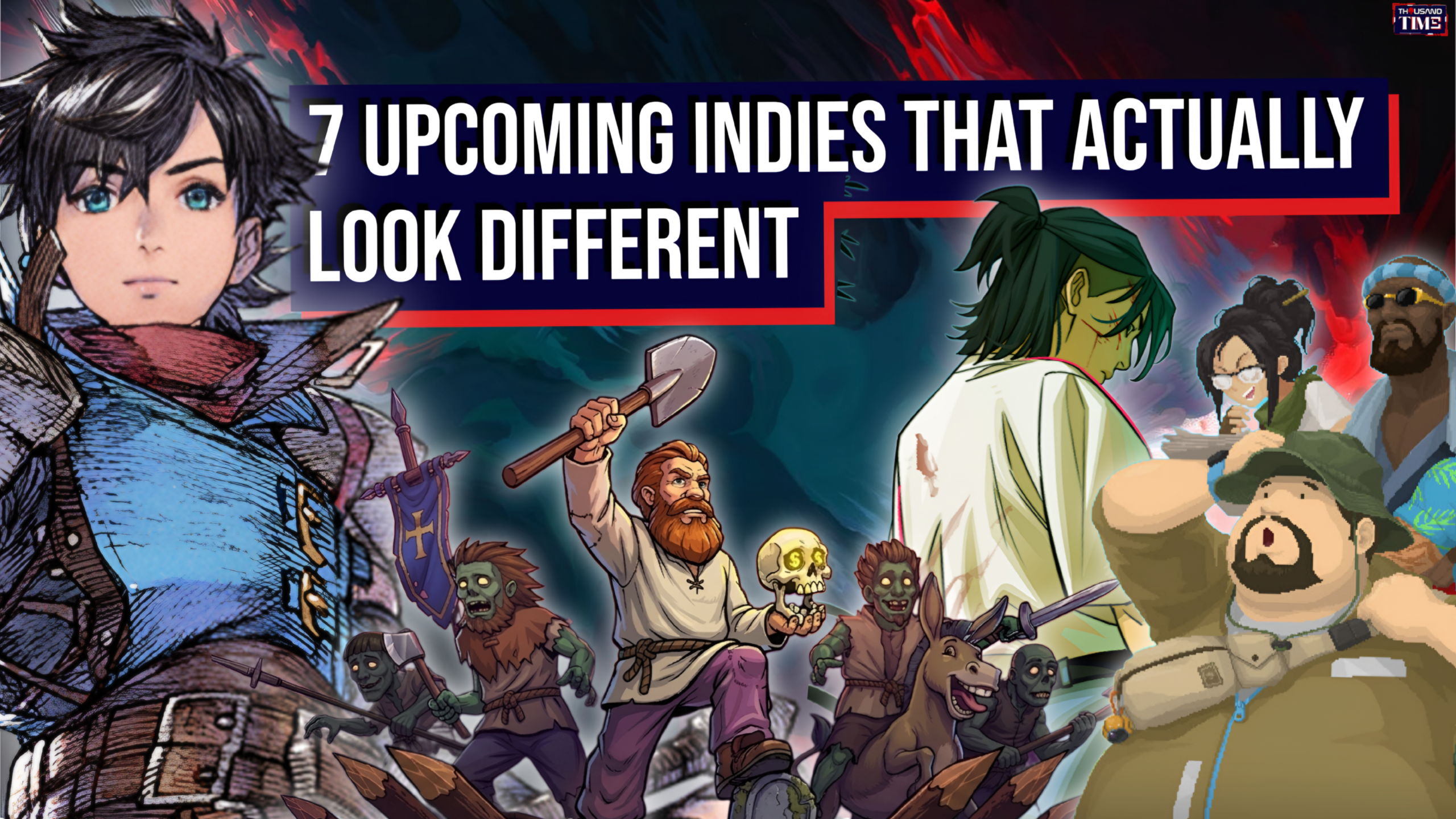
From zombie-infested graveyards to magical academies and apocalyptic neighborhoods, the next wave of indie gaming is blending cozy management with delightfully dark twists.
Something shifted in the indie gaming conversation this spring. The Triple-i Initiative announcements lit up forums and feeds with the kind of collective excitement that feels increasingly rare — not because these games are flashier than what the major studios are putting out, but because they are, in many ways, stranger. Darker. More willing to make you uncomfortable between the crop rotations. If you are building a wishlist of the best new indie simulation and RPG games to check out in 2026 and beyond, the titles that have captured the most attention share a common quality: they are using the cozy genre’s familiar vocabulary — pixel art, management loops, seasonal rhythms — to tell stories that are anything but safe.
The farming sim and life simulation genres spent years perfecting a particular kind of comfort. Stardew Valley defined it. Dozens of games refined it. And now, a new generation of developers appears to be asking: what happens when you put something genuinely unsettling inside that comfort? What if the crops are fine but one of your romanceable neighbors is a serial killer? What if the graveyard management game gives you an entire zombie-infested city to mismanage? What if the post-apocalypse feels more like a neighbourhood walk than a survival horror nightmare?
These seven games — some newly announced, some long-anticipated — represent where the most interesting creative energy in indie development is flowing right now.
Long Gone
Long Gone arrives from Hillfort Games with a premise that sounds contradictory until you play the demo and realize it is actually kind of obvious: a post-apocalyptic zombie game where you never fight anything. Instead, you solve zombies. You read the environment, figure out how they move, and navigate around them with patience and lateral thinking.
It is a subtle but important distinction. Most games in this space treat the undead as obstacles to be destroyed. Long Gone treats them as part of the architecture — something to understand and work around rather than eliminate. The result is a game that sits closer to a mystery or a puzzle experience than a survival horror one, and that repositioning makes the whole concept feel fresh in a way that is hard to articulate until you are doing it.
The visual approach reinforces this. Long Gone uses a 2.5D street-level perspective for outdoor traversal that gives the game a strange, cinematic quality — buildings and broken storefronts scrolling past in layers, the world feeling both lived-in and eerily still.
Step inside a house, however, and the camera shifts to full 3D exploration. That transition between perspectives is not just a technical flourish; it changes the emotional texture of each environment. Outside, the world feels wide and abandoned. Inside, it contracts, gets claustrophobic, becomes a space you have to read carefully. Then there is the cat.
” The End of the World, But Make It a Stroll. “
Your feline companion serves as a proximity sensor for danger — a design choice that is simultaneously practical and quietly brilliant. Cats, as anyone who owns one will confirm, have a deeply inconvenient habit of going wherever they want regardless of what you need them to do. Building that energy into a game mechanic — leaning into the animal’s instincts rather than turning it into an obedient tool — gives Long Gone a texture that feels lived-in rather than engineered.
Hillfort Games announced a 2027 release window, which prompted the developers to have what can only be described as an extremely relatable public reaction to learning their game had crossed 350,000 wishlists on Steam. That number speaks to something the concept is doing right: people are hungry for a post-apocalyptic game that asks you to slow down. To observe. To think before you move. In a genre historically defined by urgency and panic, Long Gone is making a case for methodical calm — and players are already responding to it.
Witch Brook
Witchbrook has existed in the collective indie consciousness for so long that it has started to take on the quality of a rumour. Chucklefish — the studio behind Starbound and, importantly, the publisher that helped bring Stardew Valley to the world — has been developing their isometric magic school life sim through what feels like multiple eras of gaming culture. And yet, rather than killing anticipation, the long development window has somehow sustained it.
Part of this is the strength of the concept itself. A magical academy setting that blends life simulation with social RPG elements occupies a specific nostalgic frequency — it pings simultaneously off Harry Potter’s cultural footprint, the warm memory of GBA-era RPGs, and the Stardew Valley model of seasonal routine that has become almost universally comforting. Witchbrook’s aesthetic pulls all of these threads together with pixel art that genuinely holds up as beautiful in its own right, not just as a deliberate retro callback.
“The Academy Has Been Under Construction for Years. But Hold Promising Journey.”
The balancing act at the centre of Witchbrook’s design is what makes it interesting from a mechanical standpoint. You are not just attending a magic school — you are managing the full texture of a student’s life. Attending classes and developing your magical abilities sits alongside maintaining social relationships with other students and the town around the academy, navigating dynamic seasonal changes that affect both the environment and the rhythms of daily life. The comparison to Stardew Valley is obvious but slightly reductive; the school setting introduces a structured calendar — exams, events, academic pressures — that the farming sim format does not really have.
Witchbrook release updates have been relatively sparse, which means each piece of new footage or developer communication gets treated like a dispatch from a far expedition. That level of attention, sustained across years of development, is itself interesting. It suggests that Chucklefish have built something with a concept strong enough to wait for — and, perhaps more practically, that there is a specific audience appetite for a game that places magical education within the familiar rhythms of a simulation RPG. The HD pixel art that has been showcased looks genuinely stunning — the kind of visual execution that goes beyond genre expectation into something that would be notable regardless of what game it was attached to.
The question Witchbrook will eventually have to answer is whether the finished product can satisfy years of accumulated hope. That is a difficult position to design from. But the early evidence suggests Chucklefish are aware of exactly what they have built, and are taking the time to deliver it properly.
Grave Seasons
Grave Seasons from Perfect Garbage is the kind of concept that sounds like a pitch joke right up until you realize it is both completely serious and entirely brilliant: a farming and dating simulation in which one of your romanceable townsfolk is secretly a serial killer — and you do not know who.
The core loop works exactly as you would expect from the genre. You manage a farm, build relationships, navigate seasonal events, develop your land. The wholesome scaffolding is all there, executed with obvious affection. But running underneath it, quietly and constantly, is a true-crime layer that recontextualizes everything. Someone is committing murders in this town. The clues are embedded in the same social interactions you would normally experience as charming flavour. A neighbour who always seems to be busy during the evenings. A character whose dialogue carries a strange edge. Small things that, in a normal farming sim, you would just absorb as texture, become evidence worth examining.
“Someone in This Town is a Murderer. You Might Already Be Dating Them.”
The design decision to change the killer with every playthrough is what elevates the concept from gimmick to genuinely replayable experience. There is no walkthrough that saves you. No community spreadsheet that tells you which character to avoid. You have to actually pay attention, read behaviour, make judgments — which means the social simulation layer, usually the gentlest part of these games, becomes charged with a kind of low-level paranoia that is, somehow, thrilling.
There is something culturally precise about why this resonates. True crime content has been one of the dominant forces in digital media for years — podcasts, documentaries, YouTube deep-dives, the entire forensic social media community that assembles around every major case. Meanwhile, the cozy simulation space has been running its own parallel cultural moment, offering comfort, routine, and low-stakes relationships. Grave Seasons puts those two things in the same room and asks what happens when you cannot fully trust the comfort. When the cozy aesthetic is the cover, not the content.
The answer, apparently, is that it becomes significantly more interesting.
Graveyard Keeper 2
Yes, Graveyard Keeper 2 is real. That is worth stating plainly, because for a long time it existed primarily as a wish and a rumour before Lazy Bear Games made the April 2026 Triple-i Initiative announcement official.
The original Graveyard Keeper is one of the more quietly beloved games in the indie simulation space — a dark management game that never pretended you were a good person, and was all the more compelling for it. You ran a medieval graveyard, made morally questionable decisions about what went into the ground, and navigated a bureaucratic world that rewarded efficiency over ethics. It was funny, and bleak, and surprisingly deep, and it built a small but intensely devoted audience.
“Running a Town When Half the Staff Are Already Dead.”
The sequel expands the scope dramatically. Where the first game gave you a graveyard to manage, Graveyard Keeper 2 gives you an entire zombie-infested town. The shift from a single location to an urban environment is significant — not just in scale, but in the kind of systems it opens up. You are now sending undead expeditions out into the world, rebuilding a city for profit, operating what is essentially a supply chain that runs on reanimated labour. The promise of “even more questionable morals” in the official communication is doing a lot of work, but it is accurate framing. This is a game that wants you to feel something in between entrepreneurial pride and mild guilt, and considers that emotional territory interesting.
The cross-platform release on PS5, Xbox Series, Switch 1 and 2, and PC signals a genuine ambition to bring the series to a wider audience than the PC-dominated indie space typically reaches. That matters for the genre. Automation and supply-chain management mechanics have become a dominant and deeply addictive thread in indie gaming — Factorio created an entire generation of players who now seek out games that reward systemic thinking and optimization loops. Graveyard Keeper 2 is arriving into a moment where that appetite exists and is actively looking for its next fix.
Is Graveyard Keeper 2 coming out on a confirmed date? Not yet — but the announcement was substantive enough that it moves from wishlist to genuine anticipation.
Dave the Diver – In the Jungle DLC
Dave the Diver should not have worked as well as it did. A game that combines a deep-sea restaurant management sim with fishing, combat, and increasingly elaborate narrative threads — developed by Mintrocket, a small team within Nexon — managed to become one of the most universally praised games of its release year, picked up by players who would not normally describe themselves as simulation fans and critics who found themselves struggling to categorize it cleanly.
The DLC strategy that has followed is what makes it a genuinely interesting case study for the post-launch phase of indie development. Each expansion has been treated — both by the developers and by the gaming community — as a cultural event. The Dredge crossover connected two games from completely different tonal registers and made both feel larger. The Godzilla collaboration was, by most accounts, not something anyone predicted or fully believed would happen, and yet it landed with the absurdist confidence of a game that understands its own identity completely.
“Dave Keeps Diving, and It Keeps Mattering.”
Dave the Diver new DLC release date information has been carefully managed — Mintrocket releases things when they are ready rather than to a predictable schedule, which keeps each announcement fresh rather than anticipated in a way that produces fatigue. The question of what comes next is genuinely open, which is rare. The crossover selection has so far defied easy categorization, which means speculation about future content remains wide open and community discussion remains active.
The deeper thing Dave the Diver has figured out is that the game itself is the platform. Each piece of additional content does not just add hours — it reinvents the context around the whole experience. Players who dropped the base game return. Players who were watching from the outside find a reason to finally jump in. That model — where post-launch content functions as cultural re-entry points rather than just bonus material — is the gold standard for how indie games sustain relevance after their initial release window. Other developers should be paying close attention.
Threads of Time
Threads of Time by Riyo Games exists for a specific and extremely patient person: someone who played Chrono Trigger at an age where it rewired their understanding of what games could be, and who has spent the decades since waiting for something that captures even a fraction of that feeling.
The JRPG genre has produced extraordinary games since the 16-bit era. But Chrono Trigger occupies a particular category of reverence — the kind of game that gets discussed not just as a product but as a formative experience. Its time-travel narrative, its combat system, its cast of characters, its ending structure, its music. The people for whom it landed at the right age tend to hold it with a specific, almost irrational loyalty. Games like Chrono Trigger in 2026 remain among the most searched terms in the JRPG community, which says everything about how persistent that appetite is.
“A 90s Dream, Running on Unreal Engine 5”
Threads of Time is attempting to answer that longing with HD-2D aesthetics rendered in Unreal Engine 5 — a visual approach that takes the layered, dimensional pixel art style that Square Enix pioneered with Octopath Traveler and brings it to a level of technical fidelity that rivals major studio productions. The time eras on offer span from prehistoric dinosaur environments to cyberpunk futures, which suggests a scope designed to honour the tonal range that made the original so memorable.
The turn-based combat system promises the depth that the genre demands from its most serious players — the kind of layered, strategic thinking that action RPGs have pushed to the side in recent years. There is a distinct counter-cultural confidence in building a premium turn-based JRPG experience in 2026, when the market has increasingly favoured real-time action. Threads of Time is betting that the audience who wants what it is offering has never gone away — they have just been waiting.
Rinthine
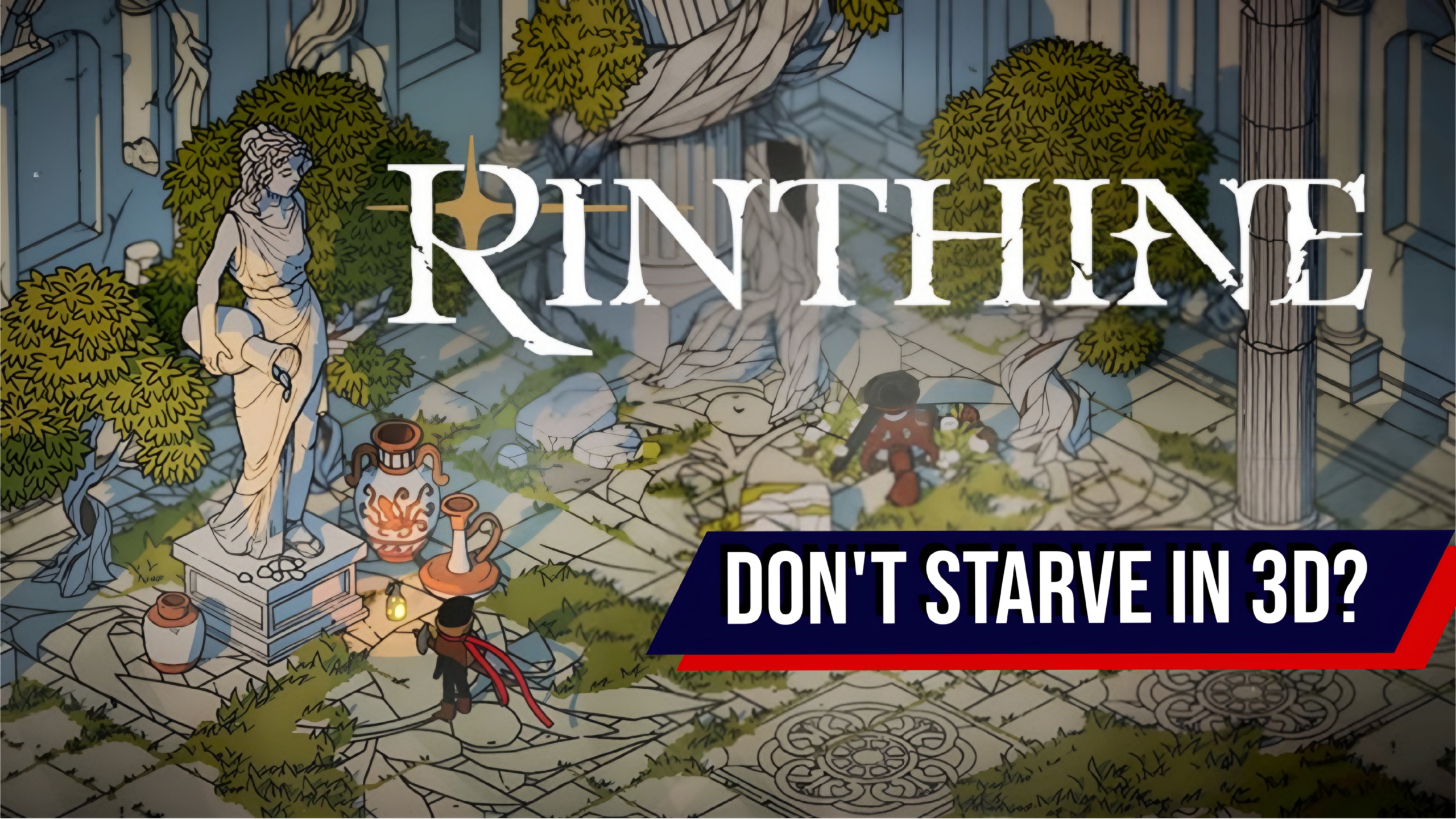
Rinthine, announced by Optillusion in March 2026, arrives with the kind of premise that immediately starts generating mental images before you have seen a single screenshot: a survival adventure sandbox set inside an enormous, labyrinthine structure called The Machine, where the rooms rearrange and the mythology is architectural.
You may wanna read our detailed Rinthine review here: Rinthine Game Early Access: Survival Mechanics Explained
The community description of a “Piranesi-esque maze of giant statues” is evocative for good reason. Piranesi — both the 18th-century artist and the 2020 Susanna Clarke novel — deals in the specific uncanniness of vast, impossible interior spaces that follow their own logic. Spaces that are beautiful and disorienting in equal measure, where scale and repetition create a kind of sublime dread. If Rinthine is drawing on that aesthetic tradition, it is positioning itself at the intersection of survival mechanics and something closer to literary horror.
“A 90s Dream, Running on Unreal Engine 5”
You play as the Wayfinder, exploring The Machine room by room, rationing resources and confronting mythological entities that inhabit the structure. The survival-crafting loop is familiar enough to be legible from the description alone — gather, build, survive, push deeper — but the setting does something important to the genre. Survival games are overwhelmingly set in external natural environments: forests, islands, tundra, ocean. The genre’s vocabulary is tied to weather, wildlife, geography. Rinthine moves all of that indoors, into a self-contained artificial world with its own rules and its own creatures, and the claustrophobic implications of that shift are significant.
A labyrinth setting also changes what exploration feels like. In an open world, discovery is expansive — you crest a hill and see more. In a room-to-room architectural maze, discovery is constrictive. You open a door and see less, or differently, or something you were not prepared for. That is a more unsettling mode of exploration, and as a survival mechanic it creates a specific kind of dread that open environments rarely achieve. Rinthine is one of the most genuinely intriguing announces of the year.
Thousandtime Thoughts
The shape of this moment in indie gaming is not really about any individual title. It is about the collective direction. A genre that spent years being defined by warmth, safety, and uncomplicated reward loops is now producing its most exciting work at the edges — in the places where comfort and unease coexist, where management systems meet moral ambiguity, where pixel art aesthetics carry stories that are dark, strange, and surprisingly ambitious.
The studios behind these seven games are not abandoning what makes the cozy genre beloved. They are inheriting it deliberately, using its familiar textures as a foundation for experiences that ask more of the player. That requires a certain confidence — a belief that the audience has grown alongside the genre and is ready for something more complicated.
The evidence of the wishlists suggests they are right.
Content you might like after reading this
Why Pragmata Makes Escort Missions…
Belmont’s Curse: The True Origin…

Why Pokémon Pokopia Sold 2.2…
Rinthine Game Early Access: Survival…
Darwin’s Paradox Review: Is the…